José Antonio Hernández-Diez: A Trajectory
José Antonio Hernández-Diez was born in Caracas in 1964. During his childhood, he was drawn to technological toys, which he would sometimes dismantle and reconstruct as grafted hybrids assembled from the parts of several others. This inclination led him early on to a curiosity about the status of the technological. Thus, during adolescence, he took apart a video camera from the surveillance system in his grandparents’ house, demonstrating his deep interest in how the technology worked. He studied at the Centro de Formación Cinematográfica de Caracas between 1984 and 1986, so that once his artistic career began, his training in the audiovisual field would prove fundamental; hence the central place of video within his early artistic production.
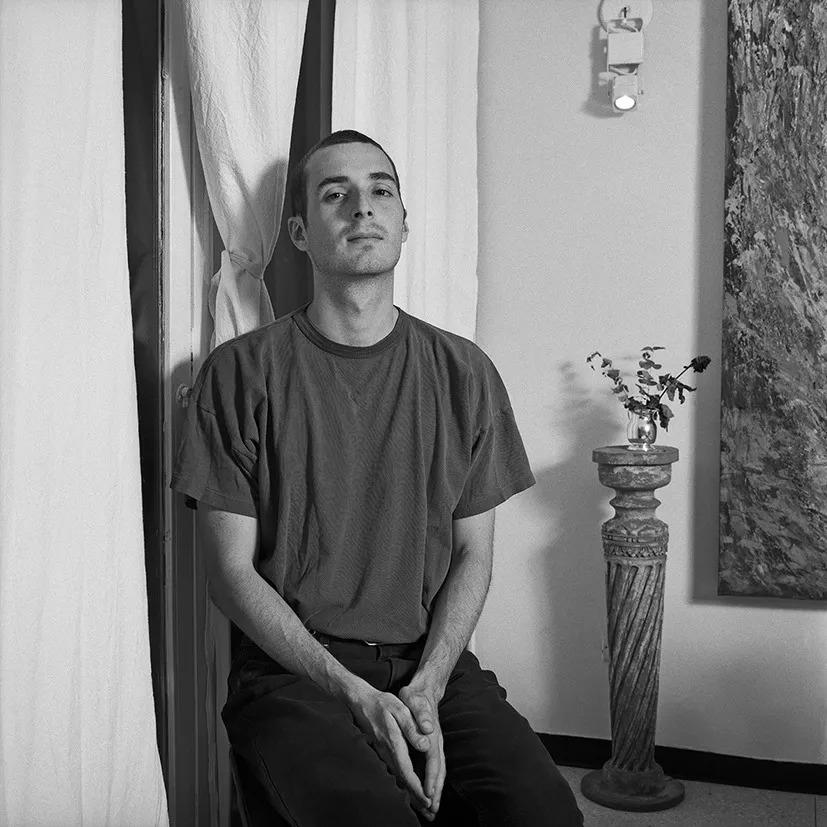
José Antonio Hernández-Diez by Carlos Germán Rojas. February, 1993.
At the age of twenty, he made his first appearance in the group exhibition El eterno arte del maquillaje at Los Espacios Cálidos of the Ateneo de Caracas, a venue where he would exhibit again two years later in the context of the First Biennial of Visual Arts in 1988. In that event, he participated in two ways: on the one hand, in the photography section at the Ateneo; and, on the other, in the section known as Expresiones Libres, exhibited at the Galería de Arte Nacional, where he won second prize with the video Los sueños no duran más de cinco minutos, a reflection on the vertigo of love. The prizewinning work was shown again in 1990 at the Third Video-Art Biennial of the Museo de Arte Moderno de Medellín (Colombia), where it received an honorable mention. Years later, in 2001, a group exhibition titled Los sueños no duran más de cinco minutos was held at Galería Alternativa in tribute to this work. For that exhibition, curator Miguel Miguel invited a group of ten artists to take part in a show allegorical to the theme of dreams, using Hernández-Diez’s work as a historical reference.
In 1988, the artist participated in the Ninth International Super 8 Festival in Brussels. He also took part in the XLVI Salón Arturo Michelena with the video installation Annabel Lee, in which a woman appears enclosed within her mortuary crypt through a video embedded beneath the representation of her tombstone. The title of the work refers to Edgar Allan Poe’s posthumous poem, in which the theme of the death of a beautiful young woman is explored. In this work, the video reproduces the catatonic state of a woman in an incessant, convulsive trance, such as that described in Poe’s poem, while the framing of the tomb image, as curator Luis Ángel Duque explained, is similar to that of The Body of the Dead Christ in the Tomb, painted in 1521 by Hans Holbein (1497–1543). In this context, he met the artist Sammy Cucher, with whom he shared an interest at the time in mythological themes and archetypal figures, as well as in formal resolutions through what were then considered the “new media.” From that affinity arose the idea of exhibiting together.
Thus, at the beginning of 1989, Hernández-Diez and Cucher jointly presented the exhibition Videoinstalaciones at Galería Sotavento, where they showed four works, two proposals by each artist. One of these works was selected for the exhibition I Reseña de Arte en Video at Sala RG. Houdini, a video-sculpture in which the artist offers his own version of the Chinese Water Torture Cell—the name given to the final feat attempted by that sort of superman of magic and escapism, which met its fatal end in Chicago in 1919. In this work, the black-and-white television monitor is submerged in water inside a display case; on the screen, images of the artist depict the audacious magician in his final moments as he attempts to free himself from his own trap of chains and padlocks. The piece seems to function as an underwater self-portrait, whose only precedent in Venezuelan art, according to Duque, is Traje de Buzo (1919) by Nicolás Ferdinandov (1886–1925). In that work, the Russian artist who settled in Venezuela and was a close friend of Armando Reverón, portrayed himself inside a diving suit. That same year, Hernández-Diez again participated in the XLVII Salón Michelena in Valencia with the work El Temporizador.
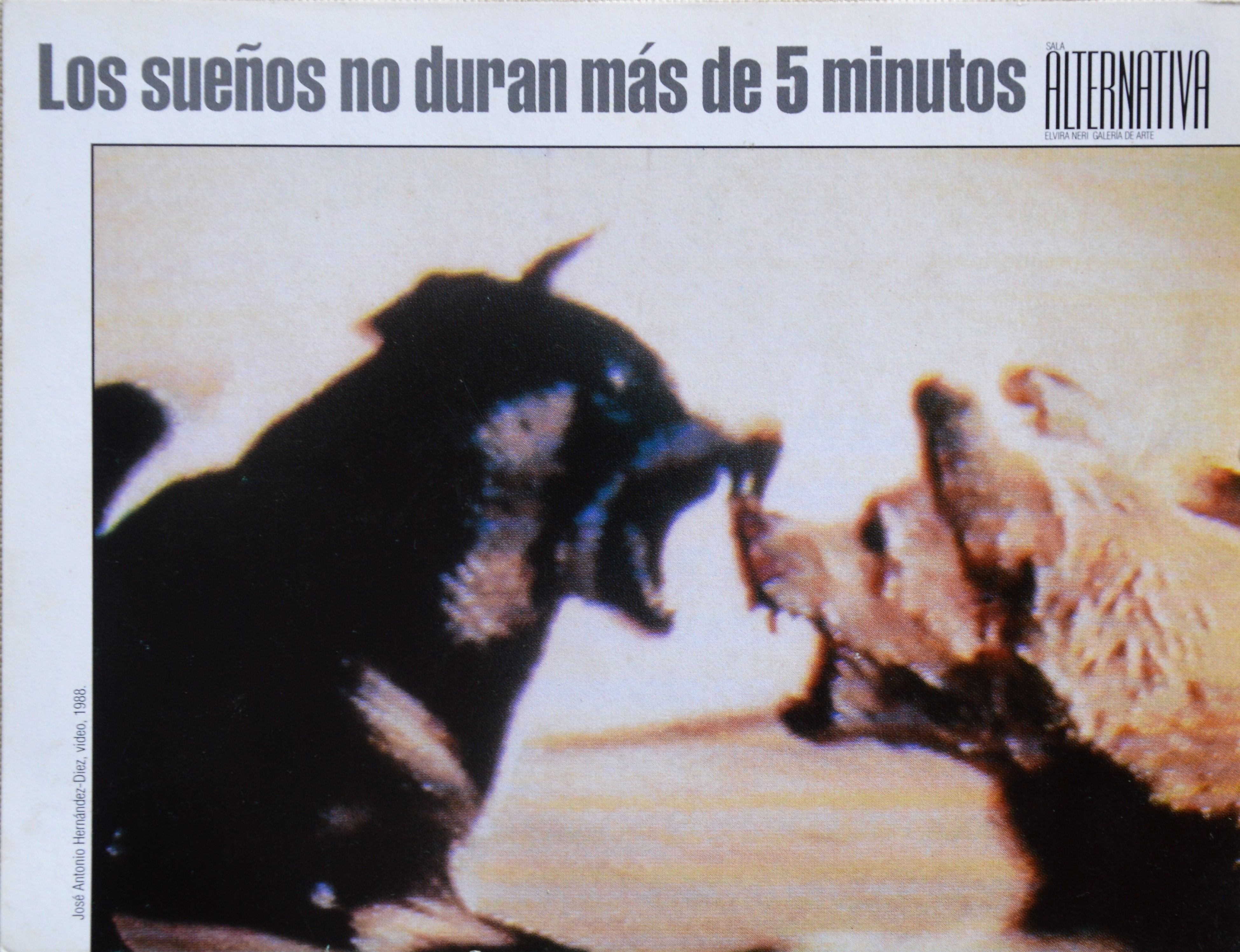


Image 1: José Antonio Hernández-Diez. Los sueños no duran más de 5 minutos. Image 2: José Antonio Hernández-Diez. Image 3: José Antonio Hernández-Diez. Annabel Lee. Image 4: José Antonio Hernández-Diez. Houdini.
In 1990, he participated in the CONAC Salon of the Encuentro Americano at Galería Los Espacios Cálidos with an untitled assemblage allegorical to Fray Bartolomé de las Casas. The proposition consisted of a case or box in the shape of a Christian cross, bearing all the characteristics of cases used to transport delicate equipment or certain collectors’ items. Produced in plywood veneered with black Formica and with aluminum edges and corners, it bore on its upper section the name of that friar who, during the Colonial period, publicly renounced the repartimientos and encomiendas of Indigenous peoples, and who is known as the principal defender of Indigenous peoples in those times. That same year, he was included in the exhibition Los 80 Panorama de las Artes Visuales en Venezuela, an important survey of that decade held at the Galería de Arte Nacional. On that occasion, Annabel Lee and Houdini were presented at the GAN. This attests to the prestige the young artist had already achieved in the local sphere. He participated, together with Sammy Cucher and Nan González, in the exhibition Video-escultura ’91 held at Sala RG in CELARG. In that context, Houdini was shown again, and the video installation In God We Trust was presented for the first time, a paradigmatic work within contemporary art in Venezuela. The work was shown a few months later in that same venue in the artist’s first solo exhibition and was subsequently acquired by the Galería de Arte Nacional.
San Guinefort y otras devociones was the title of José Antonio Hernández-Diez’s first solo exhibition, presented between July and August 1991. It was curated by Miguel Miguel, and the catalog text was written by Luis Ángel Duque. This exhibition marks a genuine milestone in the development of contemporary art in Venezuela and in the artist’s career. The work In God We Trust is defined in the catalog text as “a total proposition.” In the middle of the space, inside a specially designed pyramid with one transparent segment, one can see a monitor emitting images of eyes intercut with images of corporate towers bearing bank logos. Thus, this image of the eye within the pyramid is drawn from medieval iconography and clearly alludes to U.S. currency. As a backdrop to this piece, a large projection on the gallery wall presents images of the urban warfare unleashed in Caracas on 27 February 1989. In the text bearing the same title as the exhibition, the following comment appears regarding the work in reference to its first display: then, it says, “the spectators integrated themselves into it as though participating in a sacramental act, before the metaphor of a country subjected to the inexorable powers of reality, thanks to the effects of a powerful work of art.”

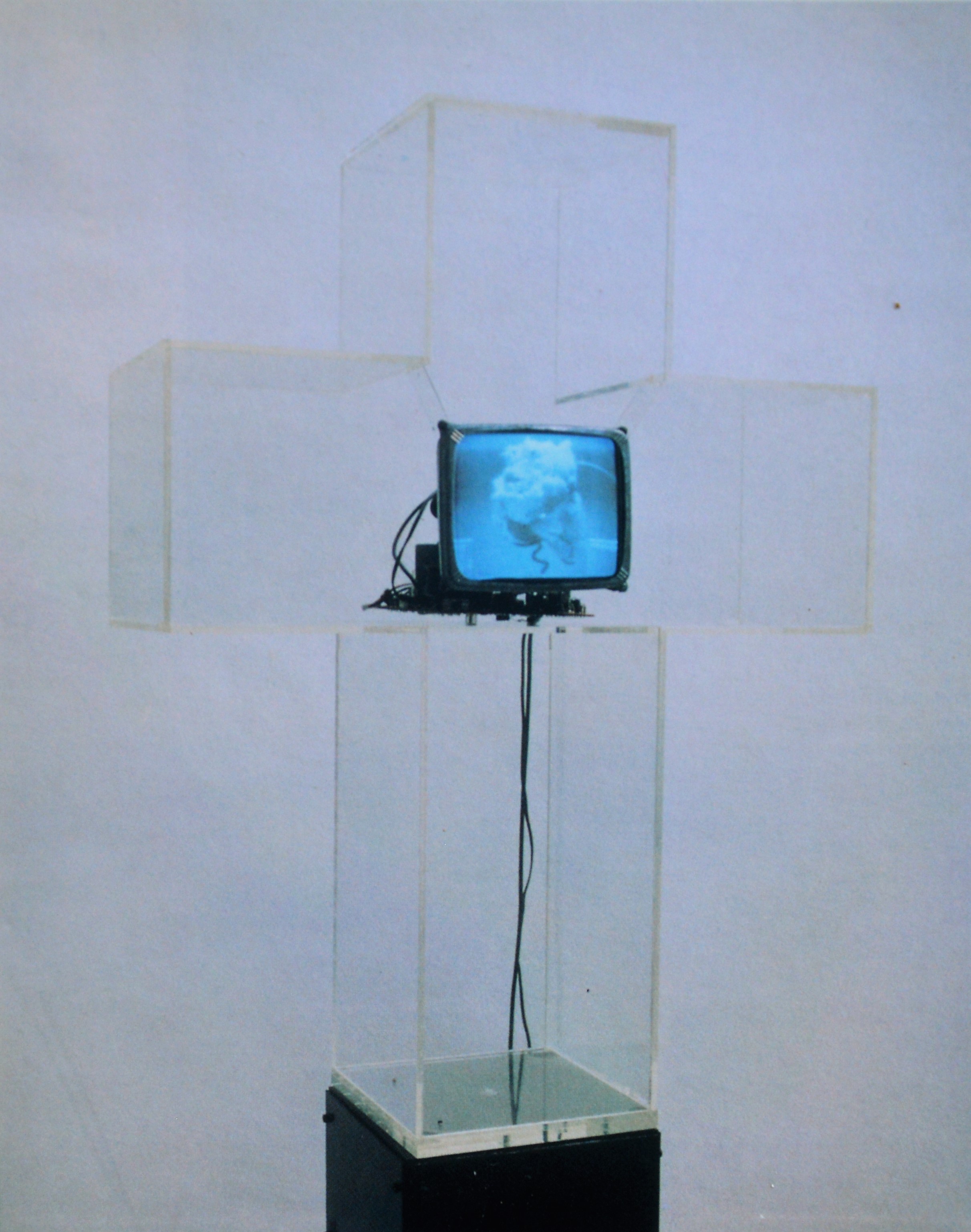
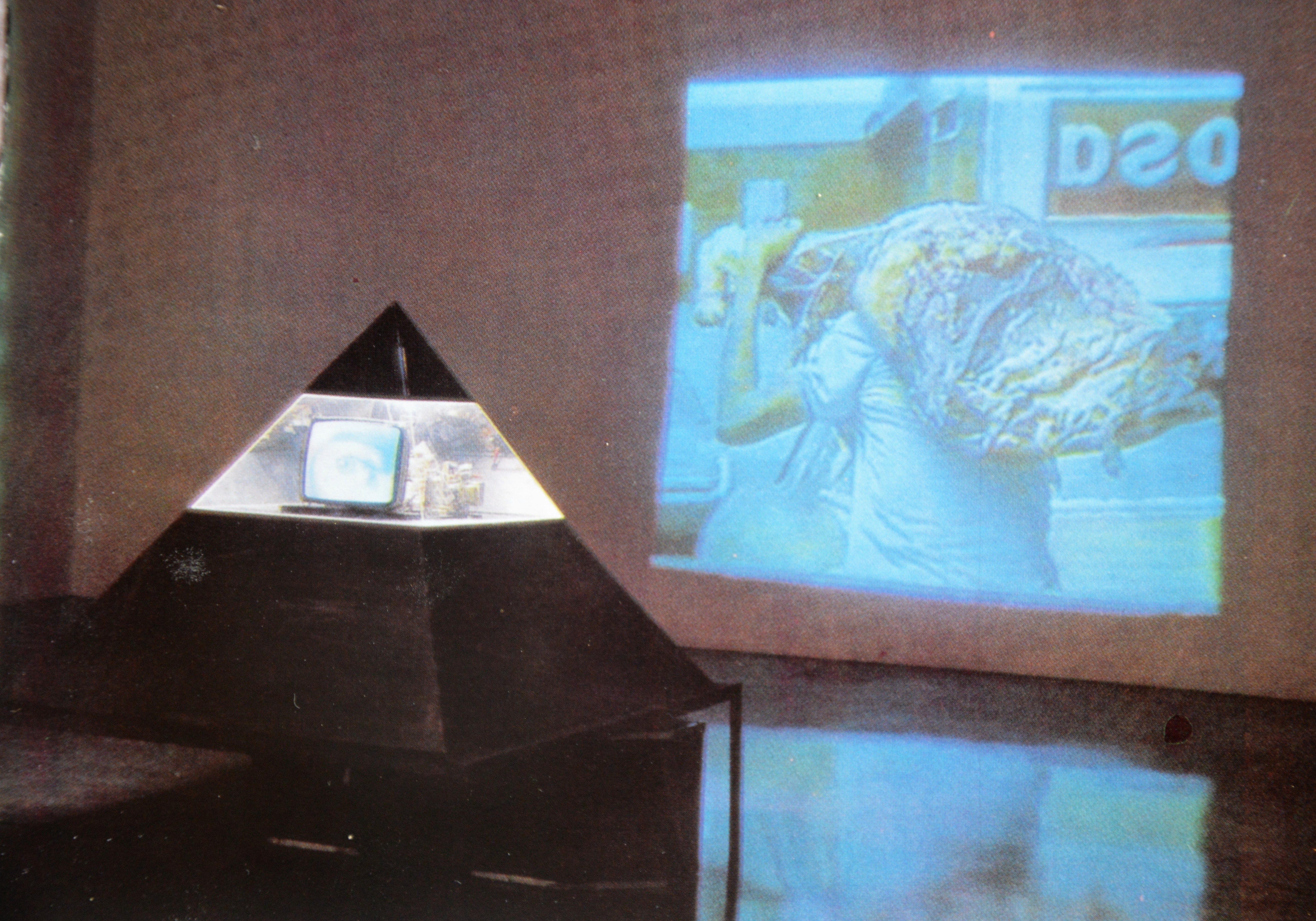
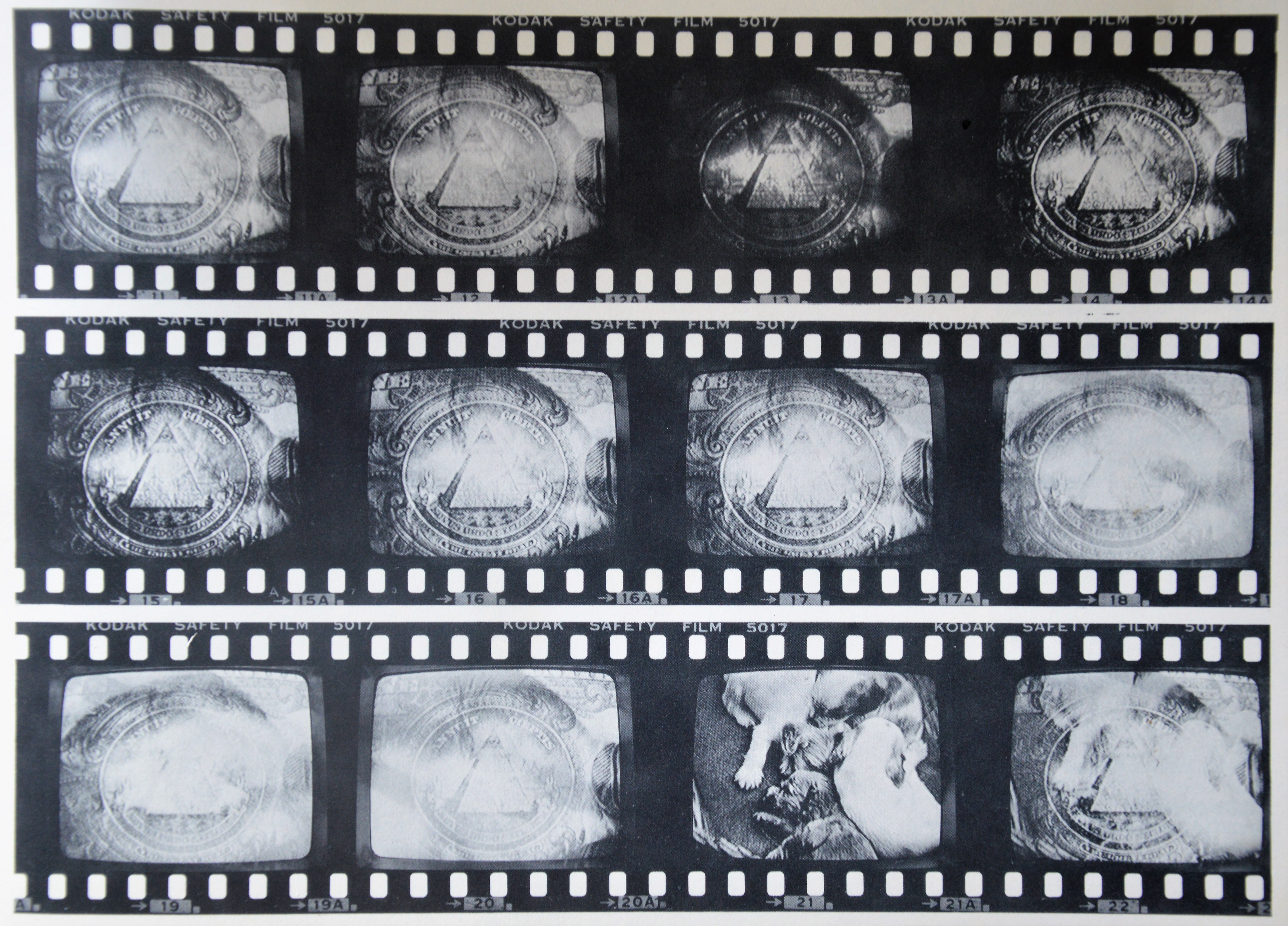
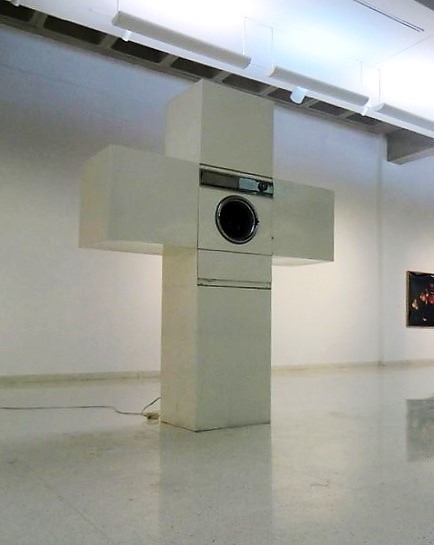
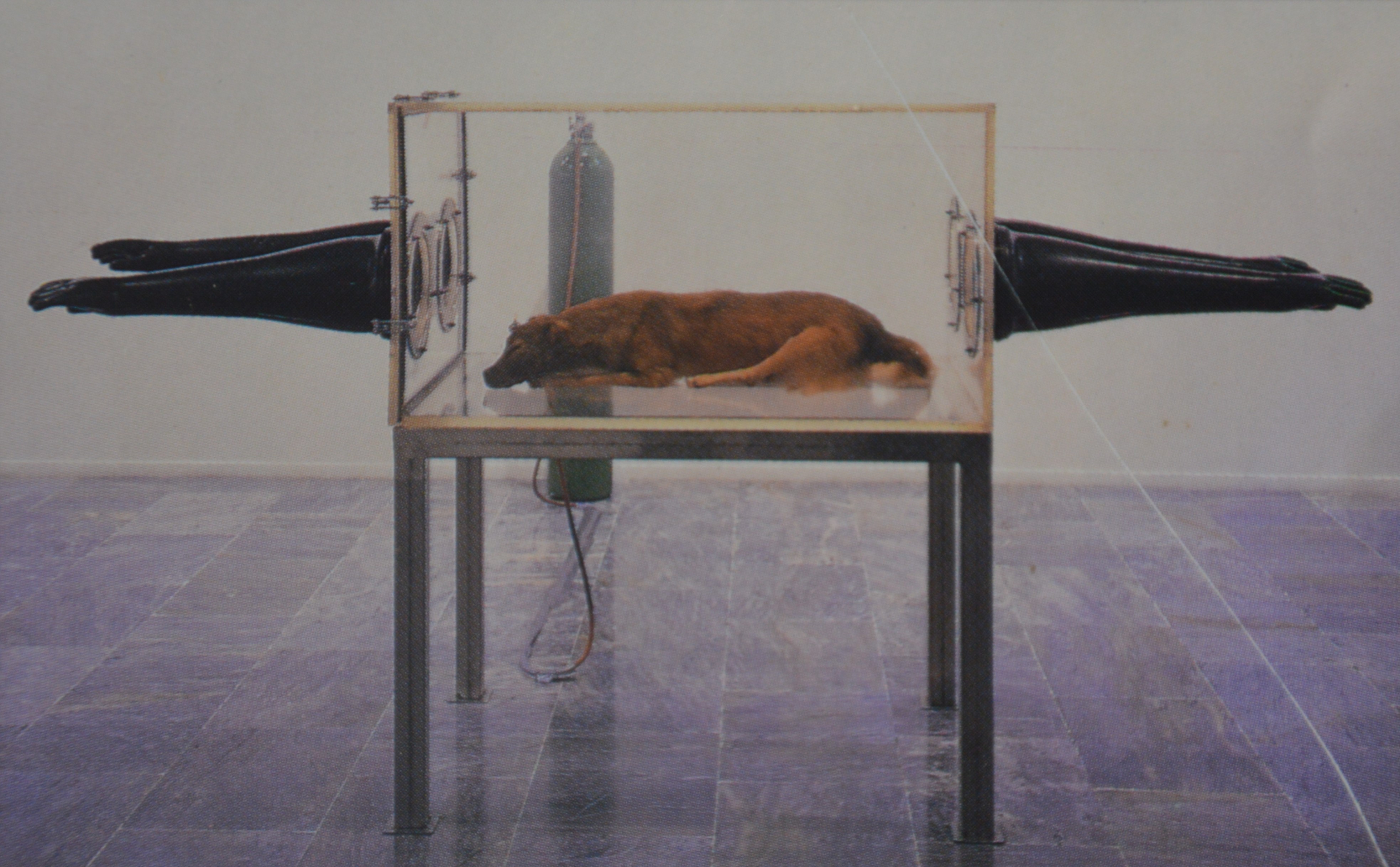


Image 1: José Antonio Hernández-Diez. Salón CONAC. Image 2: José Antonio Hernández-Diez. Sagrado Corazón Video. Images 3–4: José Antonio Hernández-Diez. In God We Trust. Image 5: José Antonio Hernández-Diez. CORP MAQUINIC, MACZUL Venezuela. Images 6–7: José Antonio Hernández-Diez. San Guinefort. Image 8: José Antonio Hernández-Diez.
In the work San Guinefort (1991), a glass vitrine enclosing the embalmed corpse of a dog—which can be touched by the viewer through neoprene gloves inflated by air supplied through specially adapted compressors—the public is able to reach into the box through these reversible gloves and thus touch the fur of the animal’s lifeless body. It was the most striking work in the exhibition. Duque recounts that the artist discovered and documented an old popular European cult from the medieval period consisting of the worship of Saint Guinefort, a greyhound dog-saint, martyr, and healer of sick children. Although this cult had been prohibited for seven hundred years, the legend continued to be cultivated in secret until the end of the nineteenth century. Another of the devotions shown was the work Sagrado Corazón Video, in which the artist fuses the Christian icon of the heart beating outside Christ’s chest with the symbol of the cross into a single volume, presenting a two-hour video of a heart surgery. In conversation with the curator María Elena Ramos in the context of the exhibition El Espíritu de los tiempos, Hernández-Diez reveals his intuitive perspective on the subject of God, making clear that his interest in the biblical God revolves around its conception as a datum that nourished language and served men in the construction of artifices and icons. In this sense, referring to the works Sagrado Corazón Video and Dios en la Casa de Dios (another of the works presented at Sala RG), Ramos adds that the artist “remains within—the—language; he desires, in a very intellectual and modern way, to construct language: video from the icon; the new installation from the ancient cross; conceptual art from the history of religions.” Sagrado Corazón Video was even reviewed internationally, and its image appeared in the October issue of Art News.
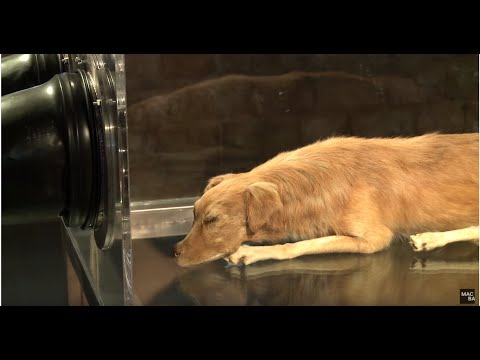
Watch video on YouTube
Also presented in that first solo exhibition, Lavarás tus pecados serves as a metaphor for this biblical verse. It featured a real, working automatic washing machine installed as the central section of a cross, through whose window one could observe a piece of cloth spinning, alluding to the “sacred mantle” turning in the hypnotic cycle produced by the appliance. This first solo exhibition was well received by critics and the public and helped consolidate the artist’s career.
El Espíritu de los tiempos was an exhibition organized by Guillermo Barrios to celebrate the sixtieth anniversary of the Ateneo de Caracas, through which the institution sought to stage an event rooted in the present rather than the survey exhibitions usually customary in such cases. Five researchers with curatorial experience or specialization in contemporary art were invited, each to select an artist and develop a proposition for an exhibition. The result was an interesting exhibition that captured the pulse of local contemporary art at the time. In this context, Hernández-Diez was invited by María Elena Ramos and developed the work Sagrado Corazón Activo, a companion piece to Sagrado Corazón Video. In this second work, however, rather than a video, the transparent cross is activated by a bioengineering system that causes a cow’s heart, immersed in a transparent isotonic solution, to beat. “To collect. To collect plasma, discarded plasma, and transfusion material. Small plastic receptacles to concentrate life. To transmit it. To collect discarded plasma as a symbol: that which stood between death and life”… With these words Ramos refers to this pulsating cow’s heart immersed in plasma; words that might just as well apply to the work A ti también (1992), presented in the sixth edition of the Premio Eugenio Mendoza, which consisted of a transparent device taking the form of a display case or commercial refrigerator used by shop employees to exhibit well-preserved foods. In this refrigerator, a series of blood plasma samples was preserved and displayed.
In 1991, Hernández-Diez participated in the Third Guayana Biennial, where he received the prize in the three-dimensional work category with ¿Por qué a mí?, a sheet of steel reflecting the printed image of the artist, while a megaphone is activated when the image receives the impact of a blow from the spectator with a bat that hangs beside the sheet as part of the installation. In December of that year, he inaugurated the exhibition Venezuela: Nuevas cartografías y cosmogonías at the Galería de Arte Nacional, curated by Luis Ángel Duque. In this context, he presented the work Minamata (1991), in which a video is projected onto a specially designed device over which a large pair of scissors, adapted to a motor, never ceases in its back-and-forth motion. The images projected onto the device contain scenes ranging from simple routines carried out with scissors to dramatic images of people affected by a disorder caused by mercury ingestion. Minamata is the name given to the syndrome produced by this intoxication—a syndrome that, in those years, was beginning to appear in Venezuela as a consequence of the contamination of rivers, especially the Caroní, with mercury resulting from processes applied to gold in order to achieve greater purity.

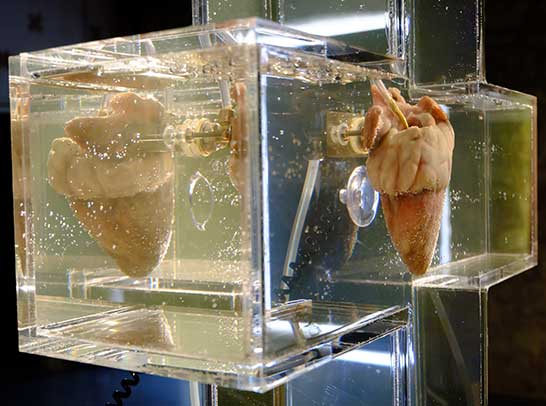
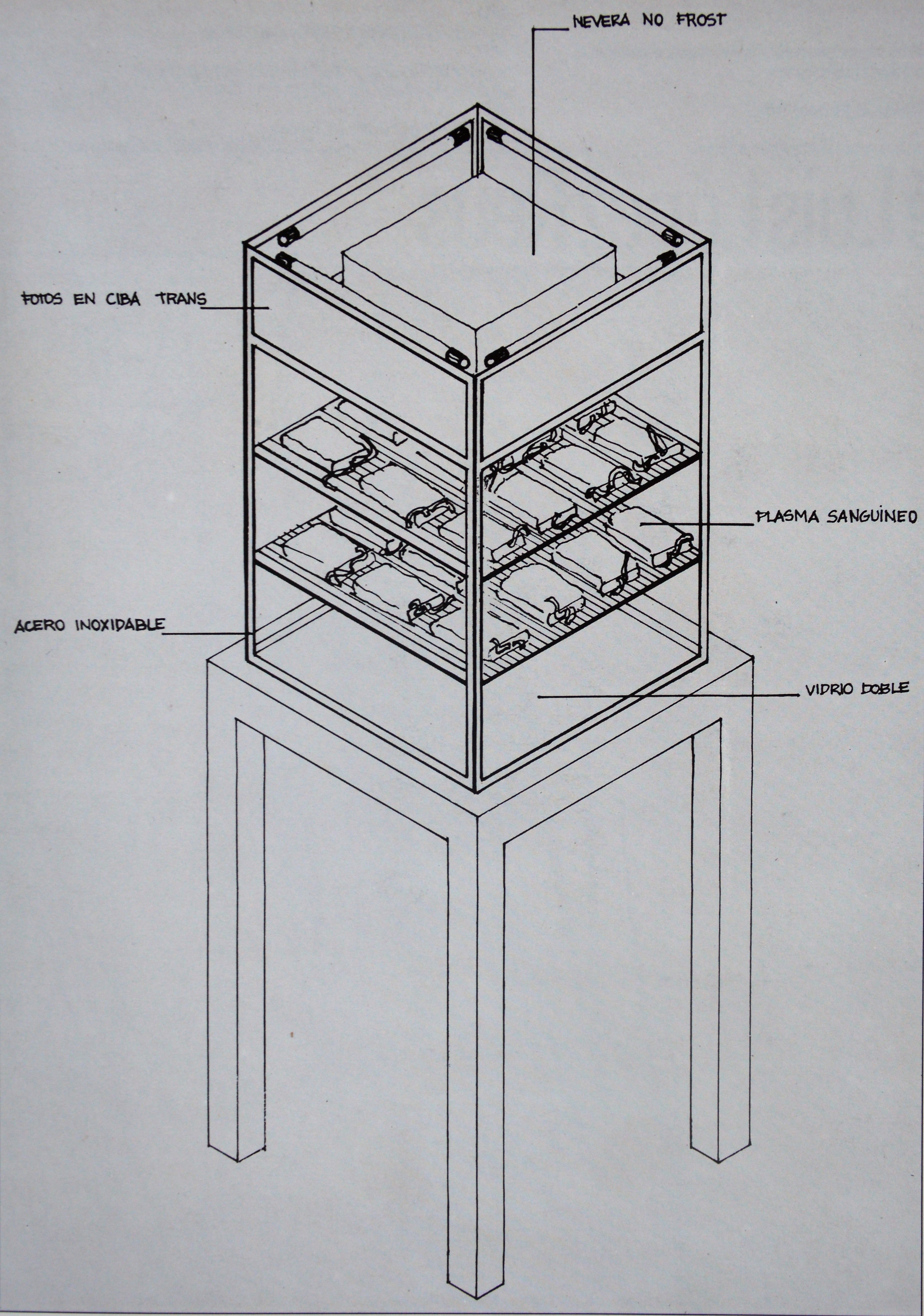

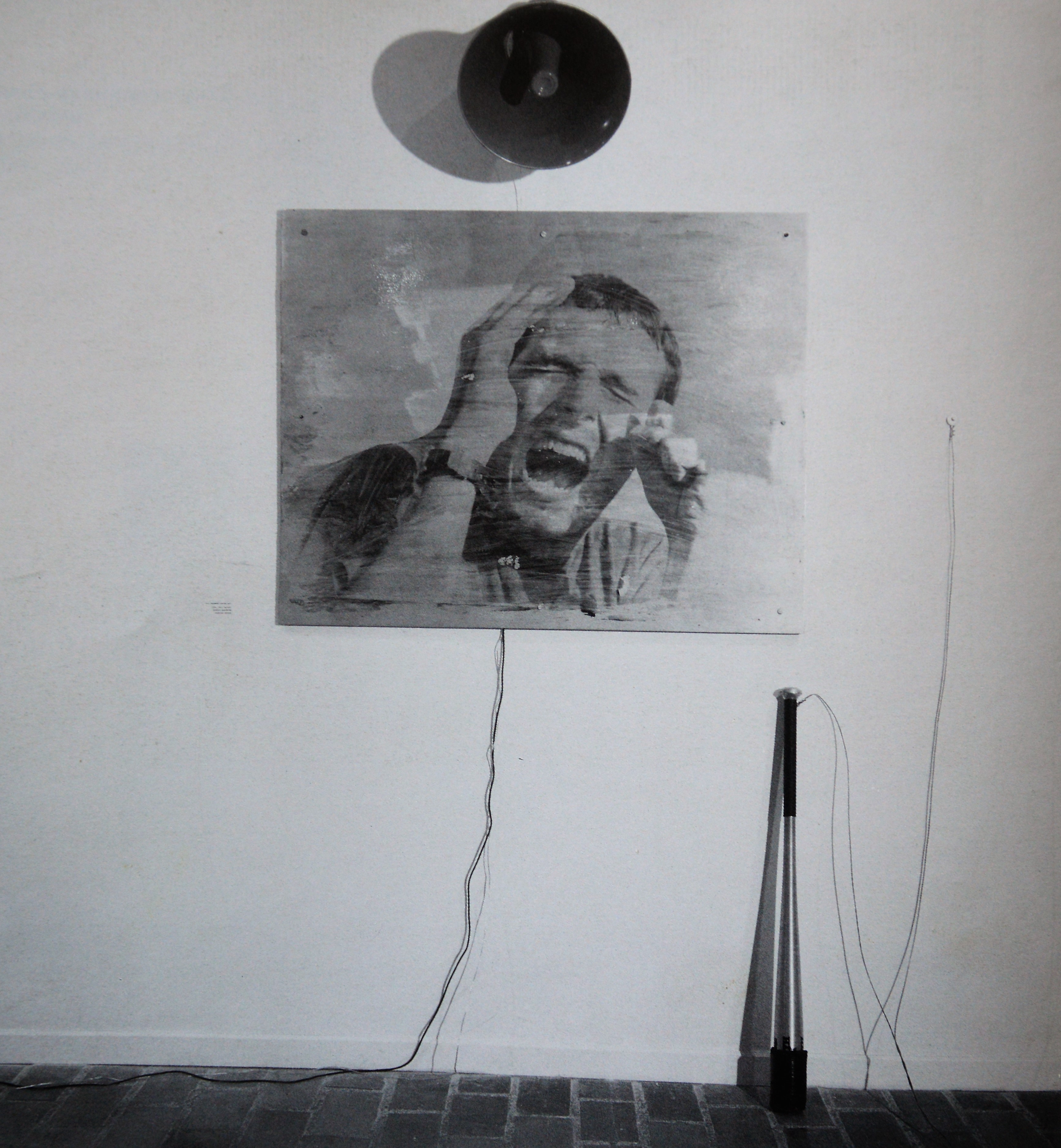

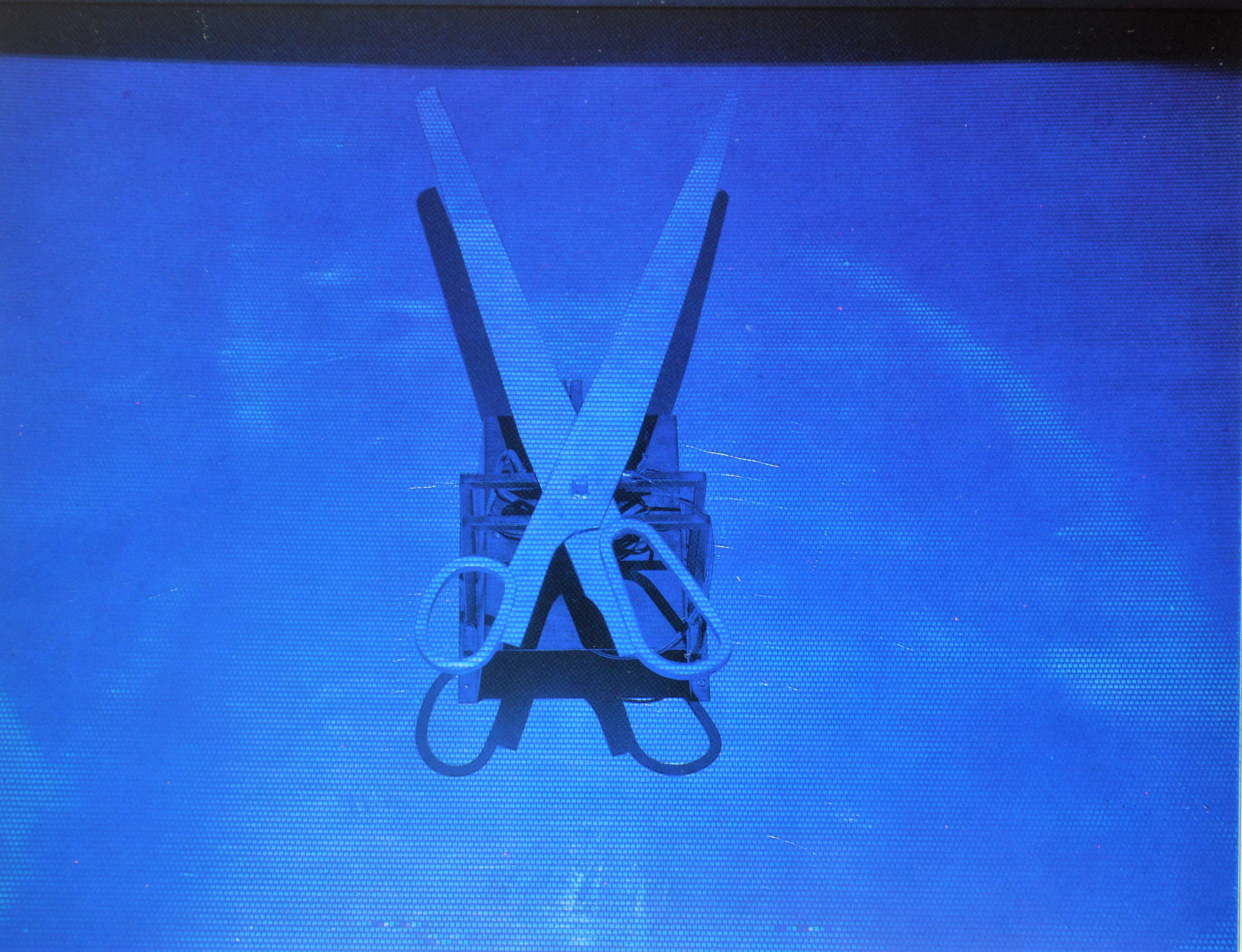


Image 1: José Antonio Hernández-Diez. Sagrado corazón activo, 1991. Image 2: José Antonio Hernández-Diez. Sagrado corazón activo, 1991. Images 3–4: José Antonio Hernández-Diez. A ti también, 1992. Image 5: José Antonio Hernández-Diez. Por qué a mí, 1991. Image 6: José Antonio Hernández-Diez. La caja, 1993. Anteamérica. Image 7: José Antonio Hernández-Diez. Minamata. Images 8–9: José Antonio Hernández-Diez. Vas pa’l cielo y vas llorando, 1992.
The following year, he participated in the exhibition Ante América at the Biblioteca Luis Ángel Arango in Bogotá, a travelling exhibition that was also shown at the Museo de Artes Visuales Alejandro Otero in Caracas, the Queens Museum in New York, and Yerba Buena Center for the Arts in San Francisco. It was curated by Gerardo Mosquera, Carolina Ponce de León, and Rachel Weiss. Ante América constituted, in the words of Mónica Amor in the catalog of the exhibition Sin Fronteras, “a gesture of semantic reconfiguration with respect to the category of ‘American art’ (…) a political manifesto that sought to vindicate the other Americas of the continent.” In Ante América, he presented La caja (1991), a video installation in which street children are projected onto a transparent plastic screen attached to a cardboard box, where, owing to the way the artist filmed them, the children appear to fall into the box as though they were refuse.
He was also invited by curator Roberto Guevara to participate in the First Biennial Barro de América, inaugurated at the Museo de Arte Contemporáneo de Caracas in August 1992. In that event, he participated with the work Vas pa’l cielo y vas llorando, in which, from a mound of earth simulating a grave, images of children “dressed in their Sunday best” emerge, projected in such a way that they appear slowly to ascend toward heaven. A year later, the same work was shown again at the Ateneo de Valencia as part of the First National Biennial Gran Premio Dimple 15 años, organized by Fundación Calara. “The work proposes itself as an act of redemption for the first victims of planetary or national injustices, whether in Bosnia, in Brazil, or in Venezuela,” commented Luis Ángel Duque, curator of that biennial.
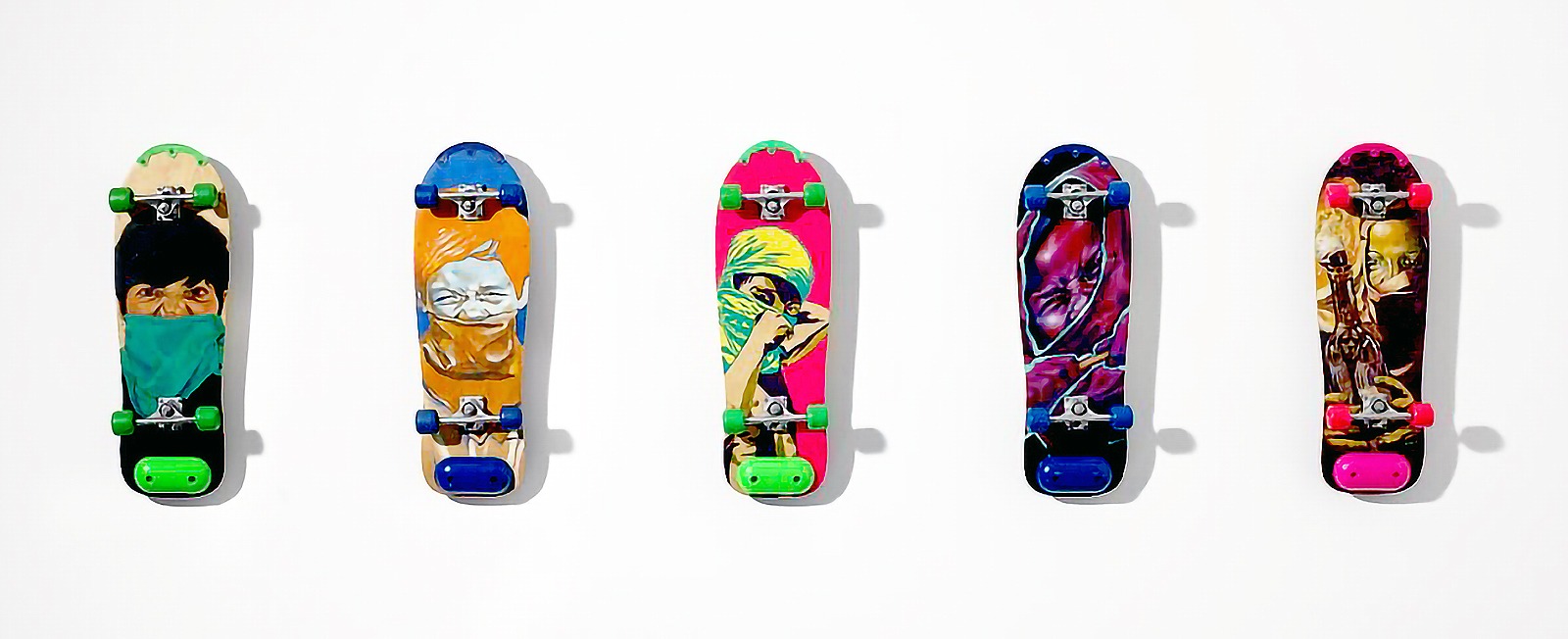
The following year, in October, the Museo de Arte Contemporáneo organized the First Pirelli Salon of Young Artists, an artistic encounter that would go on to have seven editions and a major impact on the country’s visual arts scene. This first edition was the only one whose call was exclusively by invitation. The work presented by Hernández-Diez consisted of a set of thirty skateboards whose decks were painted with portraits of masked children. Ruth Auerbach, curator of that first edition of the Salón Pirelli, comments in the catalog on the work Vehículos Perfectos: “It alludes to the precariousness and violence in which children and adolescents move through urban sectors, to the fatality of an uncertain destiny.” The work proved to be one of the most celebrated by critics in that salon and one of the most remembered. A couple of years later, in December 1995, one of these skateboards appeared on the cover of the Mexican magazine Poliéster. There, guest editor Jesús Fuenmayor, in his article “Al final de la edad de la inocencia,” maintained: “it could be asserted that the acceptance of Hernández-Diez’s work has opened up a tolerance in the reception of art in our country, where previously any minimal sign of the avant-garde was rejected (or embraced) as an imported product.” Fifteen of these Vehículos Perfectos were shown again at the Galería de Arte Nacional in the context of the exhibition La invención de la Continuidad in 1997, curated by Ariel Jiménez and Luis Pérez Oramas. The latter comments in that exhibition catalog: “(…) landscape as a trama of human dealings, as a worn field, stained by an incessant economy of exchanges, uses, and daily rites, which José Antonio Hernández-Diez declines in the muted register of his works: inadvertent, violent, affective, indifferent gestures that frame, originate, and conclude every formalism.”

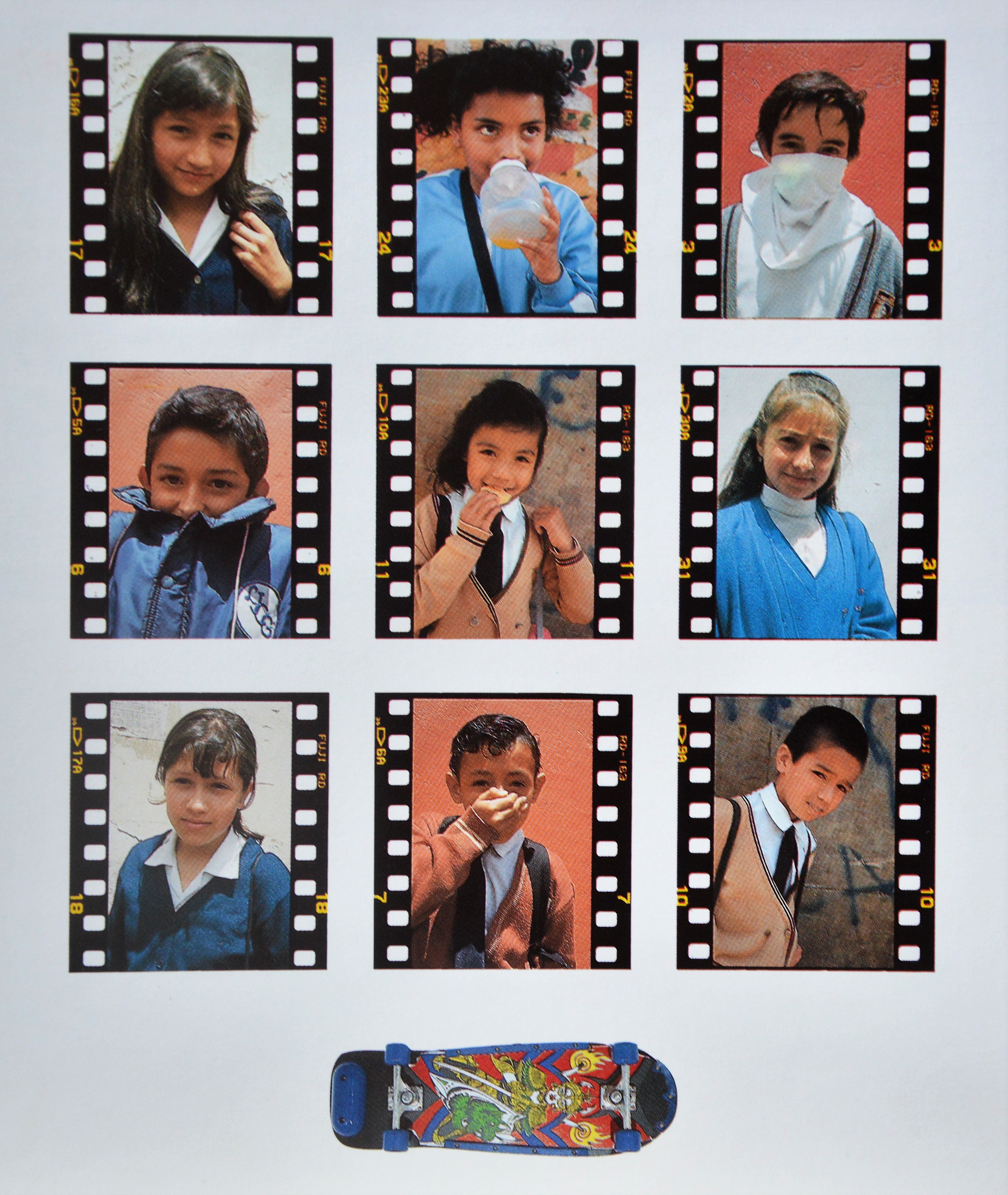


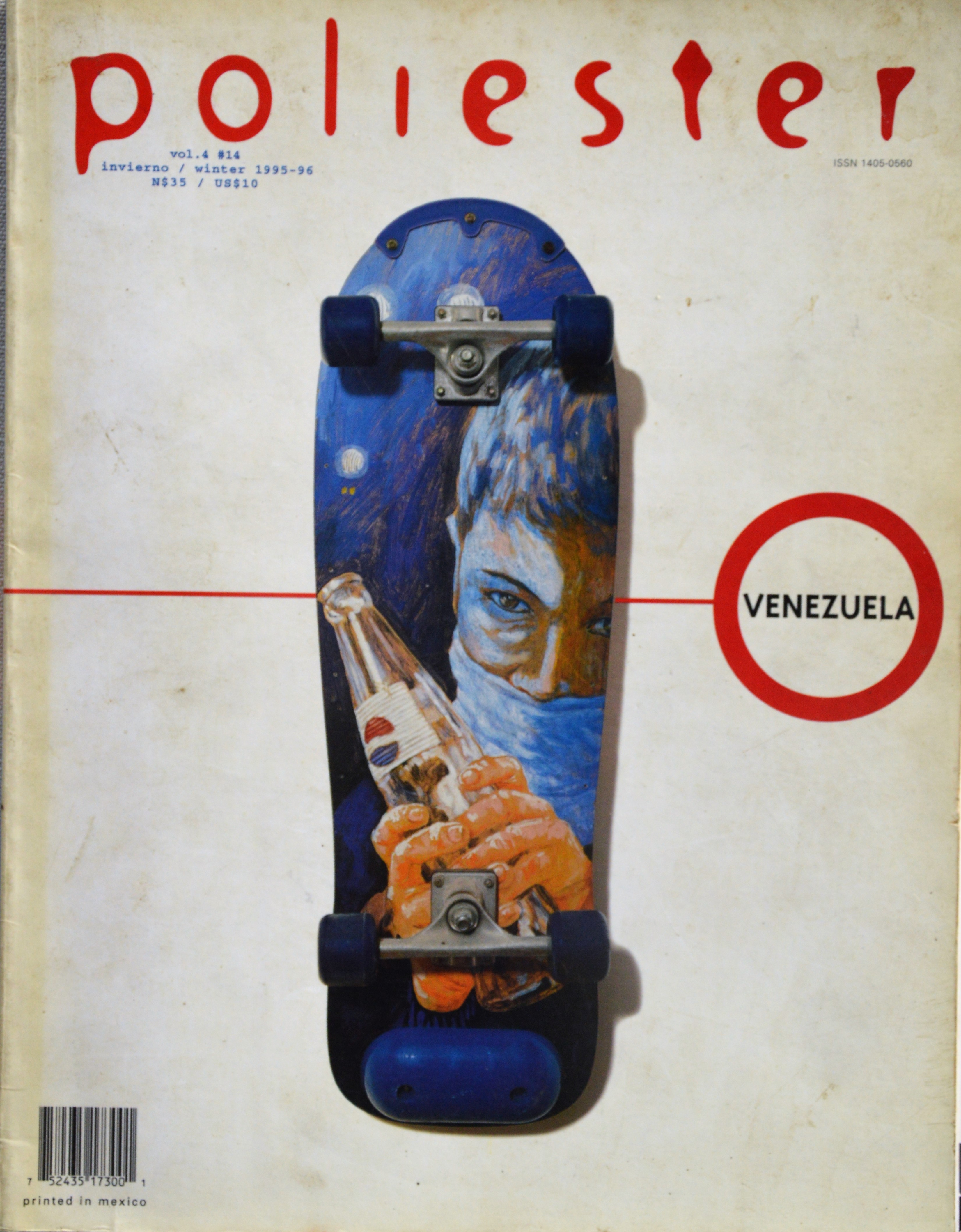
Image 1: José Antonio Hernández-Diez. Portada Estilo 13, 1992. Image 2: José Antonio Hernández-Diez. Vehículos perfectos. Catálogo Pirelli. Image 3: José Antonio Hernández-Diez. Vehículos Perfectos, 1993. Image 4: José Antonio Hernández-Diez. Vehículos perfectos. Detail. Image 5: Portada de Poliéster, 1995.
Simultaneously with the Salón Pirelli, the artist participated in the exhibition CCS-10, one of the most ambitious curatorial initiatives in the country at the time, held at the Galería de Arte Nacional under the curatorship of Álvaro Sotillo. In this context, he presented El gran patriarca, a pool table on which a prosthetic hand is positioned to hold a cue, activated by a robotic arm that makes it oscillate. It is a metaphor for the potential substitution of the body by robotics, and for the instrumentalization of the prosthesis as a substitutive bodily element, making the work an artifact of reflection on the potential of the body itself, placed in a situation at once absurd and premonitory.
Shortly thereafter, he was invited to the exhibition Aperto ’93: Emergency/Emergenza at the 45th Venice Biennale, organized by curator Helena Kontova within that edition of the biennial directed by Achille Bonito Oliva. There, the selected work was Vas pa’l cielo y vas llorando. Also in 1993, he participated in the exhibition The Final Frontier at the New Museum in New York. In that exhibition, organized by curator Alice Yang together with critics Lisa Cartwright and Celeste Olalquiaga, the work San Guinefort was shown, where the dead dog in its glass case, to be caressed with rubber gloves, caused a sensation, being regarded as an unsettling and mysterious work and described by critic Elizabeth Hess as the central work of the exhibition. Also in those years, he participated in the Fifth Havana Biennial (1994) and in the first Gwangju Biennale in South Korea (1995).
He took part in the important exhibition Cocido y crudo, invited by curator Dan Cameron to the Museo Nacional Centro de Arte Reina Sofía in Madrid. In that context, he presented La Hermandad (1994), a video installation composed of three videos playing on three televisions, fried pork skin forming the decks of the skateboards, and rubber-and-metal wheels screwed onto them. In one of the videos, the pork-skin skateboard is fried; in the next, it is ridden on the street; in the third, it is devoured by three stray dogs. “In this way, these processes, which should be diachronic—that is, unfold continuously over time—are separated, yet simultaneous, synchronic,” comments researcher Iris Peruga in an article she wrote on the artist. The composition is completed by twelve skateboards hanging from a metal bar, like cuts of meat in a butcher’s shop. Months before this important exhibition, the artist had begun to be part of the stable of artists represented by Sandra Gering Gallery in New York, where, that same year, he participated in a group exhibition. Since then, he has held four solo exhibitions at that gallery, in 1995, 1996, 2002, and 2005.
In 1995, the artist held a solo exhibition at Galería Camargo Vilaca in São Paulo. The following year, he participated in the exhibition of new acquisitions from the Gilberto Chateaubriand Collection at the Museu de Arte Moderna do Rio de Janeiro. He also took part in the exhibition Bis at the same Galería Camargo Vilaca, where he would present another solo exhibition in 1999. Later, once the gallery had changed its name to Fortes Vilaca, it mounted another exhibition in 2004. He also participated in Universallis, the 23rd São Paulo Biennial in 1996, the same year he took part in the exhibition Defining the Nineties at the Museum of Contemporary Art (MOCA) in Miami.
In June 1995, his works Annabel Lee, Los sueños no duran más de cinco minutos, and Sagrado Corazón Video were exhibited at MACCSI as part of the exhibition Una visión del Arte contemporáneo Venezolano / Colección Ignacio y Valentina Oberto. In November 1996, he participated in Sin Fronteras / Arte Latinoamericano Actual, an exhibition that brought together representative works by leading Latin American artists, drawn from the most important private collections in Caracas. The selected artists, in the words of the exhibition’s curator Miguel Miguel, stood out for their “valuable contributions to the creation of new languages for the plastic arts of the West.” In this context, four works by the artist were presented, among them Sin título (desechos de la hermandad) from 1995, consisting of four transparent boxes containing residues from the chicharrón skateboards used in the video installation La Hermandad (1994), along with four photographs. Another of the works shown was X-I (1995), a video-assemblage composed of a television displayed, like a freshly purchased French loaf, partially emerging from a paper grocery bag. Here, the device of tightly closing the frame around the principal motif generates an ambiguous form that appears like a penis expelling a stream of urine, bringing into play the suggestive and provocative power characteristic of many of the artist’s works—an enigmatic inventiveness that invites the spectator to imagine what may not even be there. In that same year, 1996, he presented a solo exhibition in Caracas at Galería Espacio 204. There, the images from the series Sense titol (1996) could be seen for the first time, featuring enlargements of plastic children’s dolls that the artist had bitten. A copy of this series forms part of the MACBA collection. In 1997, he participated in the exhibition In Site San Diego 97, in which a piece of furniture was instrumentalized as a giant marimba, activated by striking it with a bat.

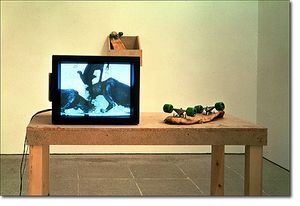

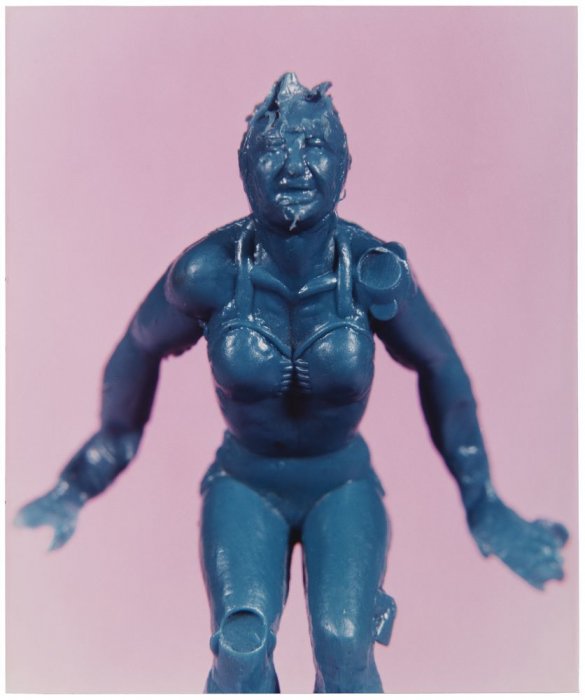
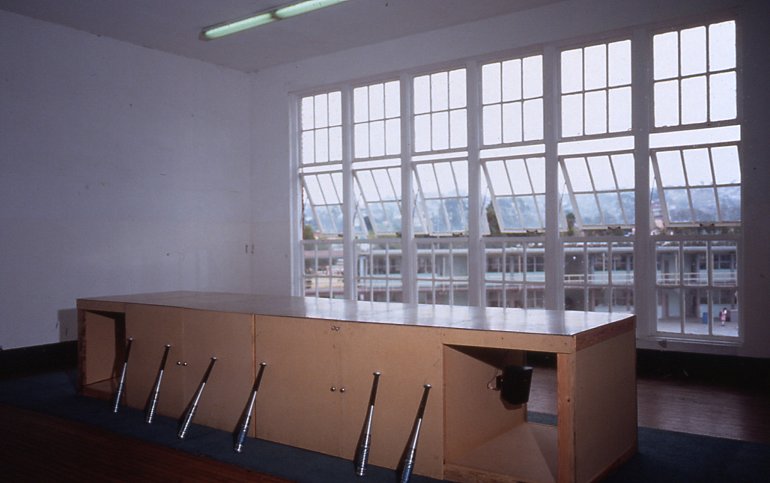

Images 1–2: José Antonio Hernández-Diez. La hermandad, 1994. Images 3–4: José Antonio Hernández-Diez. La hermandad, 1994. Detail. Image 5: José Antonio Hernández-Diez. Sense Titol. Image 6: José Antonio Hernández-Diez. In site. San Diego, 1997. Image 7: José Antonio Hernández-Diez. Ceibó, 1998. Image 8: José Antonio Hernández-Diez. S/T, 1998. Image 9: José Antonio Hernández-Diez. Soledad Miranda 2, 1998. Image 10: José Antonio Hernández-Diez. Soledad Miranda, 1998. Image 11: Cover of the exhibition catalog at Sala Mendoza.
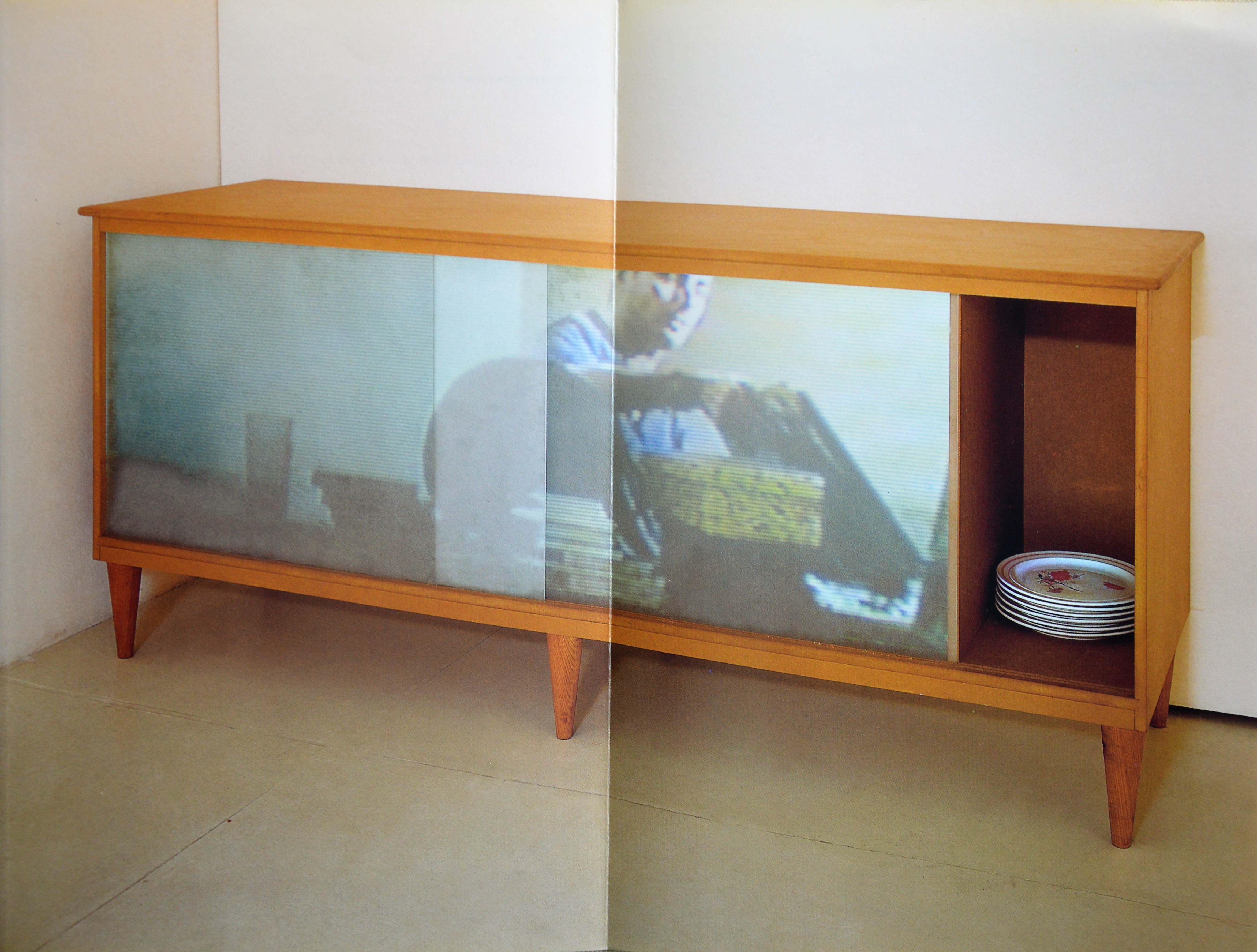
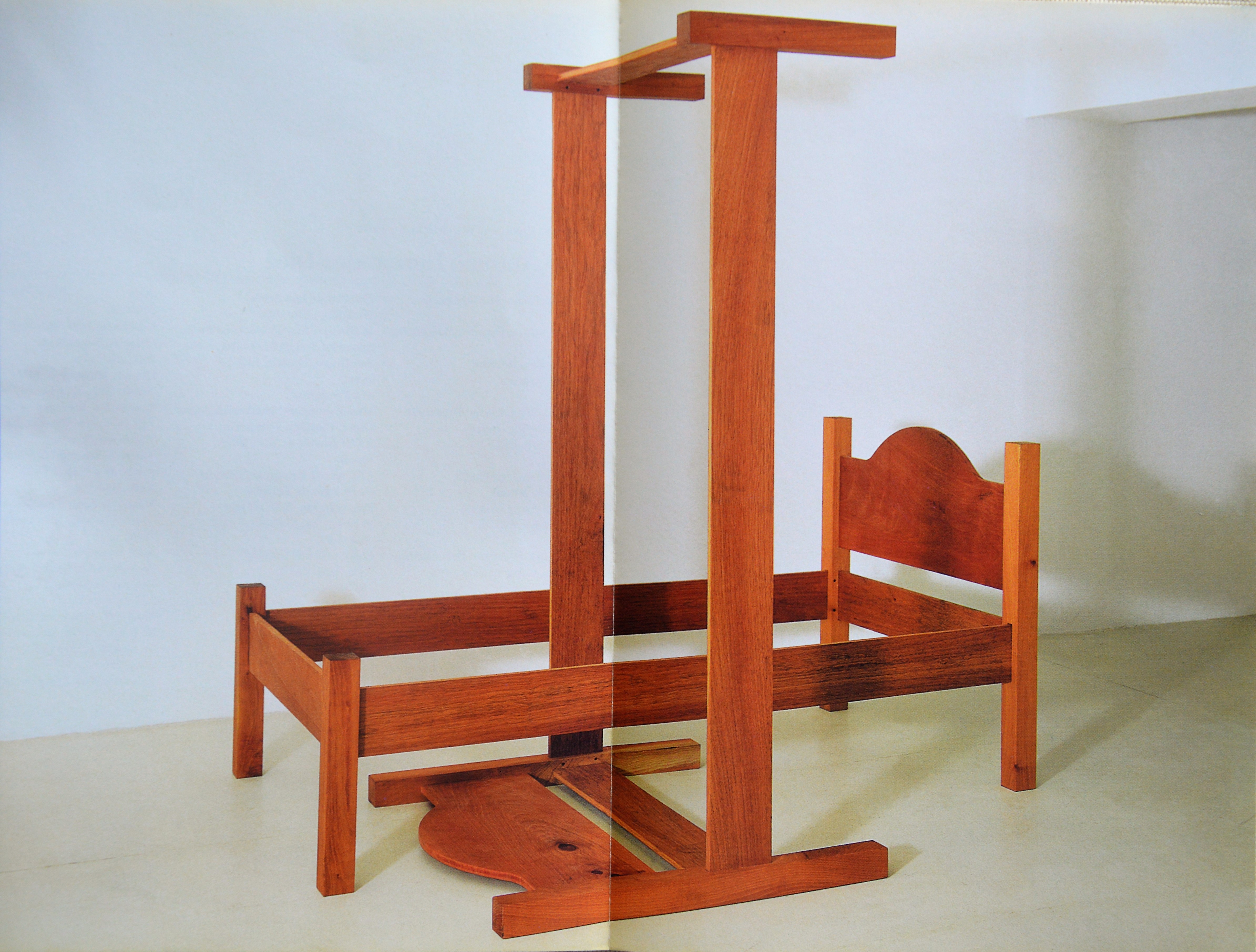
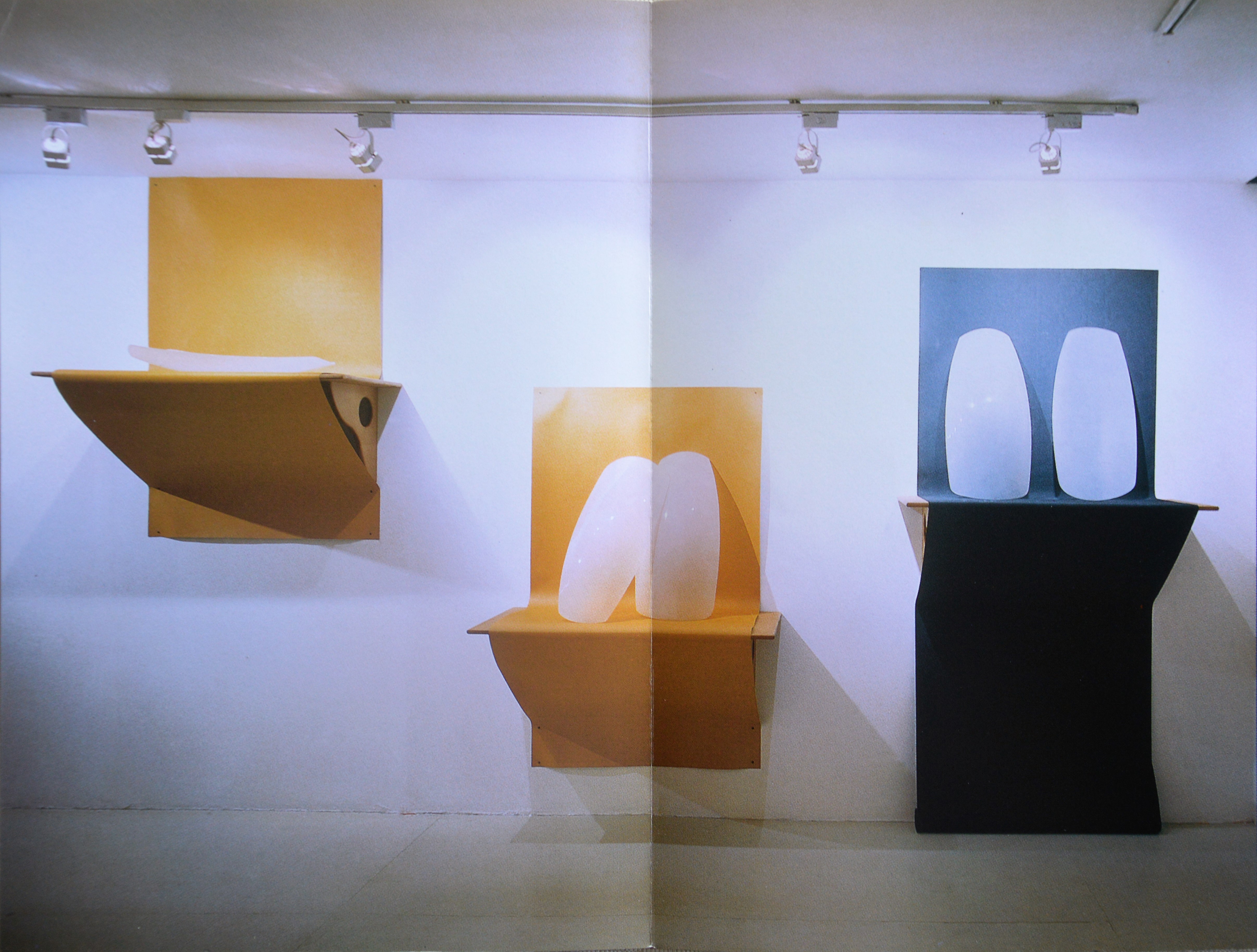
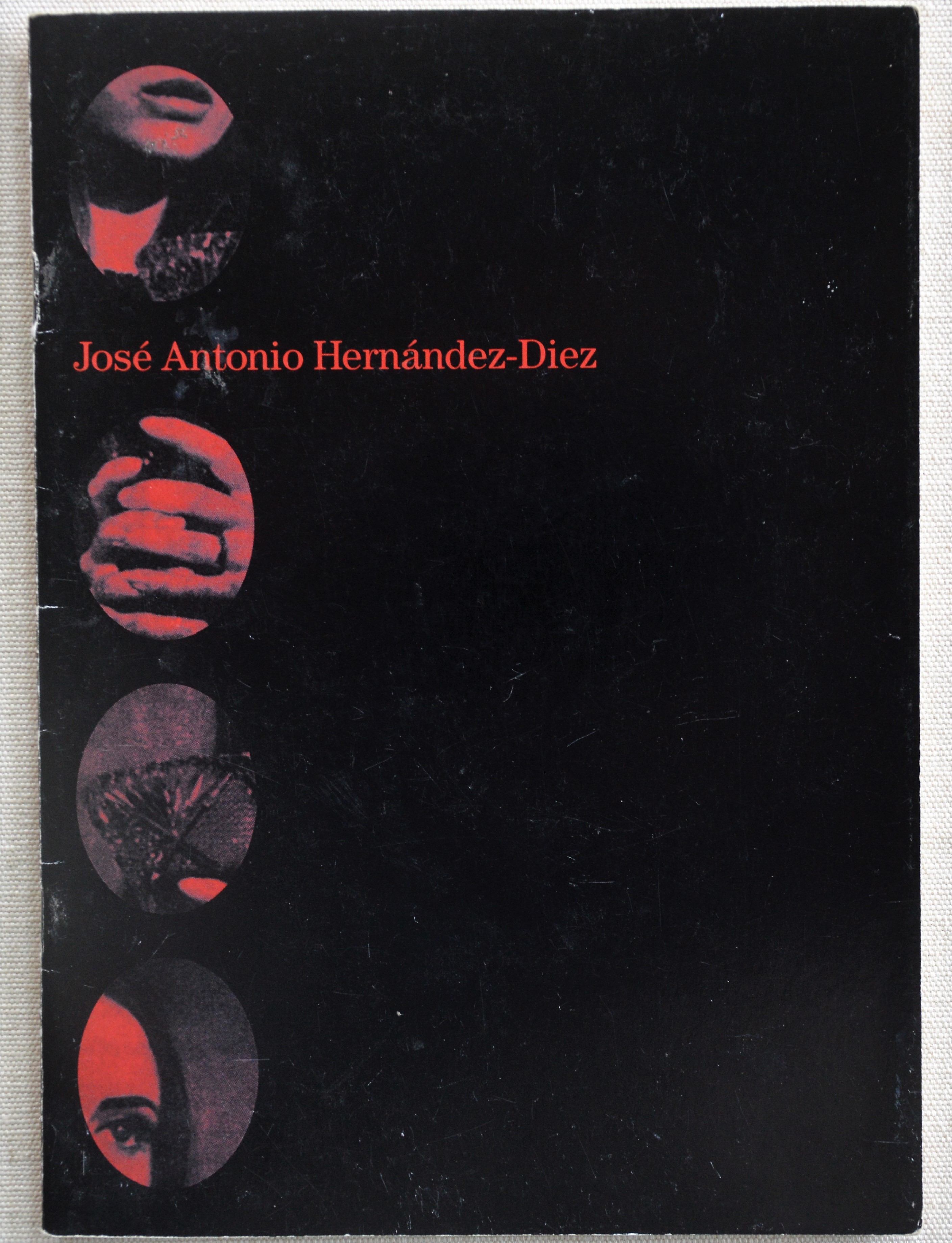
At the beginning of 1998, he presented the exhibition José Antonio Hernández Diez at Sala Mendoza, curated by Cecilia Fajardo-Hill with texts by Carlota Álvarez Basso. Four works were exhibited: the installations Soledad Miranda I and Soledad Miranda II, the first a counter, the second three shelves, all completely covered with yellow industrial sheets of sandpaper. Resting on these pieces of furniture were oversized acrylic false nails. Soledad Miranda (Seville, 1934 – Lisbon, 1970) was a Spanish B-movie star who embodied the stereotype of the erotic myth of the femme fatale and became a cult actress for many after her early death in a car accident. Also shown was Ceibó (1998), an installation consisting of a video in which the artist, in a disorderly manner, puts away a few belongings; the looping video is appropriately assembled within a piece of furniture of the familial ceibó type, giving the proposition a poetic charge. Also shown was the sculpture S/T (1998), in which two interlocked children’s beds become a useless yet evocative piece of furniture.
Around this time, Hernández-Diez began dividing his life between Venezuela and Spain and held his first solo exhibition in Madrid at Galería Elba Benítez in 1997. He would again present solo exhibitions there in 2002 and 2006. In that city, he also participated in the exhibitions A vuelta con los sentidos at Casa de América and Eztetyka del sueño at the Palacio Velázquez in 1999 and 2000, respectively. Also in 1997, he entered the collection and participated in the exhibition Colección La Caixa at La Caixa in Barcelona. In another iteration of that collection, he exhibited the following year at the Palacio de los Duques de Gandía in Granada. The artist settled in Barcelona, and there, the gallery representing him was Estrany De La Mota. At that venue, he exhibited solo in 1999, 2004, 2007, and 2016, and participated in various group exhibitions. Also in Spain, he exhibited solo at the Centro Galego de Arte Contemporánea (CGAC) in Santiago de Compostela in 2000, at Galería Javier López in Madrid in 2002, and at AD HOC in Vigo in 2003.
In 2000, Hernández-Diez was selected to participate in the prestigious biennial The Carnegie International in Pittsburgh. That same year, he participated in the exhibition Ultra Baroque: Aspects of Post-Latin American Art at the Museum of Contemporary Art San Diego, a traveling exhibition that was also shown at the Modern Art Museum of Fort Worth, Texas, and the San Francisco Museum of Modern Art in California. During 2001, he participated in exhibitions in New York and Miami, as well as in Italy, Portugal, the Netherlands, Switzerland, and France.
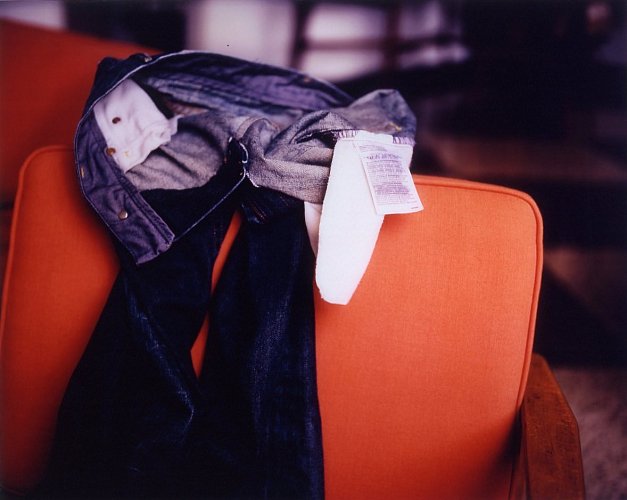
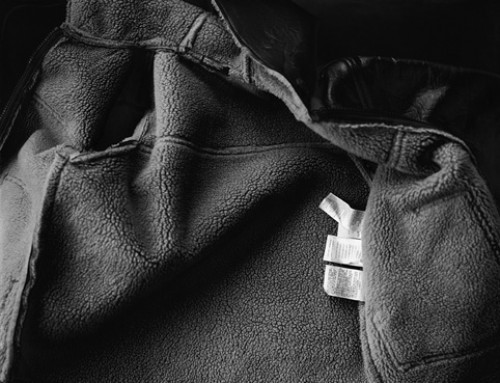
Between 2002 and 2003, his retrospective exhibition took place, shown at the Palm Beach Institute of Contemporary Art in Miami, the Institute of Visual Arts (INOVA) in Milwaukee, SITE Santa Fe in Santa Fe, and the New Museum in New York. In 2005, his work was featured in the prestigious and widely circulated directory of contemporary artists Art Now, volume 2, edited by Uta Grosenick for TASCHEN. In that volume, the artist is quoted as saying: “I do not seek to transgress the meaning of things; I simply want to show it, to make it manifest, like the washing instructions on T-shirts that appear when you turn them inside out.” This statement takes form in the Cuidados series (2004), a group of large-format photographs showing garments turned inside out so that their labels are emphasized. Also notable in these years are the works in the Pensadores series (2000–2008), in which athletic shoes are arranged in vertical rows in order to organize the letters appearing on them as brand symbols and thus form words, the names of well-known figures and thinkers: Hegel, Hume, Jung, Kant, Marx, Kafka, and Mao. “Hernández-Diez raises with ironic impartiality the question of whether contemporary social coexistence is defined by shared ideas and values or whether it is instead based on brands and McDonaldization on a global scale,” writes Jens Asthoff in the aforementioned directory. In 2003, he participated in The Structure of Survival, the 50th Venice Biennale, curated by Carlos Basualdo.

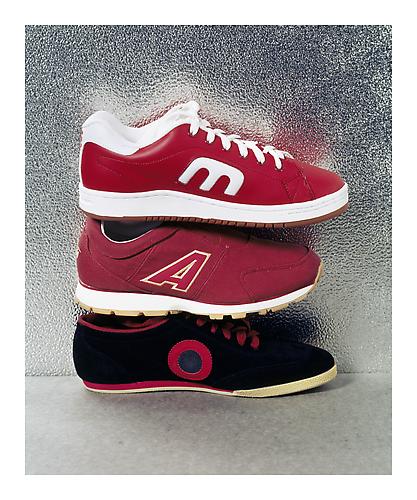


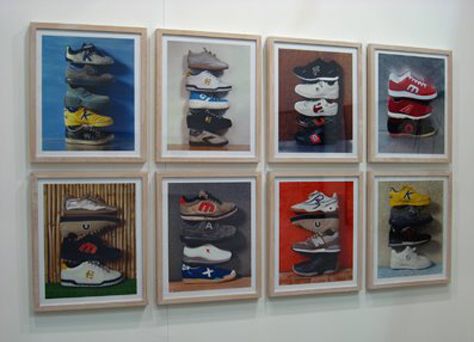
Images 1–3: José Antonio Hernández-Diez. Cuidados, 2004. Images 4–7: José Antonio Hernández-Diez. Pensadores, 2000–2008.
In 2005, he presented the exhibition José Antonio Hernández-Diez at Sala Mendoza, his most recent solo exhibition in Venezuela. Among the works exhibited on that occasion were several from the Cuidados series and Autorretrato con franela, an apparently absurd artifact in which one of the artist’s worn T-shirts is shaken by a movement produced by its being subtly tied with nylon thread to a precarious mechanism made up of an old bicycle and a household blender. This work was acquired by the Mercantil Collection and later formed part of the exhibition Jump Cuts. Venezuelan Contemporary Art at the Americas Society in New York in 2005. In Caracas, after the exhibition at Sala Mendoza, some of his works have appeared in several group exhibitions, the most recent being Anti Ready-Made at Galería Espacio Monitor, where works from the Chiviados series were shown, part of a body of works exhibited in Barcelona in which there underlies a mordant commentary on Minimalism, instrumentalizing the use of broomsticks adapted into lamps formally arranged in the manner of Dan Flavin’s works. No temeré mal alguno was the title of the artist’s most recent retrospective exhibition. Held at MACBA in 2016, the exhibition combined works from the 1990s with a project produced specifically for the occasion.
We conclude by recalling that there are many works and many contexts in which the artist has exhibited that we have not been able to mention. This is a trajectory spanning three uninterrupted decades, a trajectory that has exercised an important influence on the transformation of the conventionalisms governing the reception of art in Venezuela, a trajectory that coincides with a stellar moment in the development of our cultural field of the visual arts, as is reflected in this article through the names of the personalities, institutions, and local exhibitions mentioned. The task of writing on the work of this artist, on his biography, on the implications of his propositions in context, and on his contribution to the understanding of the dialectical transformations operating in contemporary art from the end of the last century to the present remains an important pending task, something that must be done.
José Antonio Hernández-Diez’s contribution has been extraordinary, for there is no doubt that, beyond what has been said here, he is one of the protagonists of the shift in perception that has taken place with respect to Latin American art, which, as we know, was long classified as derivative, mimetic, belated, not fully inserted within the Eurocentric model, and accompanied by a historical record that, until the 1990s, granted little consideration to its specificity—or at least to the impact it may have had on the international scene beyond isolated individual cases. Although much remains to be done, and although Venezuela in particular has experienced a regression, since those years the situation has begun to change internationally, and there has been a reconsideration and resignification of the development of avant-garde artistic movements of the 1950s and 1960s, especially in Argentina, Brazil, Mexico, and Venezuela. The insertion of these discourses into the narratives that make up the history of art in recent decades has been accompanied by the emergence of increasingly relevant figures, artists whose works, elevated within international art circuits, respond to strategies of production and circulation proper to globalization, while always preserving and bearing a dialectic in relation to their countries of origin. José Antonio Hernández-Diez is one of the first paradigmatic figures in this sense. An indispensable one.
Javier León is a visual artist and art researcher. Follow him on Instagram: @javierleonccs
Originally published in Revista Estilo on Feb 21, 2021. This English version appears on EL CONSULADO with permission from the author.