Luis Salazar: “4 Kilos of Gego, 1 Liter of Cruz-Diez, 6 Tablespoons of Alejandro Otero”
“Another thing I like to work with in my pieces is the anti-monumentality of the work. That is why they go without stretchers, and many times what should go on the wall goes on the floor, and vice versa: zero frames, zero altars, zero pedestals. More than a finished product, I seek to show the process, to gesture toward the social, political, and economic situation.”
— Luis Salazar
Luis Salazar (Caracas, 1968) is a genuine revisionist of many of the most effervescent tendencies of international art in Venezuela. One of the most emblematic figures in the country’s contemporary art since the 1990s, he is the author of a body of work—and the bearer of an attitude—that makes him an artist of lasting significance. Yet he remains insufficiently known internationally.

Luis Salazar by Javier León.
It is no small challenge for the following lines to convey the relevance of a powerful practice that has developed successfully over three decades within a local panorama that has itself been displaced, as the republic has progressively closed in upon itself and more than seven million people have emigrated, including many from the intellectual sphere of the arts.
Salazar’s works are an effective response—not to a particular artistic tendency or to a specific artist, though at moments to these as well—but to a cultural field, to a system. They are an interpellation of reality, of the order of the world. This aesthetic is founded on displacement, in the sense of making works from contexts situated at the margins of centers of international influence, such as our own in Caracas: a displaced context. And beyond that, it means developing a proposal within it that differs from local practices and conventions.
When we say that this body of work constitutes an effective response, we mean that, in addition to responding to the country’s specific socio-political situation, it also offers a hybrid aesthetic response, catalytic of its reality, endowed with singular originality that returns to the world a way of seeing.
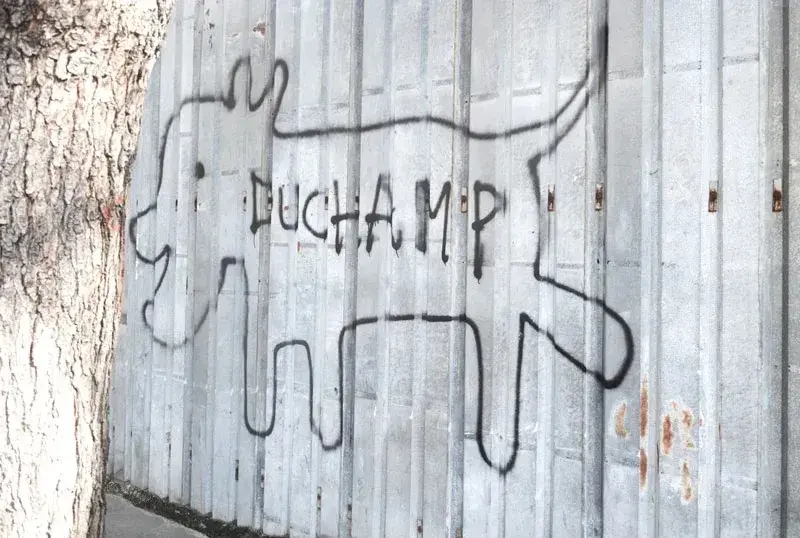
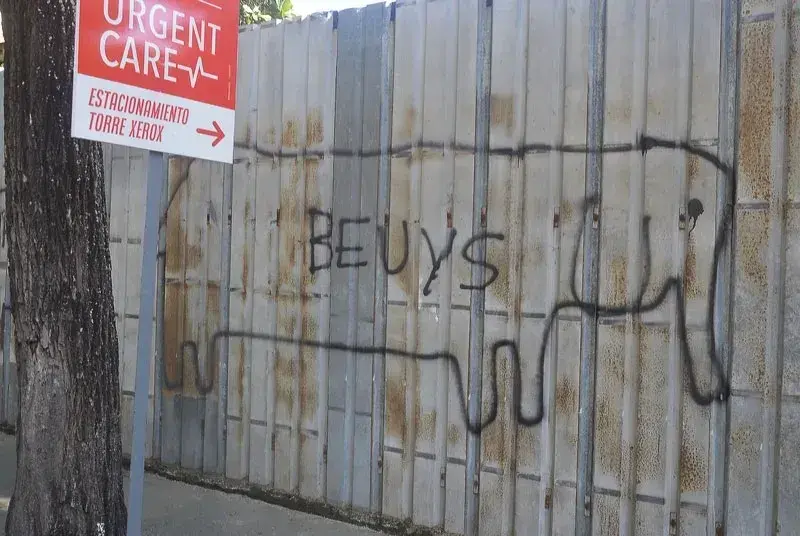
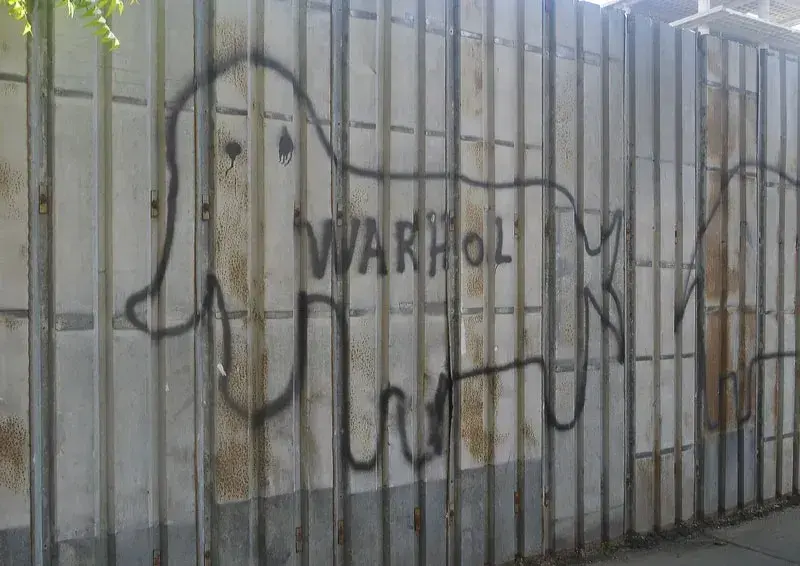
You know you’re getting close to Salazar’s home because you come across his drawings along the way. Photos by Javier León.
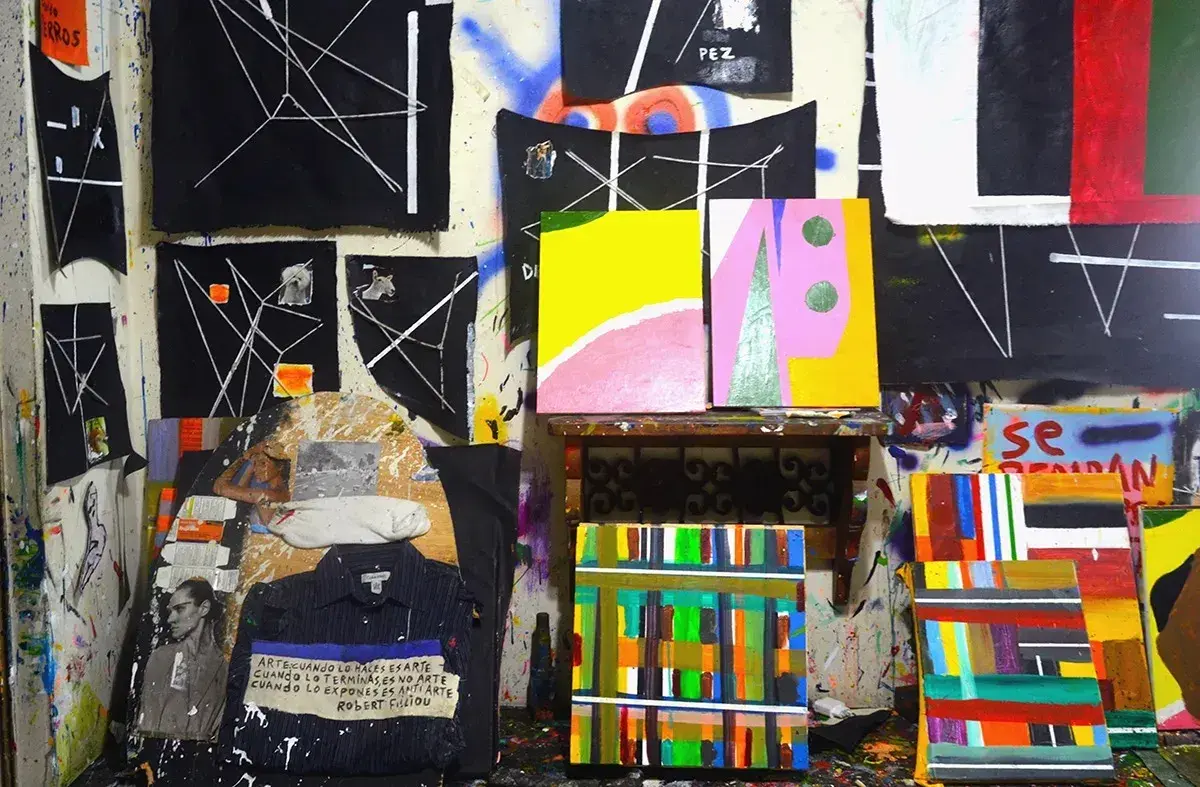
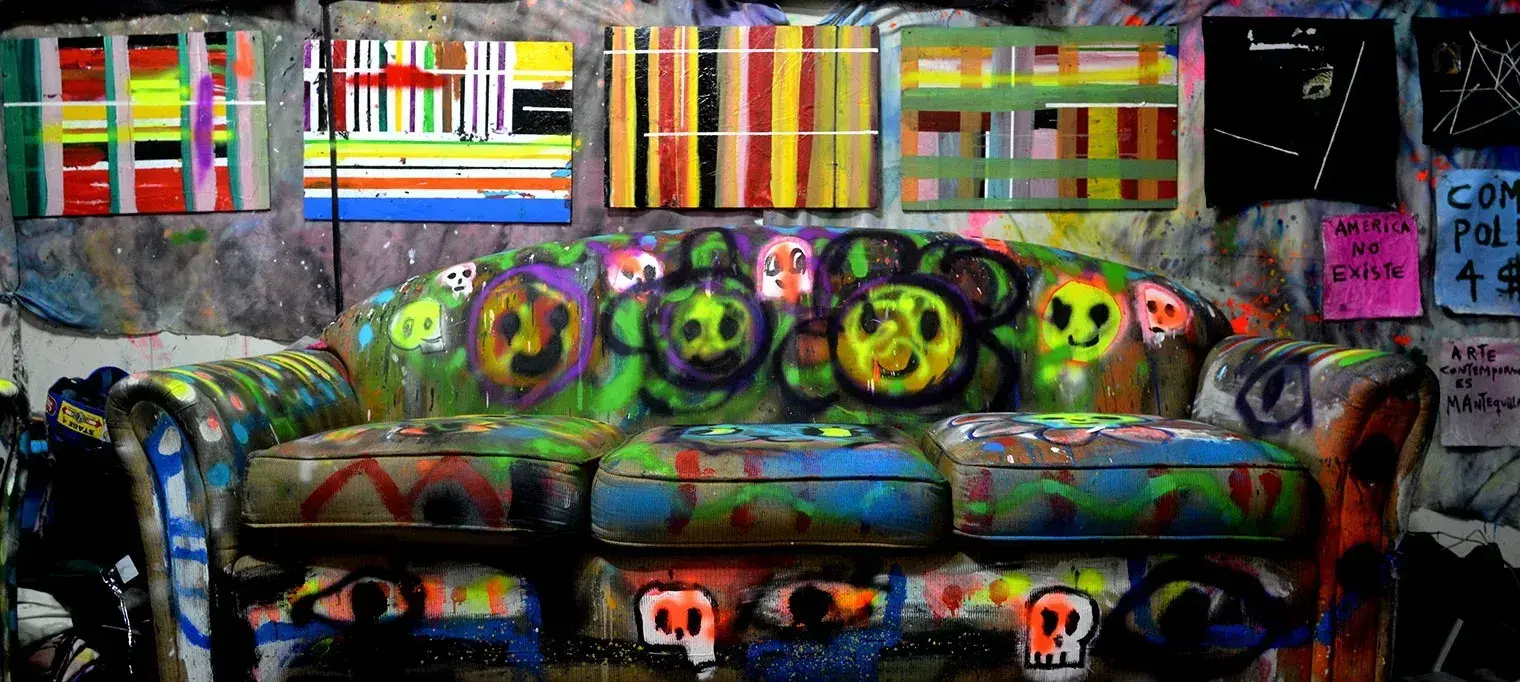
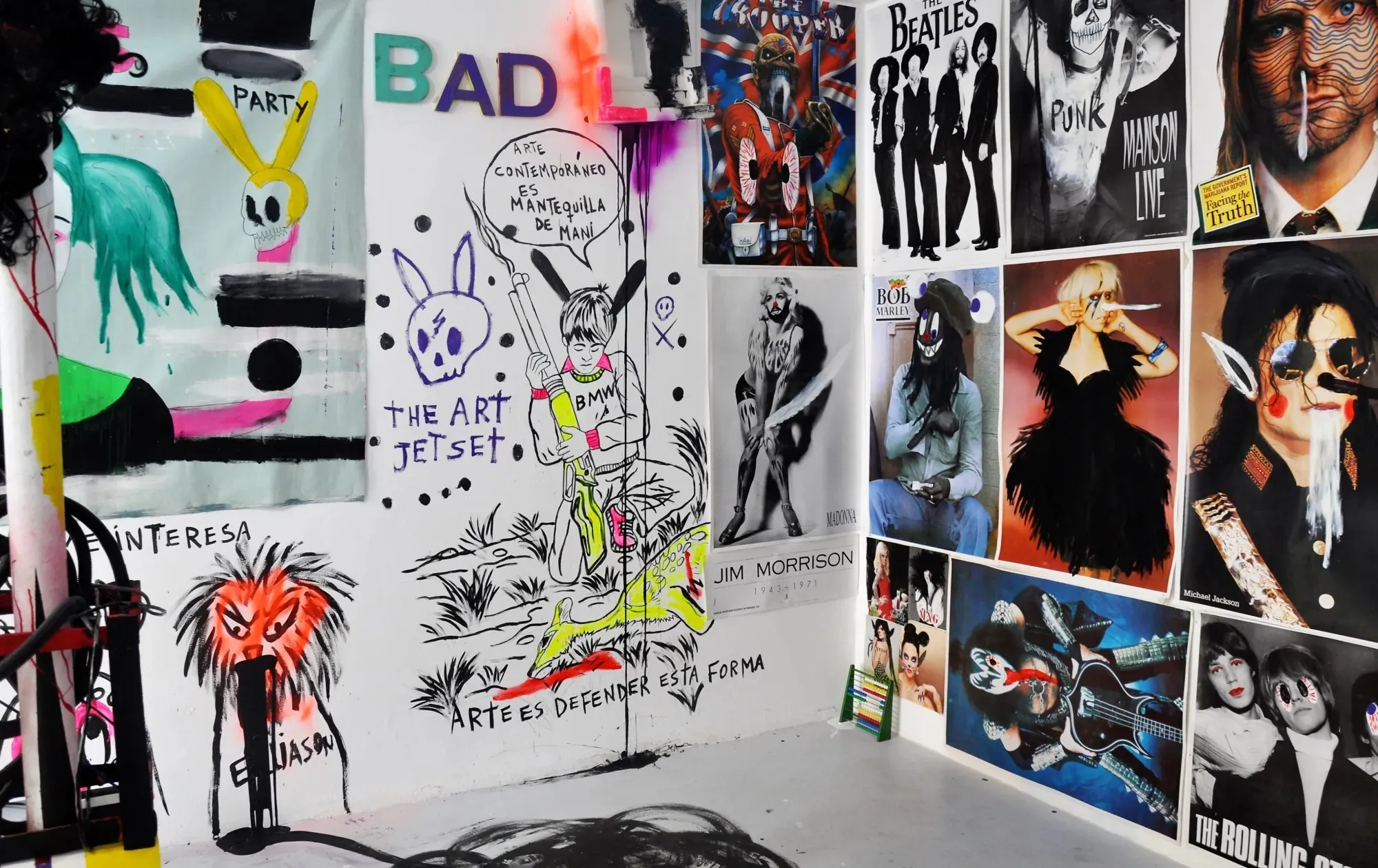
Inside Salazar’s home, completely transformed by his interventions. Photos by Javier León.
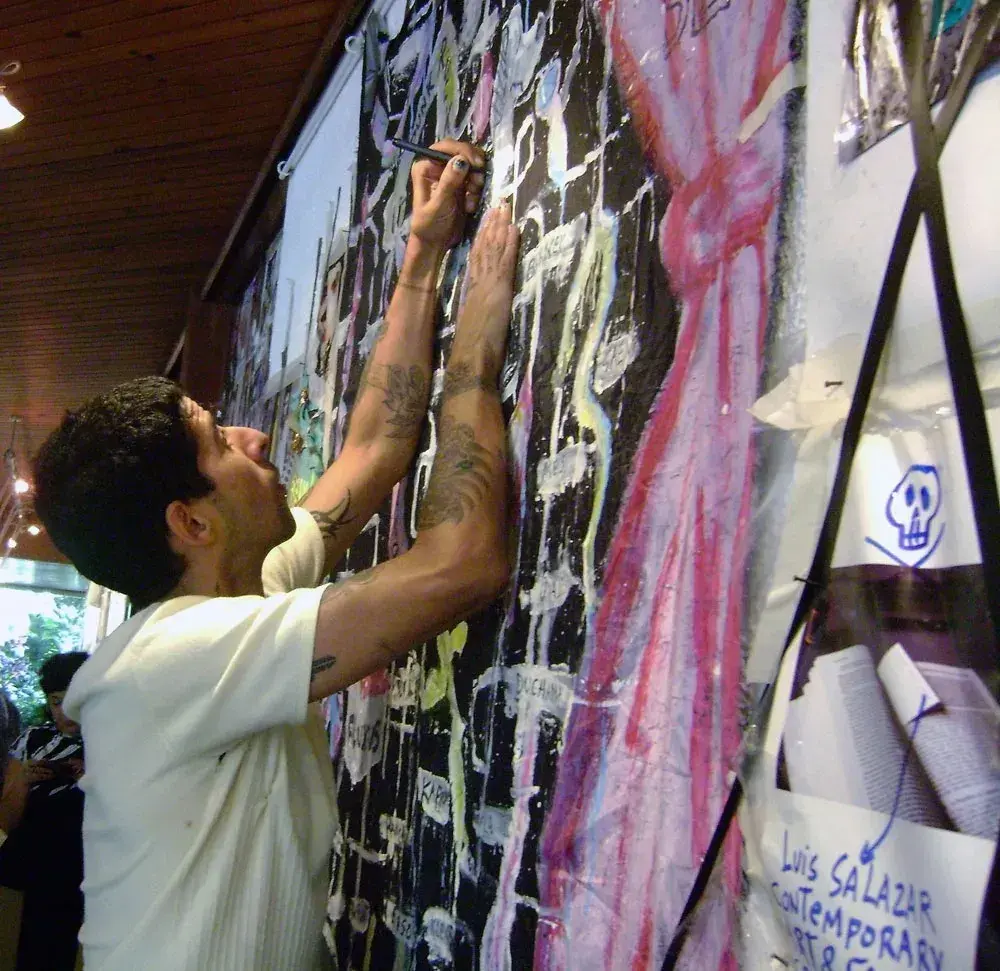
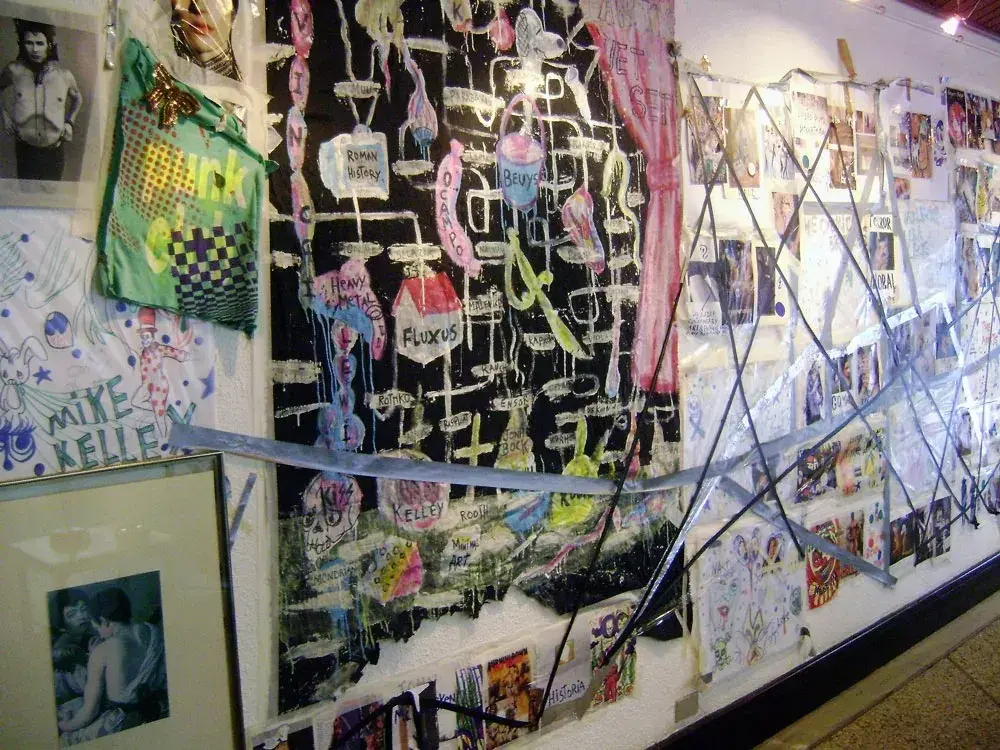
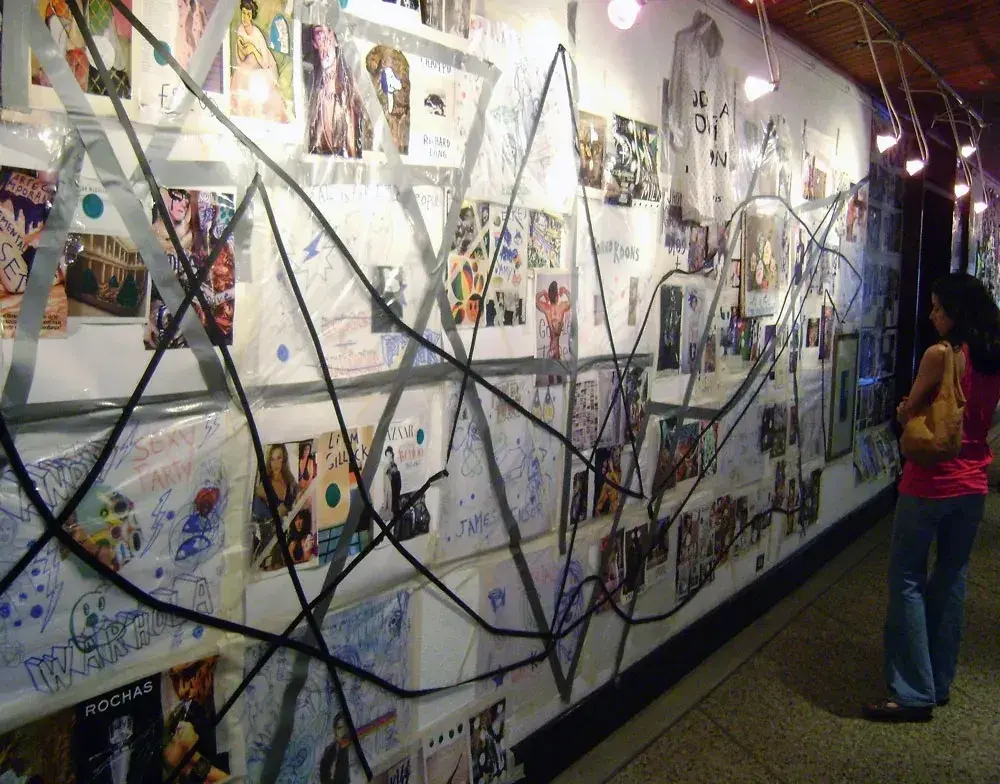
Luis Salazar and one of his installations. Exhibition at Altamira Suites, curated by Jesús Fuenmayor. Photos by Javier León.
Without being a scholar in the conventional sense—perhaps because he is the son of educators—the artist has developed a particular ability to process information, transforming it into essential material for the constitution of his works, in which the communicative component is central. He has a vocation for knowledge, especially knowledge of art; an interest in staying current across different areas of the discipline. Over time, this has been distilled into many of his series, at times implicitly, at others directly through the written message. He deploys an appropriationist strategy whose principal formula is displacement: the terms of his visual discourse admit a double meaning; they allow for a displacement in the response, which may or may not be in tune with what the artist says. Displacement consists of the incoherence between two segments of a text, an incoherence that we reduce by modifying our interpretation. [1]
His first exhibition took place in 1988 at Mazzo Club, a post-punk nightclub in Chacaíto, Caracas. From that early moment, the artist already aligned himself with a punk aesthetic, from which he drew traits that would endure over time: the trash aspect of his work, an attitude that challenges the system from multiple angles, and the use of phrases that sometimes resemble protest slogans. Since then, performance and the performative have been integral to his works and exhibitions, as has an ironic and persistent sense of humor.
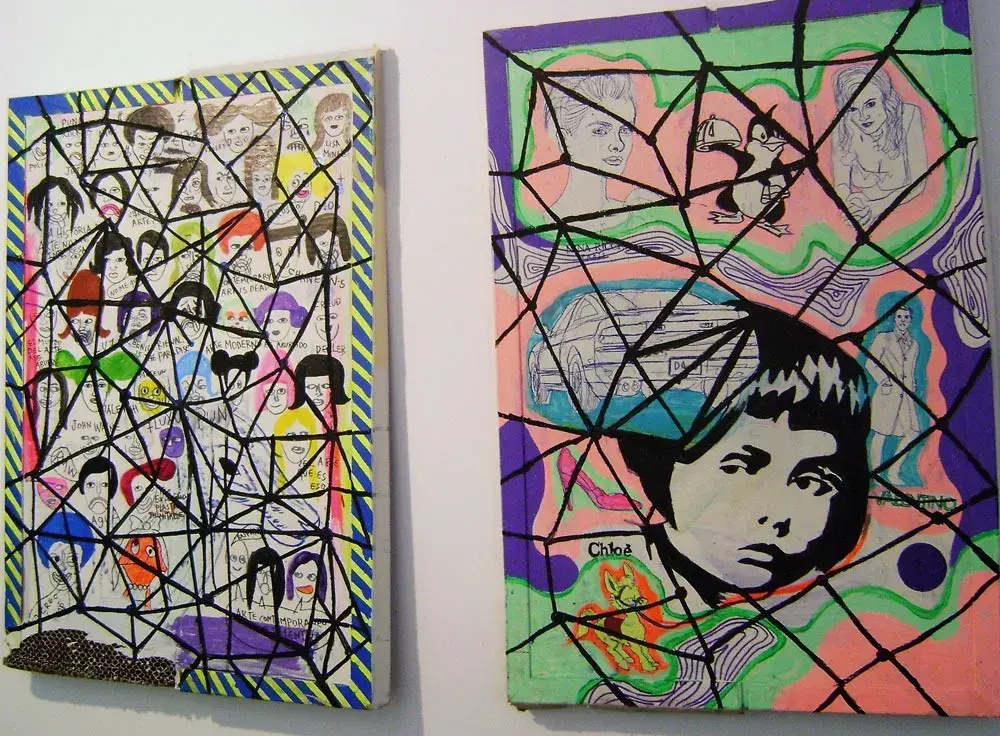
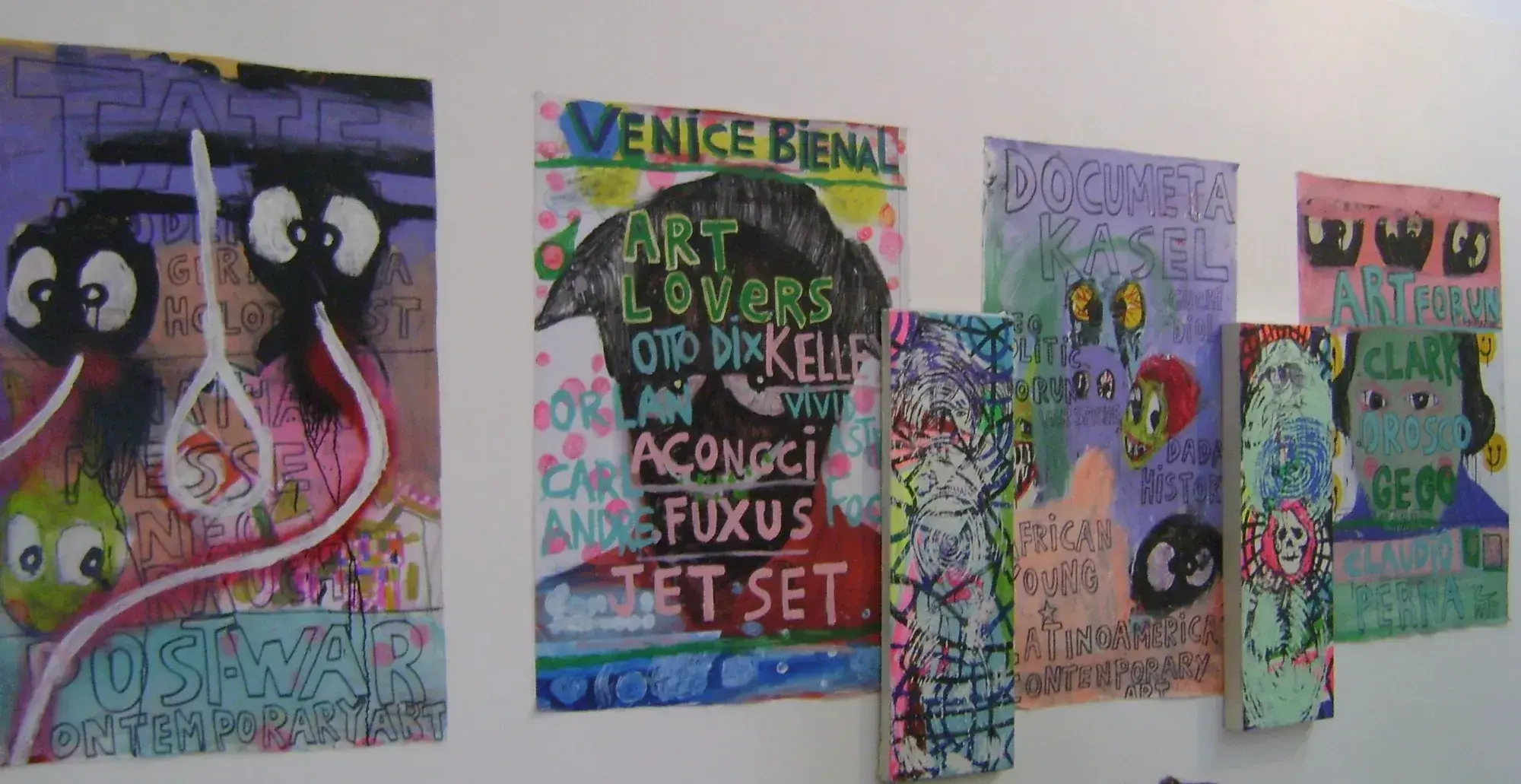
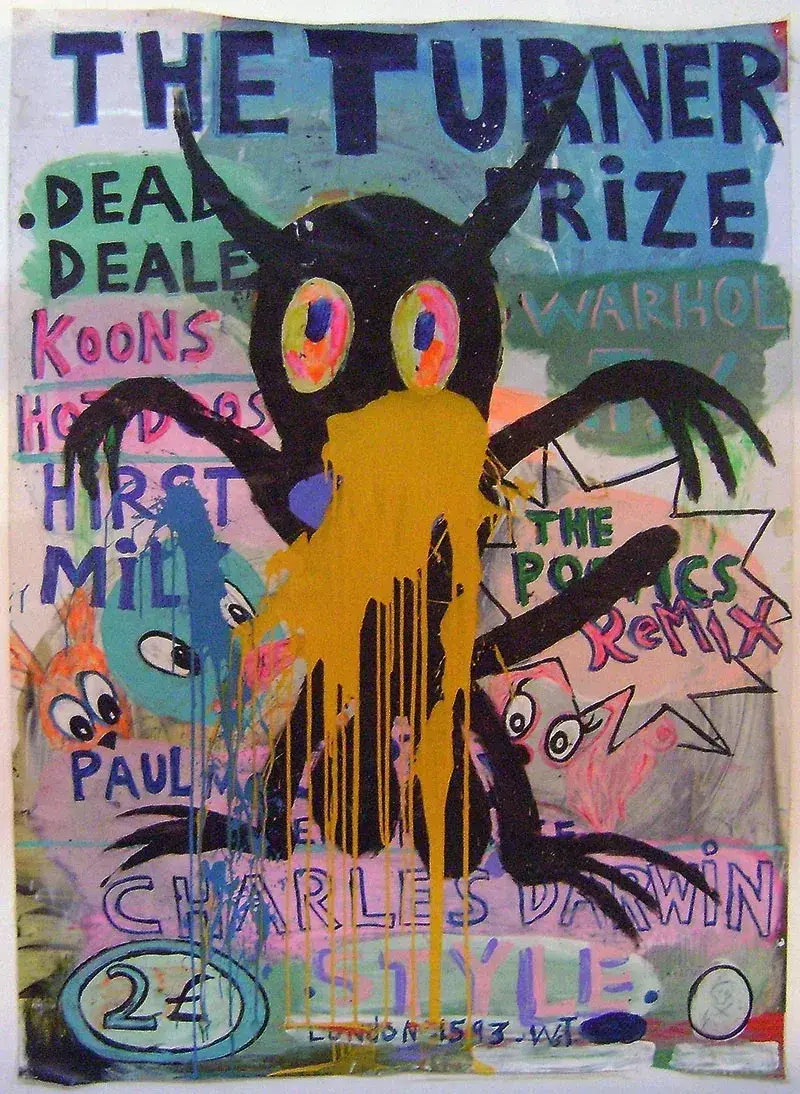
Luis Salazar. Postwar, 2009. Galería Fernando Zubillaga. Photos by Javier León.
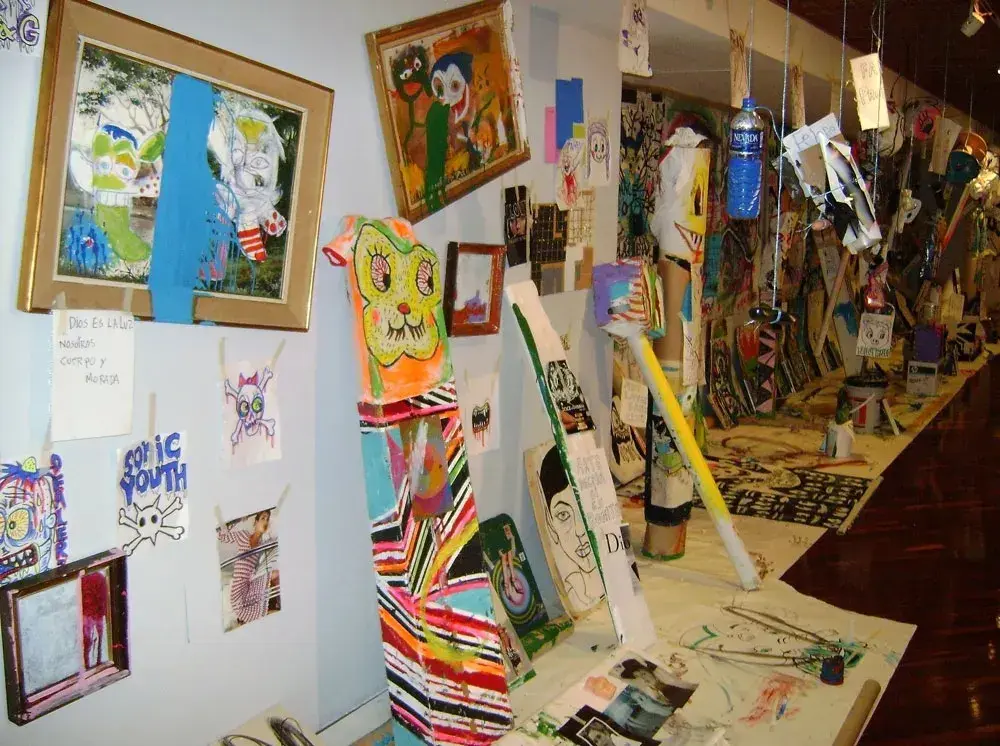
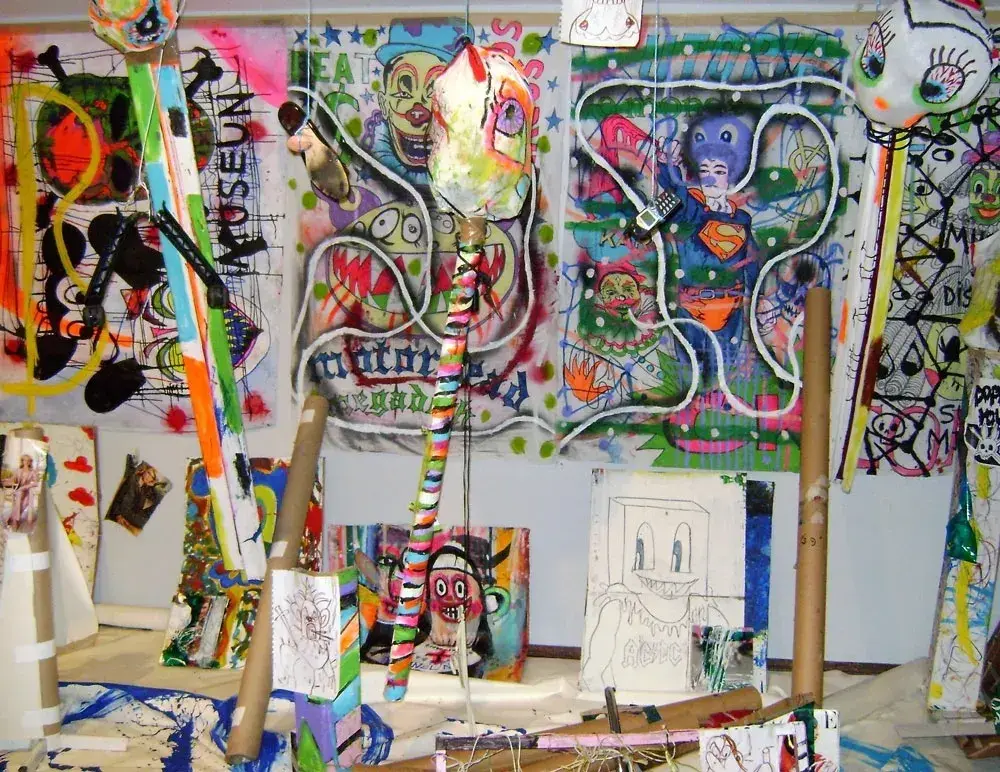
Jovenes con FIA, 2009. Centro Cultural Corp Banca. Photos by Javier León.
One notable aspect of the language he has developed over the years is his use of the absurd: phrases and replicant objects with no apparent connection are endowed with new meaning; they say something other than what they usually say, often while saying it in exactly the same way. They activate language expansively, imbricating it within his assemblages and paintings, at the threshold of the image. As Sandra Pinardi has observed, they become a dispositif, understood in the Foucauldian sense:
“…a decidedly heterogeneous ensemble that includes discourses, institutions, architectural installations, regulatory decisions, laws, administrative measures, scientific statements, philosophical, moral, and philanthropic propositions—in brief, the said as much as the unsaid: these are the elements of the dispositif.” [2]
An aesthetic of displacement. Not only for the reasons already mentioned, but also because of the idea of art promoted by his appropriationist practice, in which ideas or things taken from others and mixed with his own interpretations are instrumentalized not so much to foreground institutional critique, as some of the exponents of this kind of art have done (Holzer, Levine, Kruger, Prince), but rather to emphasize a relation with the world from the position of otherness, in which displacement operates as a strategy of transposition. Displacement as strategy is the fundamental trope that allows metaphorical and allegorical residues to settle upon trivial or fortuitous objects, producing an ephemeral “click” that, once it becomes an image, dissolves soon after—as occurs in many of his assemblages and installations.
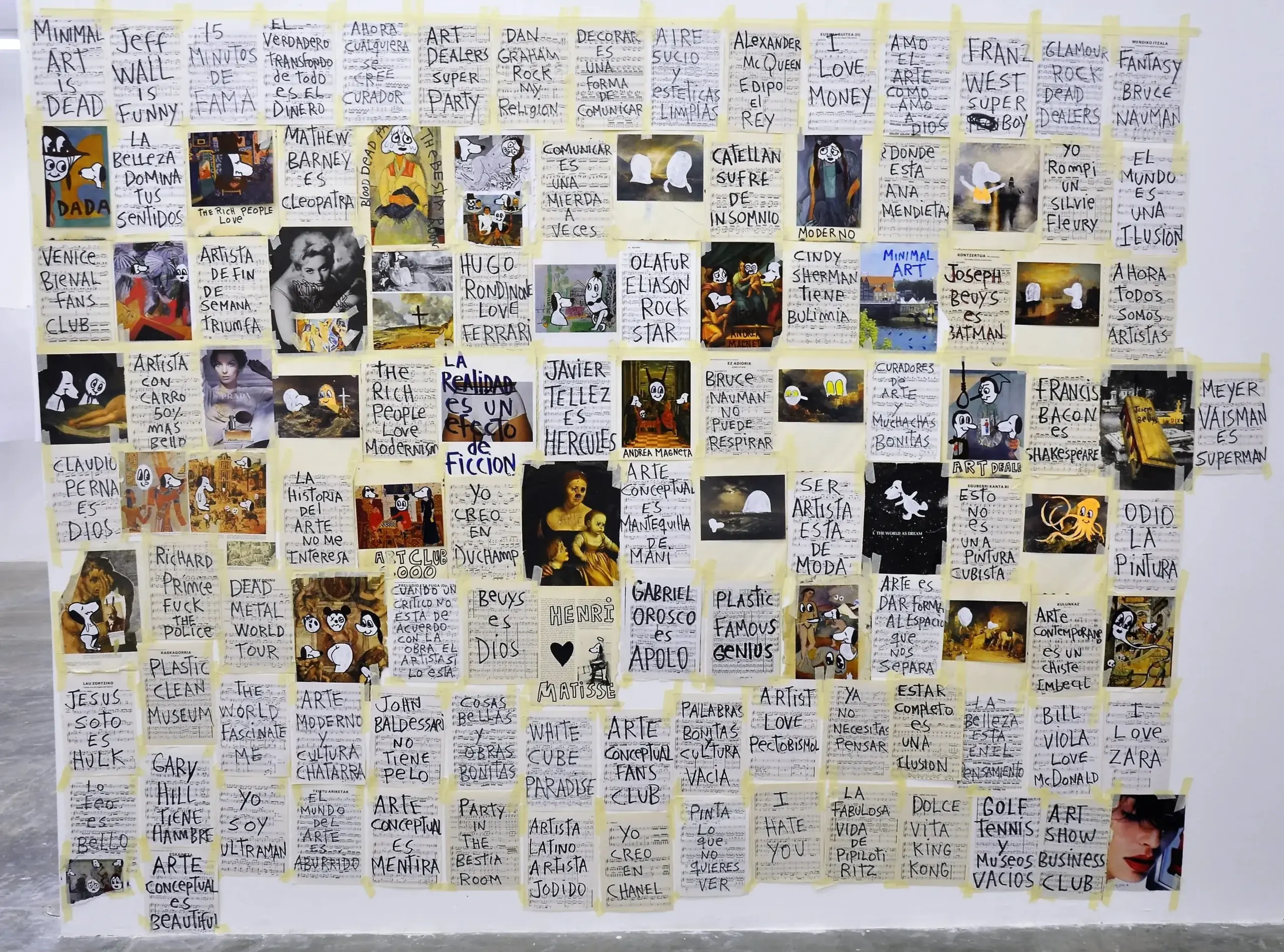
Luis Salazar. Didáctica, 2010. Periférico Caracas. Photo courtesy of Galería Carmen Araujo Arte.
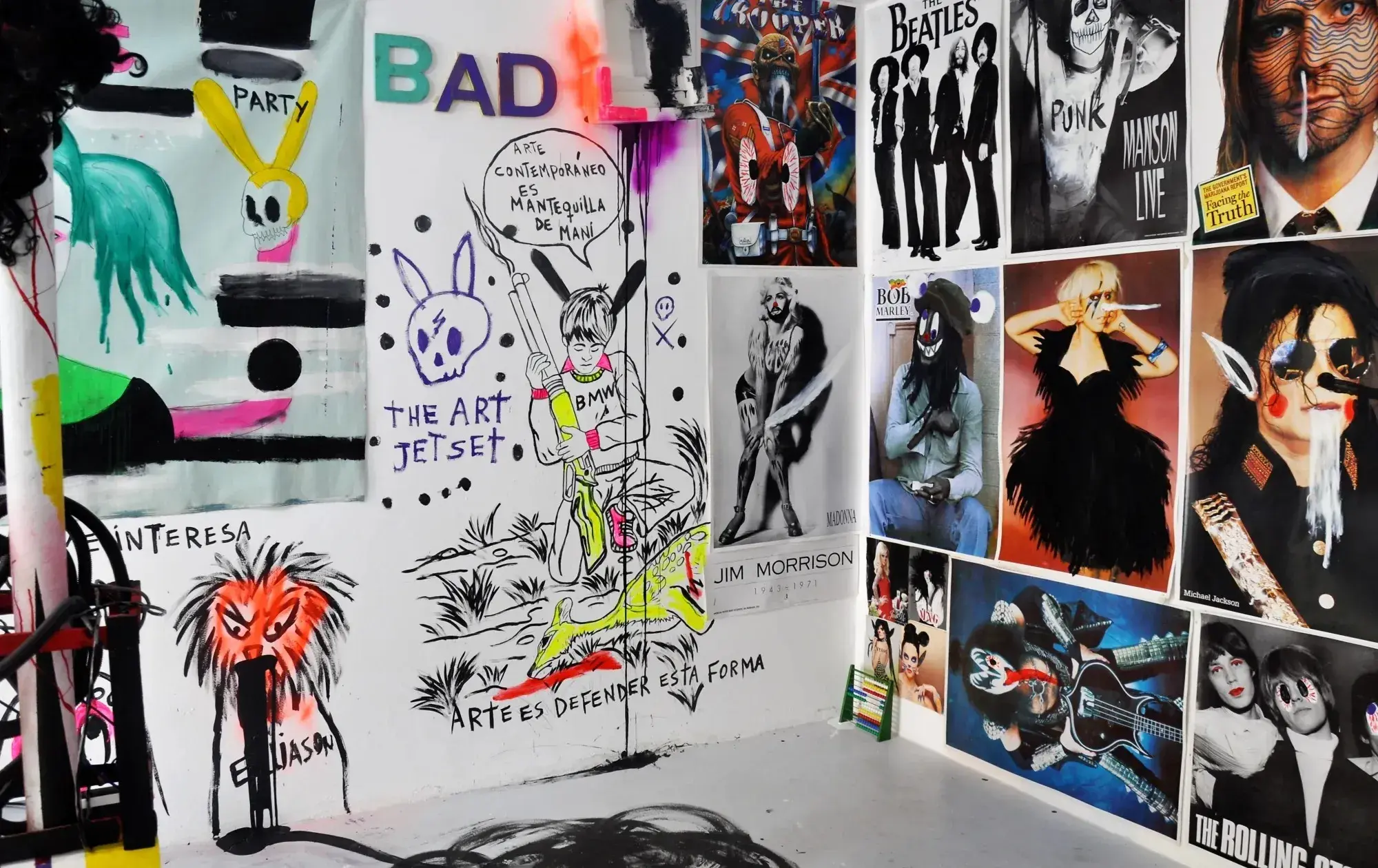
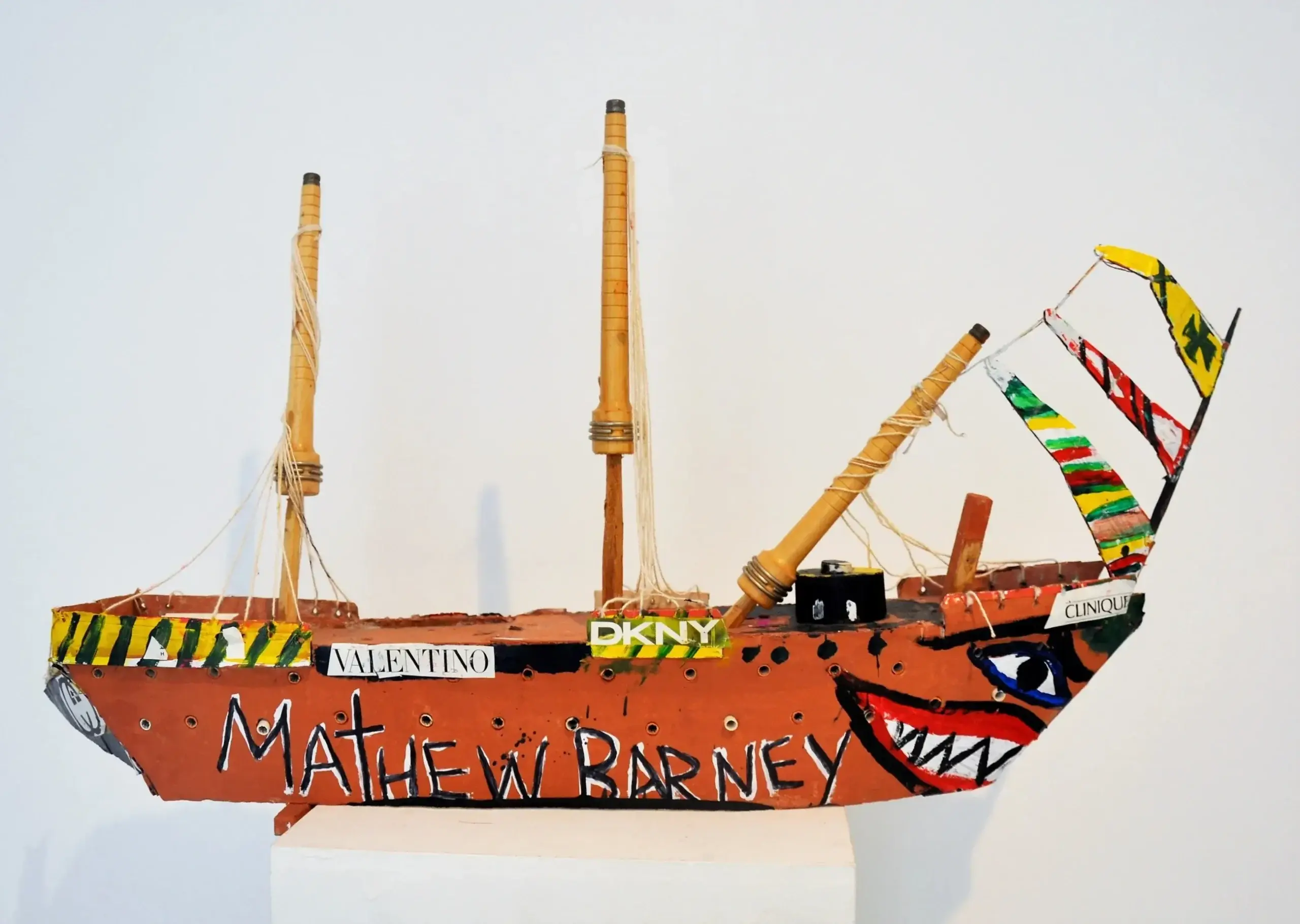
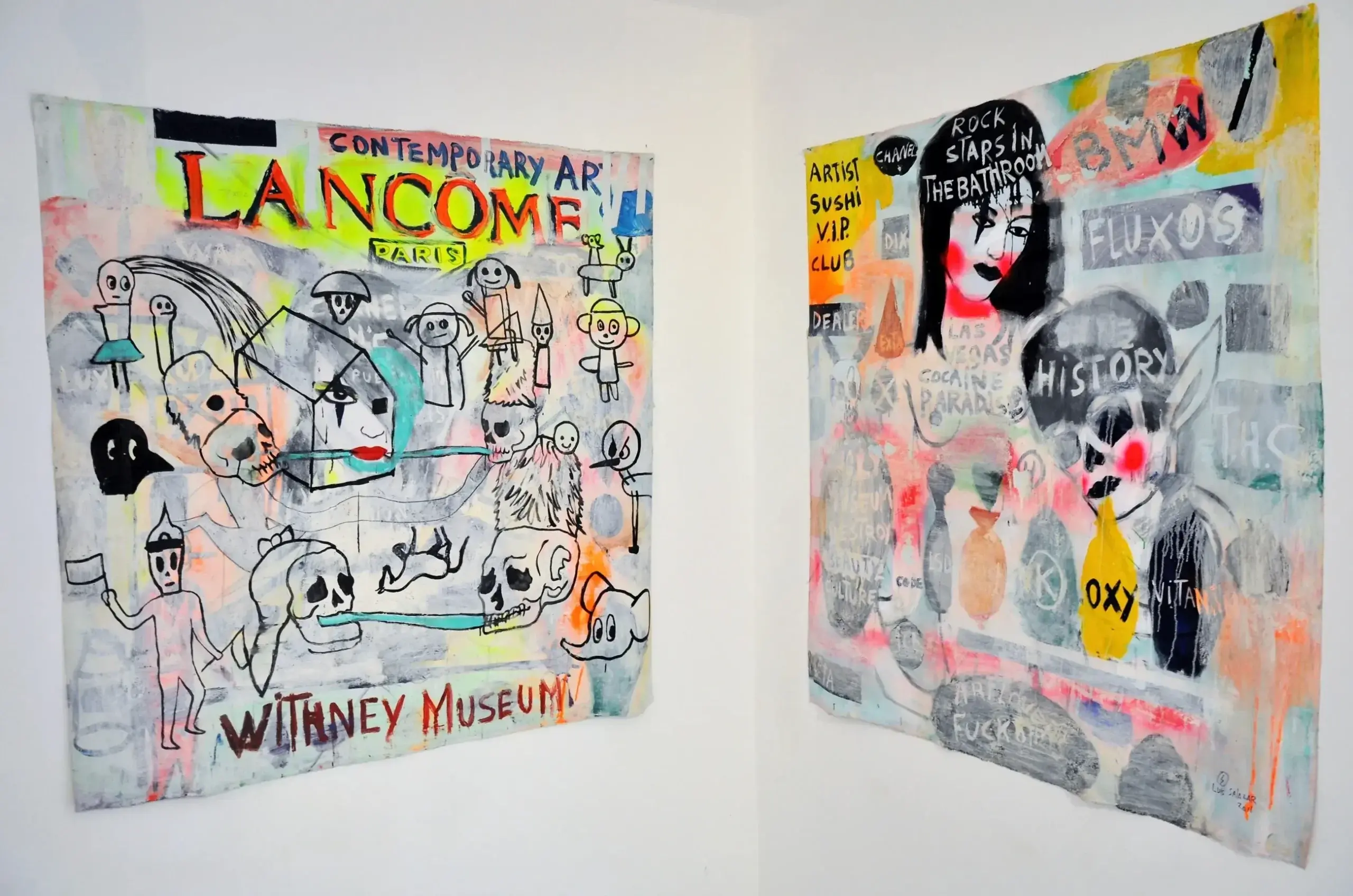
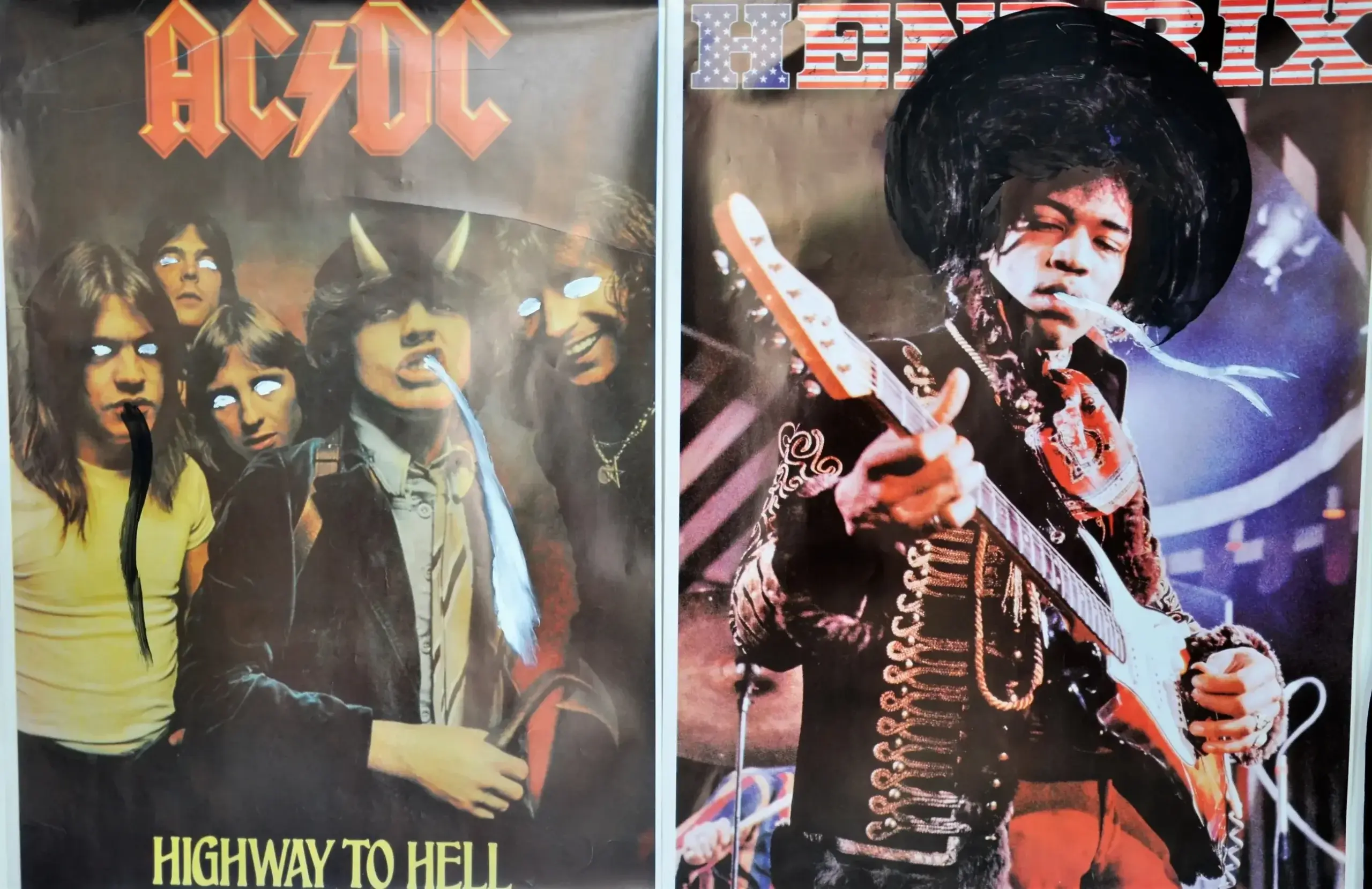
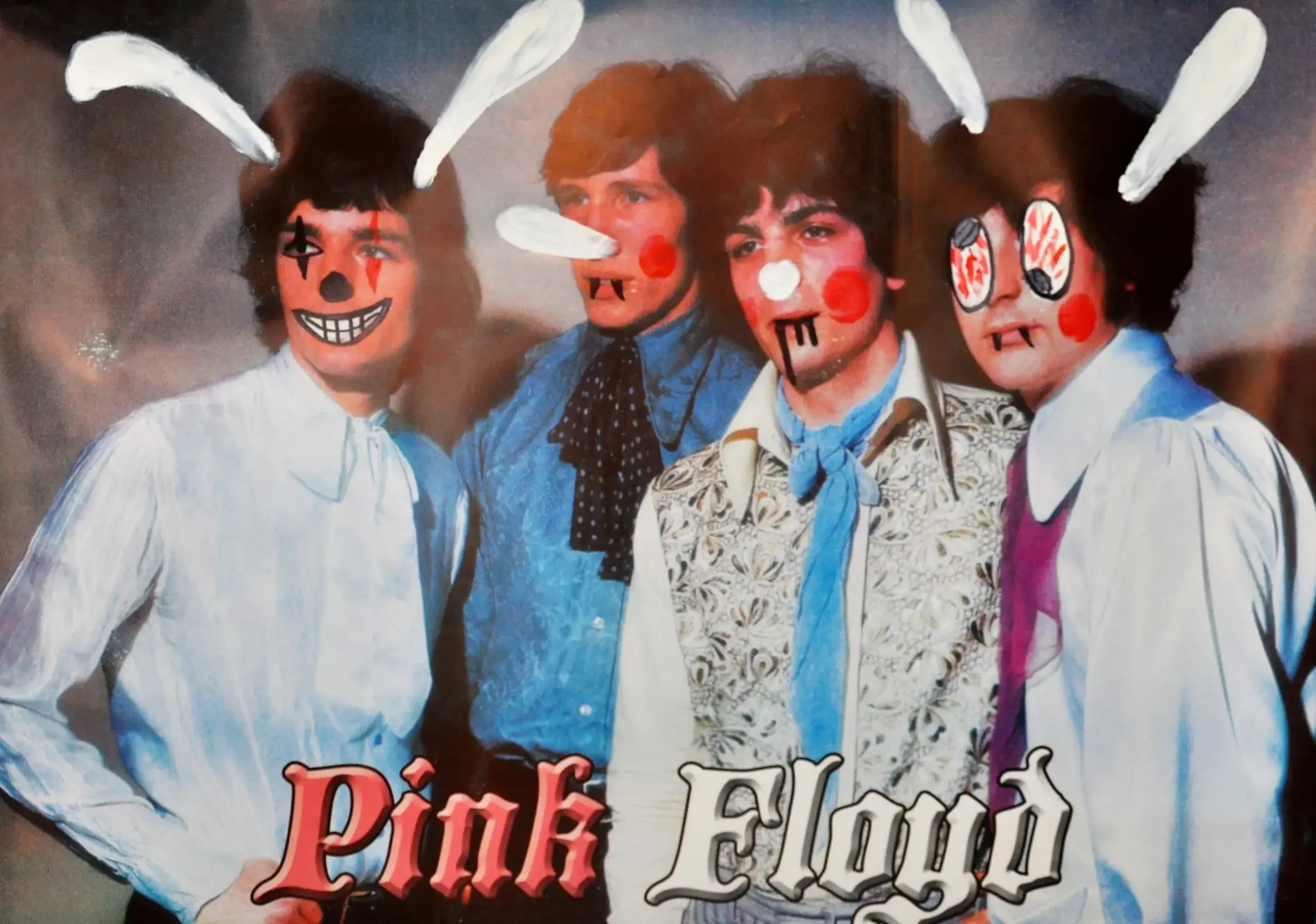
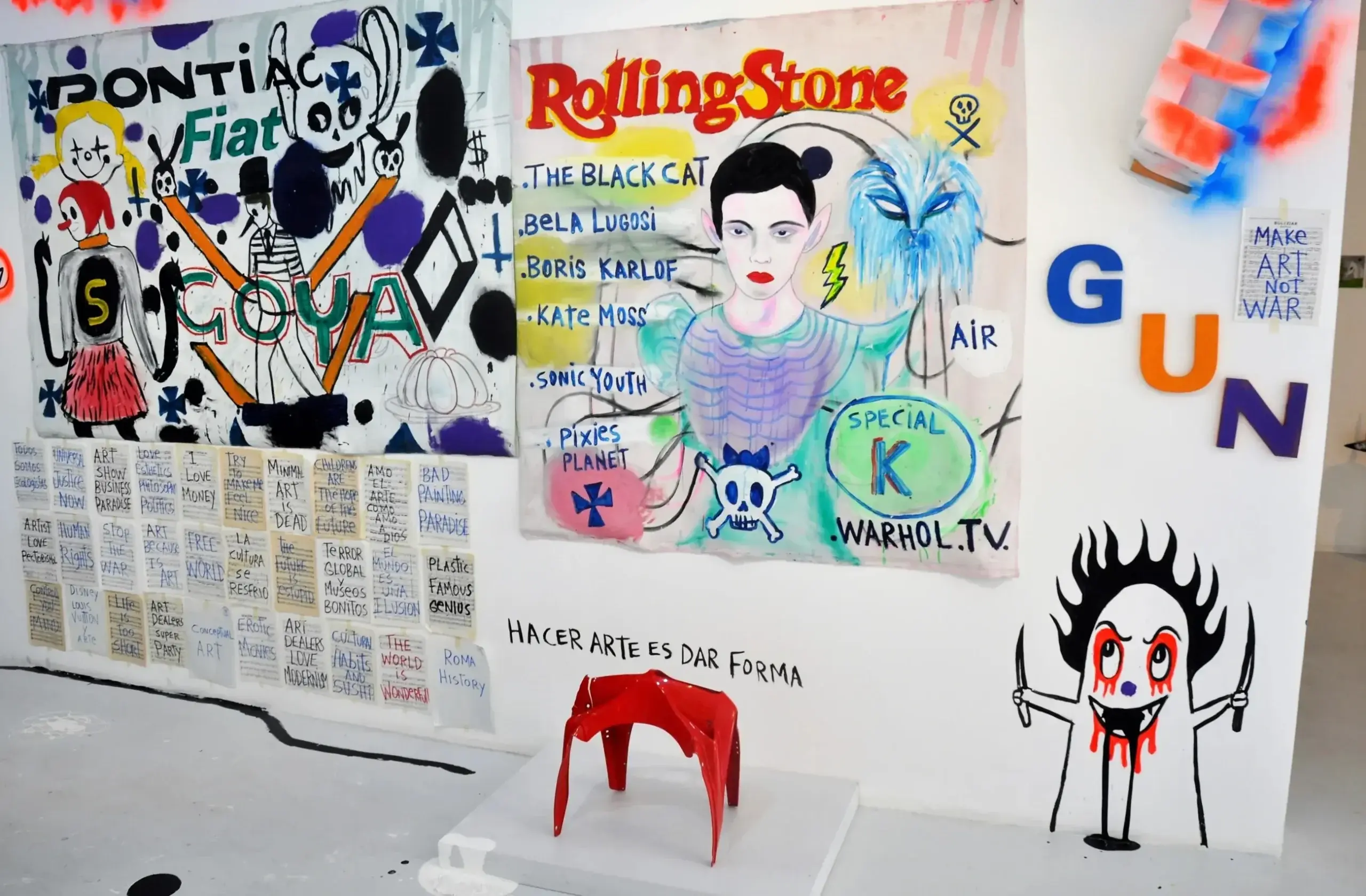
Luis Salazar. Venice Bienal, 2011. Espacio MAD. Photos courtesy of Galería Carmen Araujo Arte.
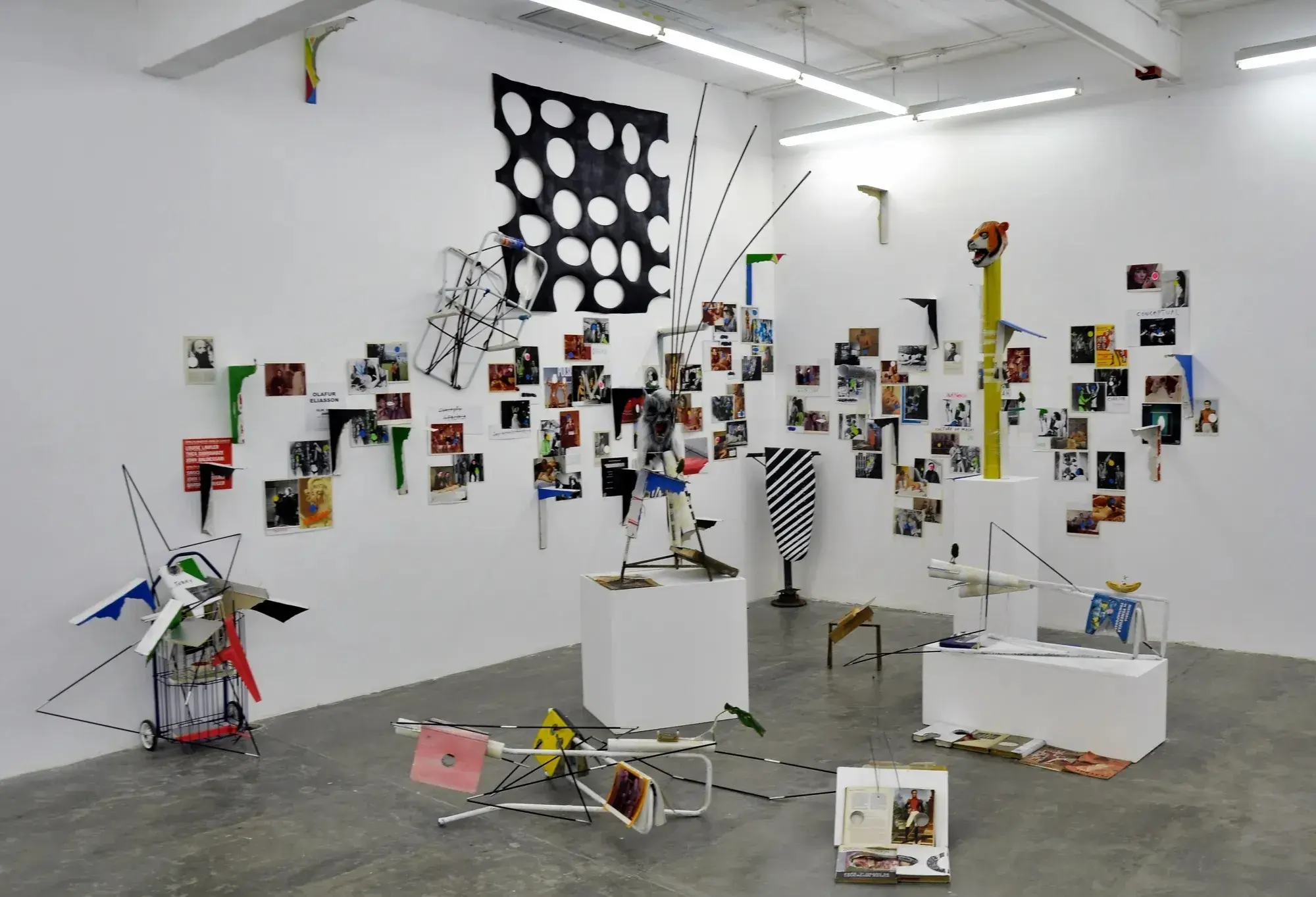
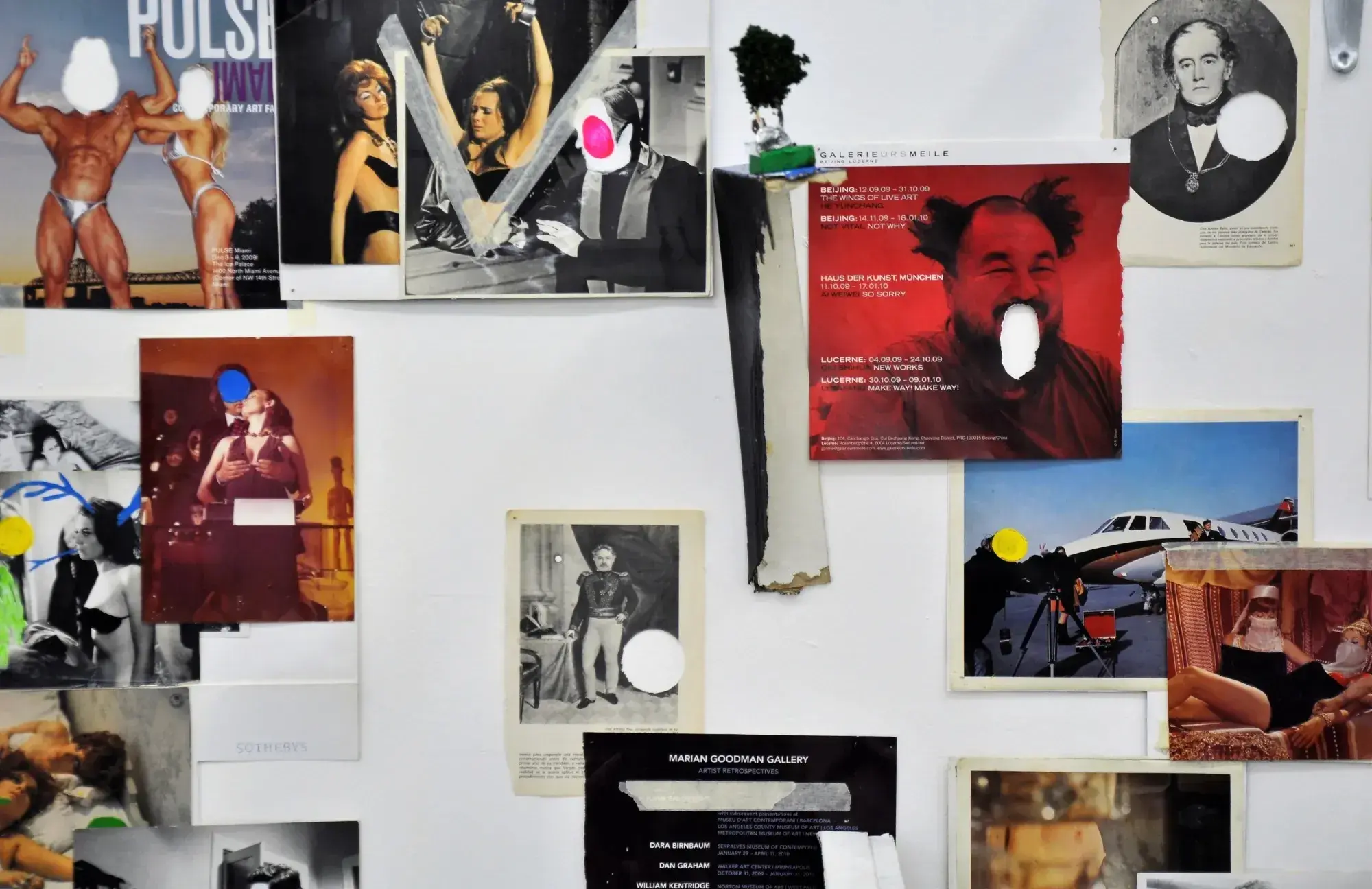
Luis Salazar. Exculturas, 2013. Periférico Caracas. Photos courtesy of Galería Carmen Araujo Arte.
From his early work onward, there has been a persistent concern with looking at the present, with processing information, and with a particular attentiveness to the occupation of the physical space in which the proposal will be presented—that is to say, the space of art’s circulation. Physical space is central to the development of many of Salazar’s works; in his exhibitions, the works are almost always completed on site.
In the institutional presentation of his work—in museums and galleries—painting has remained his center, and installation his most recurrent medium. Since the 1990s, in his participation in the Salón Pirelli (the most emblematic exhibition platform of that decade, organized by the Museo de Arte Contemporáneo de Caracas Sofía Imber), his installations were characterized by creating a situation within the exhibition space that the notion of “environment” might well describe. Thus, the processual dimension extends beyond the moment of exhibition: not only are the works completed on site, but some of these spaces continue to transform during the exhibition itself. On this point, Sandra Pinardi writes:
“…heterogeneous fragments are constellated, contained, and reflected in one another, governed by a constructive principle (different in each case) that dynamizes the meaningful expansion of the image and converts it into a complex ‘theater of operations’ in which diverse spaces and cultural matters appear in tense relation. These installations are ‘relational objects’.” [3]
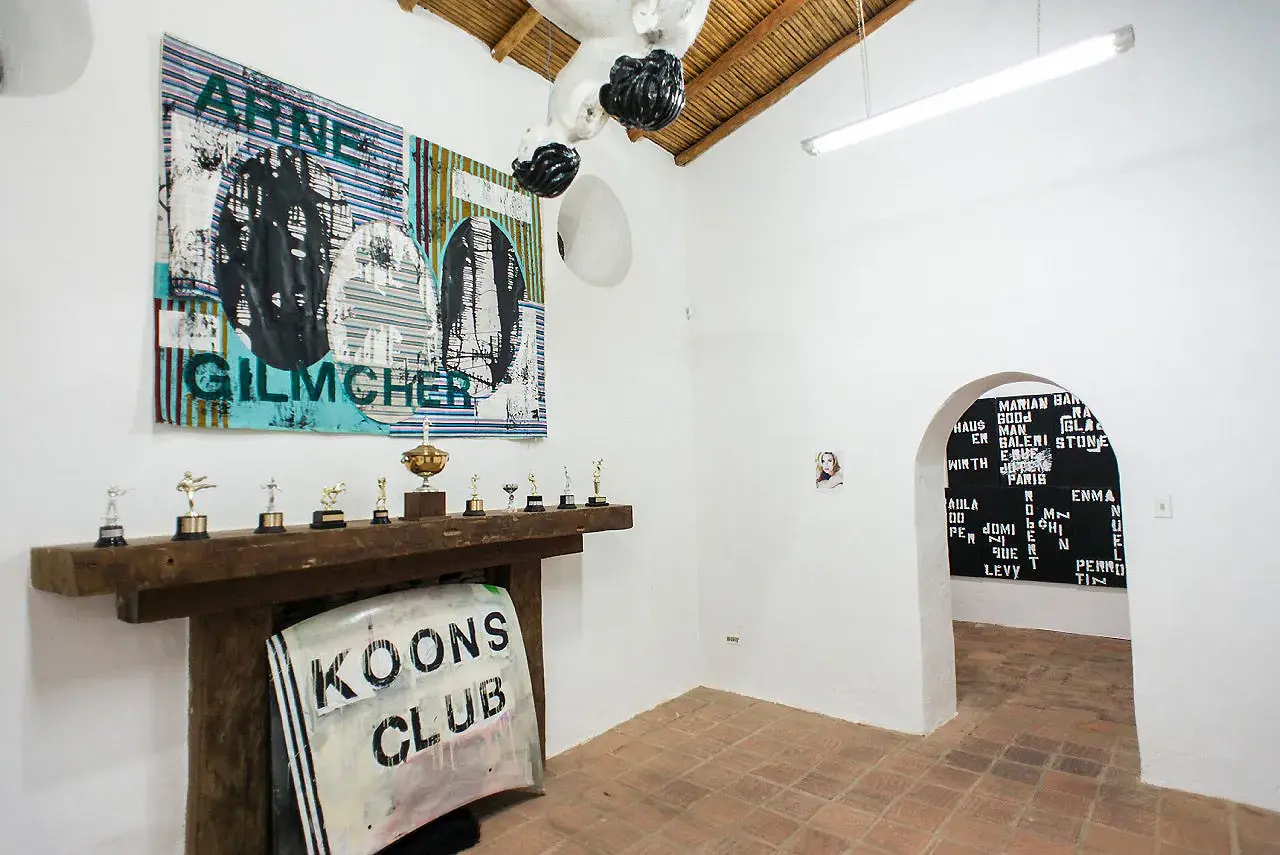
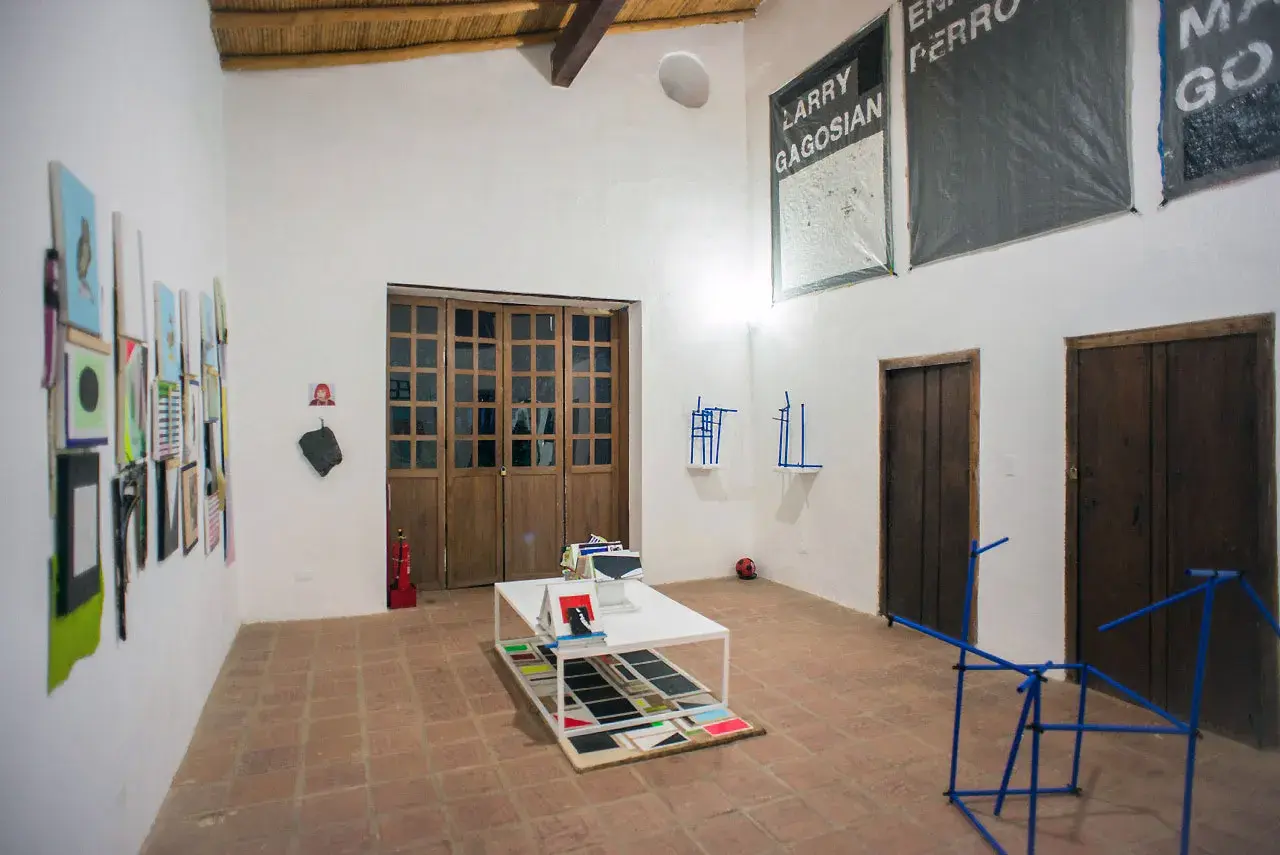
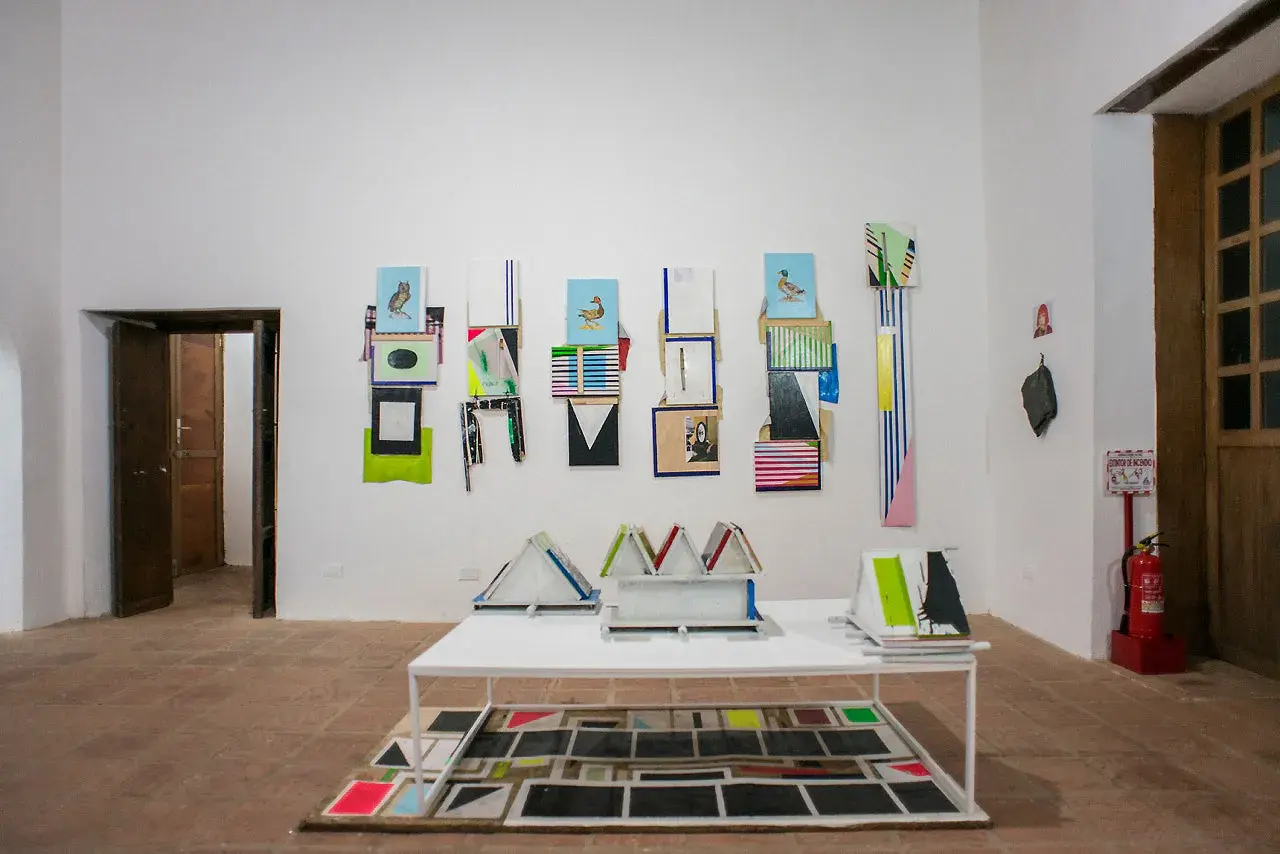
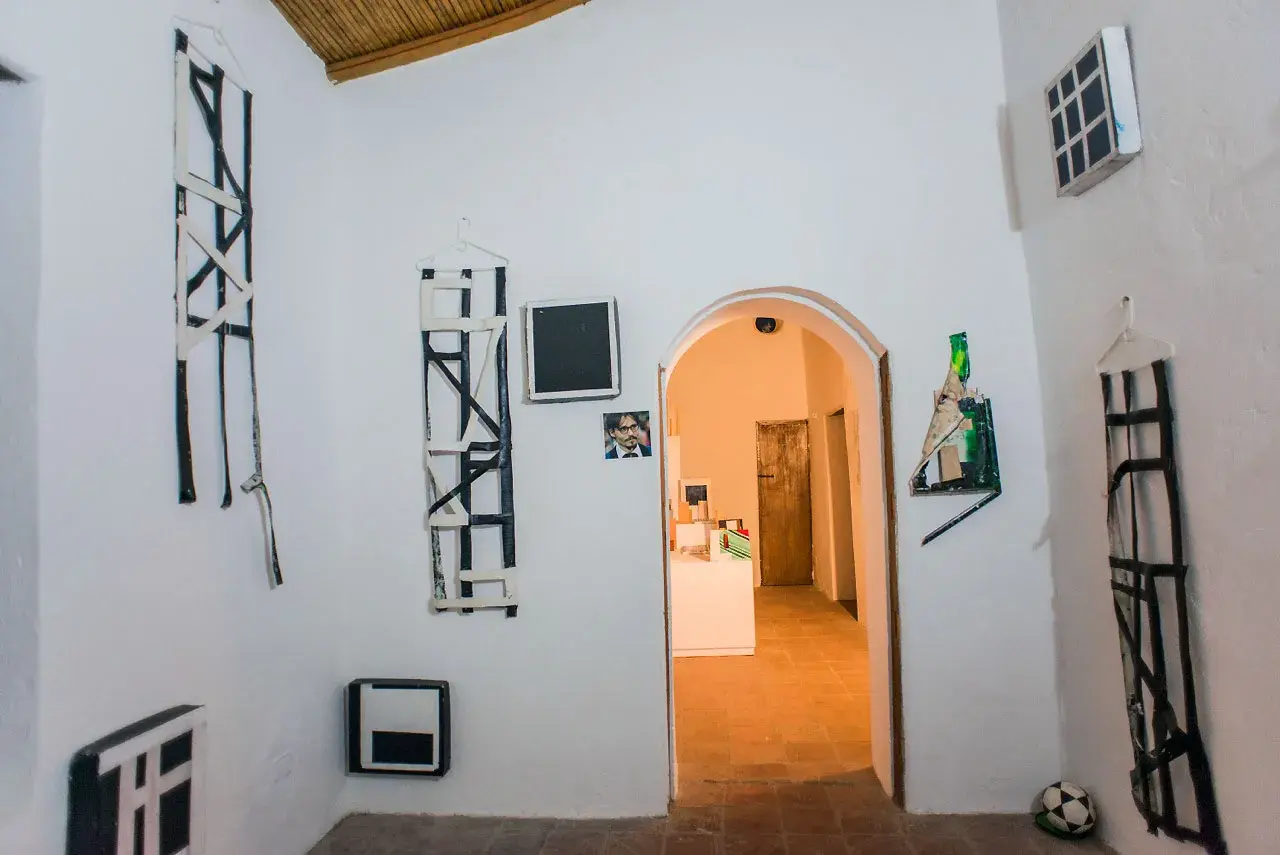
Luis Salazar. The Great Utopia, 2014. Hacienda La Trinidad Parque Cultural. Photos courtesy of Galería Carmen Araujo Arte.
Rather than creating environments, he introduces the environment into the work. The artist establishes a direct relationship with it. Thus, the necessity of art has led him into an ongoing aesthetic dialogue with his context, into a compulsion toward sustained production at any cost.
As a form of trace, Luis Salazar marks urban territory whenever and wherever he sees fit through a practice in which objects collected from a site are arranged randomly yet significantly, so that this trace, this aesthetic sign, suggests an image—and in the very act of suggesting it, dissolves, though not before returning to us that “click” that testifies to its fleeting existence. The documentation of many of these situations circulates on social media as they occur, without any intention of becoming an archive. That is, the artist does not systematically preserve these images in any format other than the Android device on which he produces them.
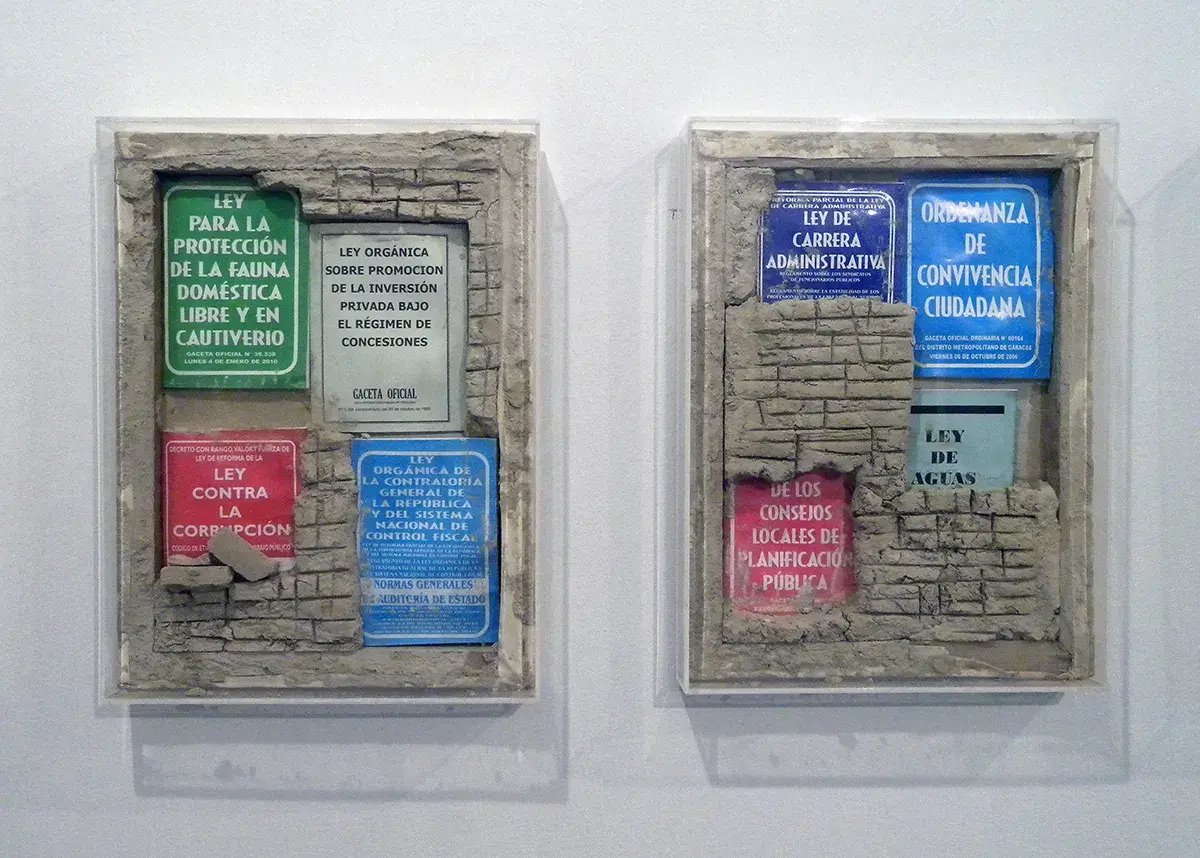
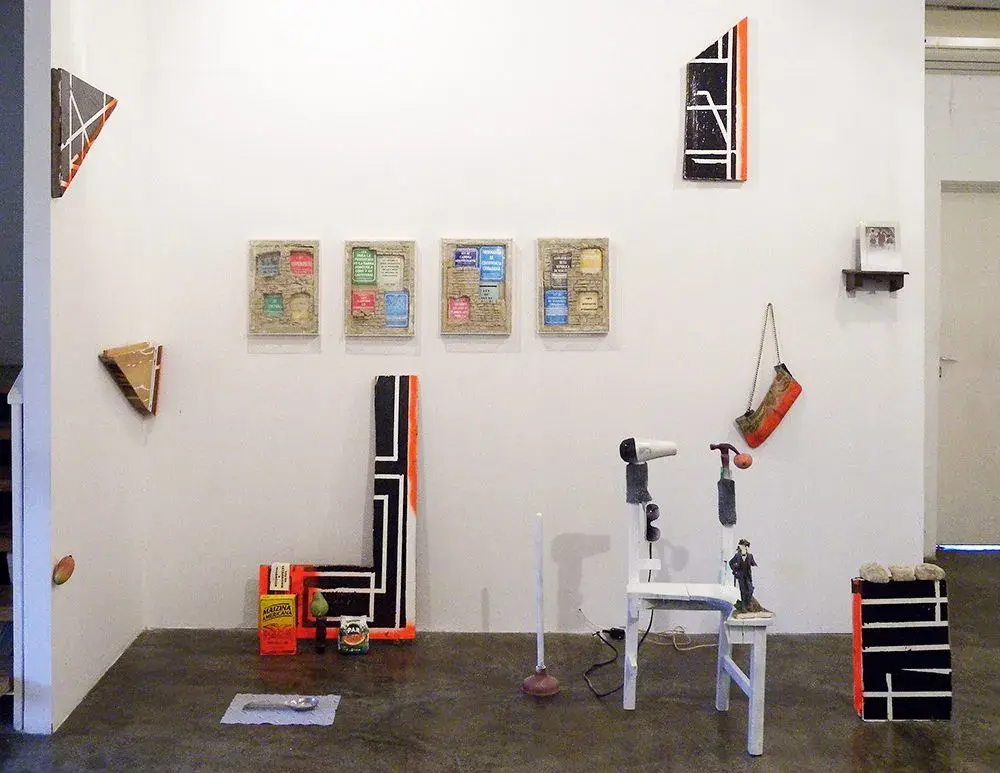
Luis Salazar. Fugas, 2015. Galería Carmen Araujo Arte. Photos courtesy of Galería Carmen Araujo Arte.
The exhibition Héroes Caídos, held at Sala Mendoza in 2003, marked an important moment in Salazar’s trajectory. He returned after four years in Europe, and his adherence to an art/life practice had deepened and radicalized. His thematic interests shifted, and the broad repertoire of images drawn from pop culture that had previously characterized him now began to merge insistently with direct references to the art star system.
His work became more conceptual and, with that, more critical. He turned his attention to the art world, to structures of power and institutional conditioning; through his works, he problematized a system whose coercion reduces art to merchandise: “art is like a giant supermarket,” Koons has said. “Koons is Gucci.” Sandra Pinardi cites Beuys in the epigraph to Teatro de Operaciones: una imagen que se excede, the text she dedicated to Salazar’s work. One fragment of that epigraph reads:
“Our current culture has nothing to do with what cultural administration manages; rather, our culture is fully governed (like all people) by what is called economic nature. That is to say, we in fact live in an eco-nomic culture.” [4]
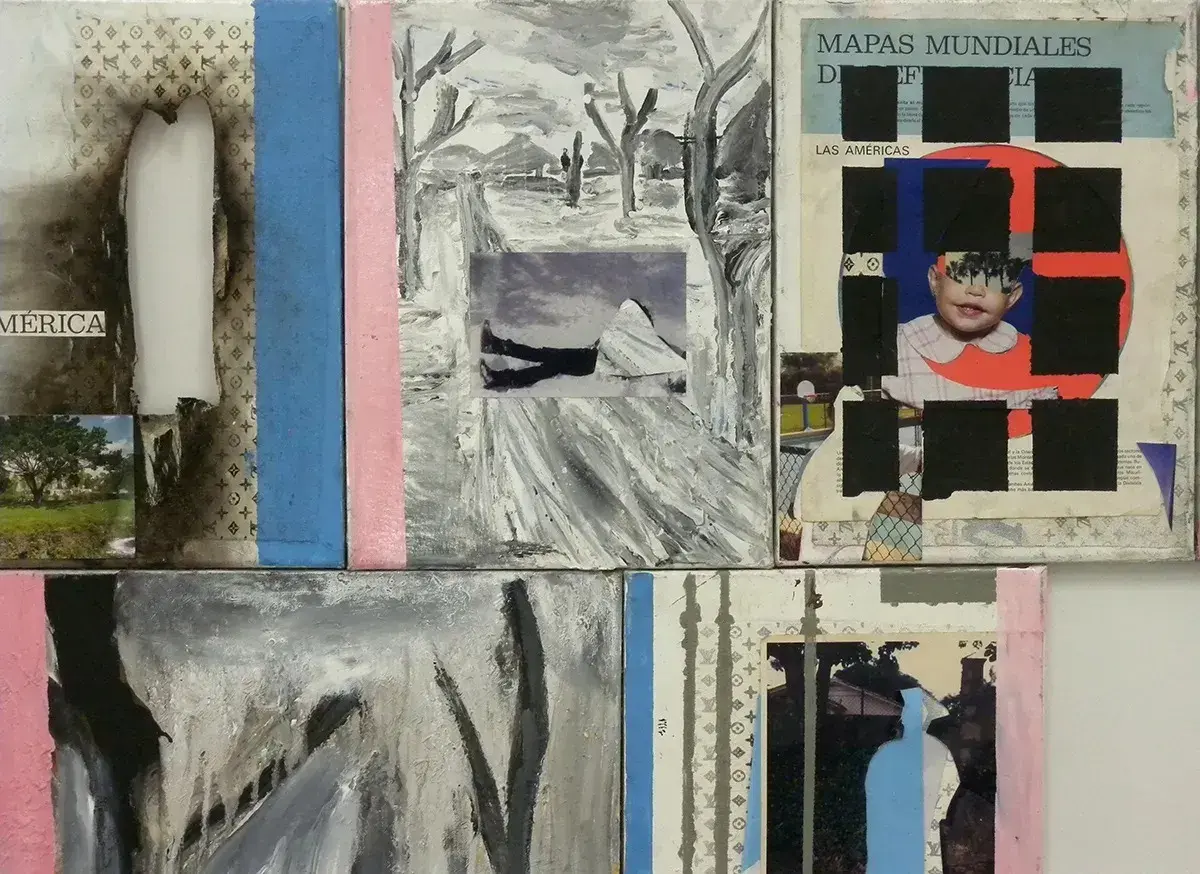
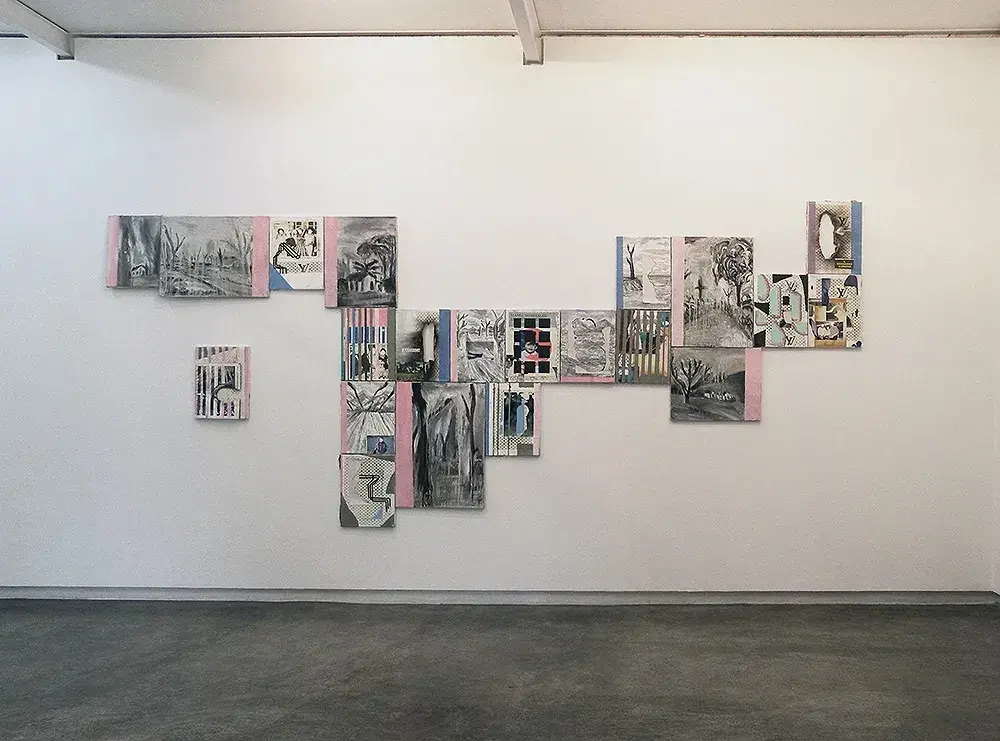
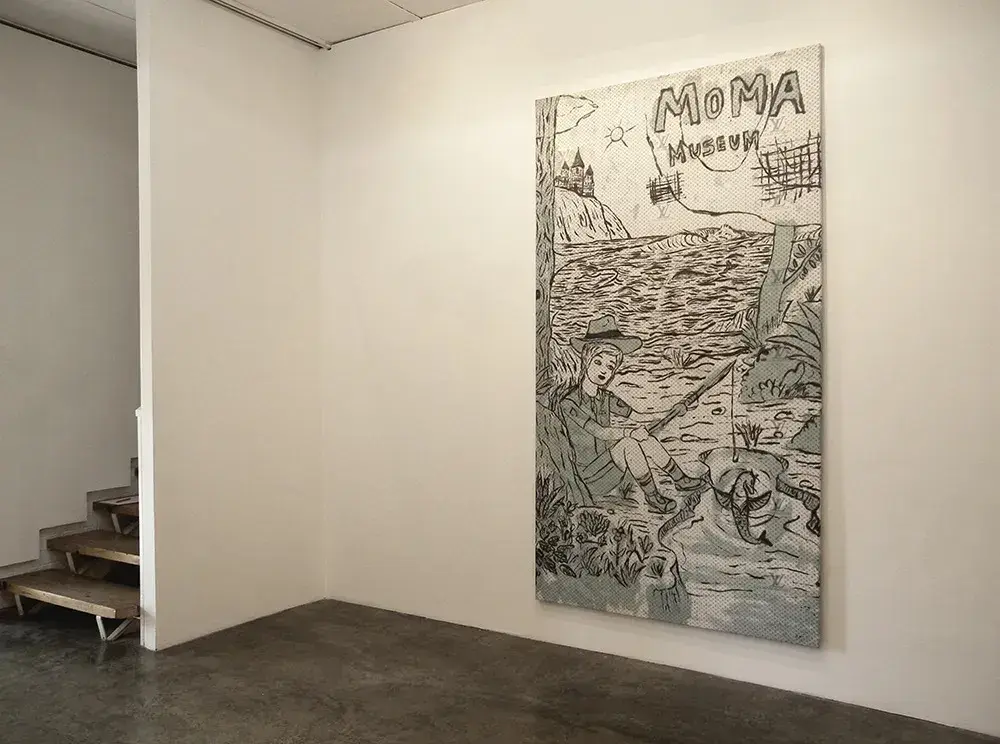
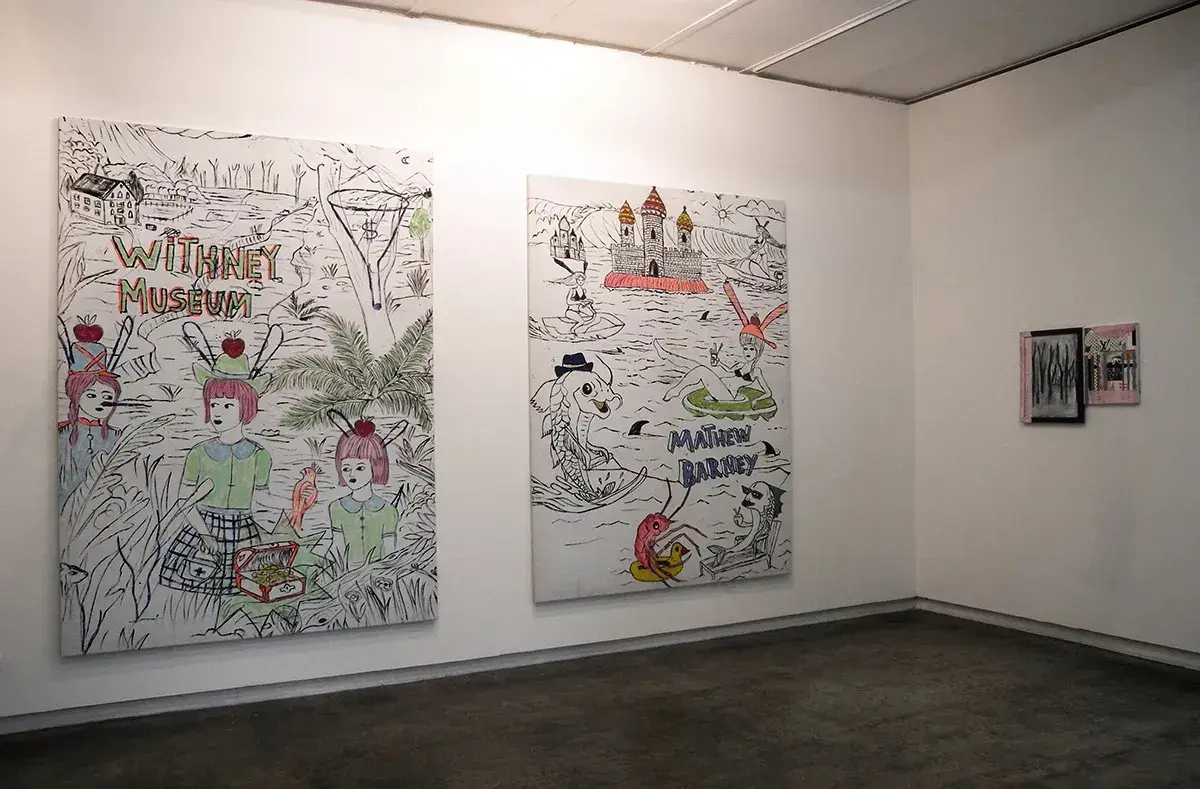
Luis Salazar. A Landscape in Time of Drought, 2016. Galería Carmen Araujo Arte.
An understanding of and admiration for dissimilar artistic tendencies contribute to a highly contrasted production in which multiple references converge in a kind of mix. Ruth Auerbach, curator of Héroes Caídos, notes that artistic practice is conceived as a tense territory in which the profound contradictions of the politics of consumption in mass society and of art as a commodity are brought into dispute. [5] It is striking how the principle of contradiction reaches a kind of paroxysm in many of Salazar’s works: a montage that, without being cinematic, functions in Eisensteinian terms, where shock arises from the juxtaposition of images and planes with the explicit intention of producing meaning in the sequence—or in this case, the series. Here, the combination exposes pure contradiction. In Héroes Caídos, the performative was imbricated with the staging of the spaces at Sala Mendoza. This would become a recurring characteristic in some of his later exhibitions.
Performance has been one of the elements incorporated into this artistic conception. We are not speaking of a body artist, but of an artist who makes a body with his work. It is an art/life premise in line with that developed by certain artists associated with the Fluxus movement in the 1960s. Salazar himself, eccentric in his way of dressing, has also ventured into fashion design, creating garments that incorporate elements of his painting and of his broader plastic expression. Consistent with the tradition of art for art’s sake that has operated since the first artistic avant-gardes—those which, from Manet or Courbet, Flaubert or Baudelaire onward, cleared a space of autonomy for artistic activity—Salazar’s is a body of work whose object and content is art itself, the art system.
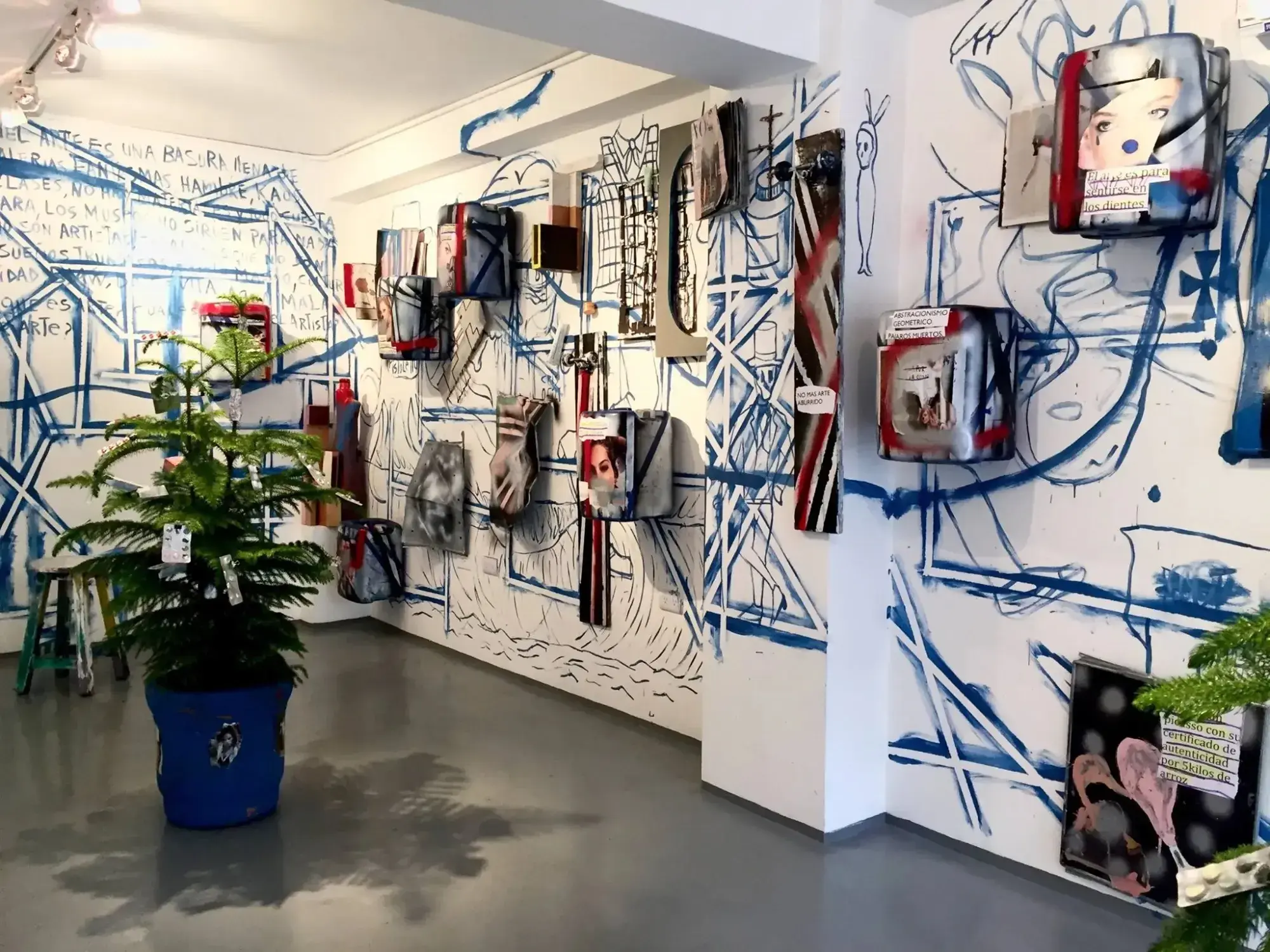
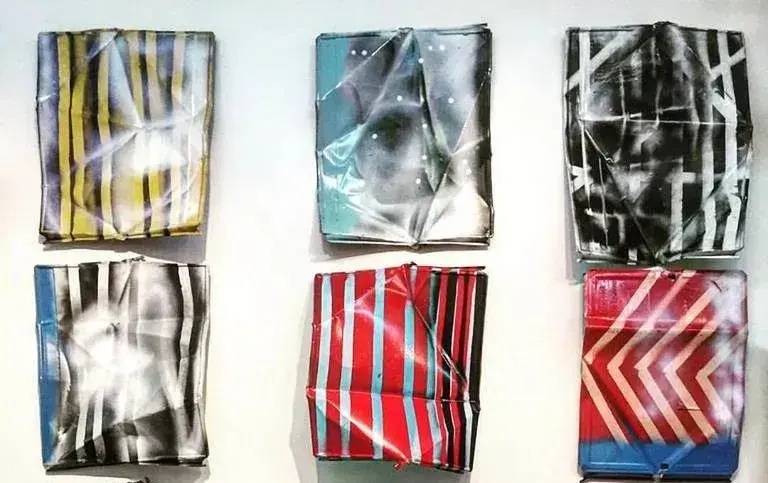
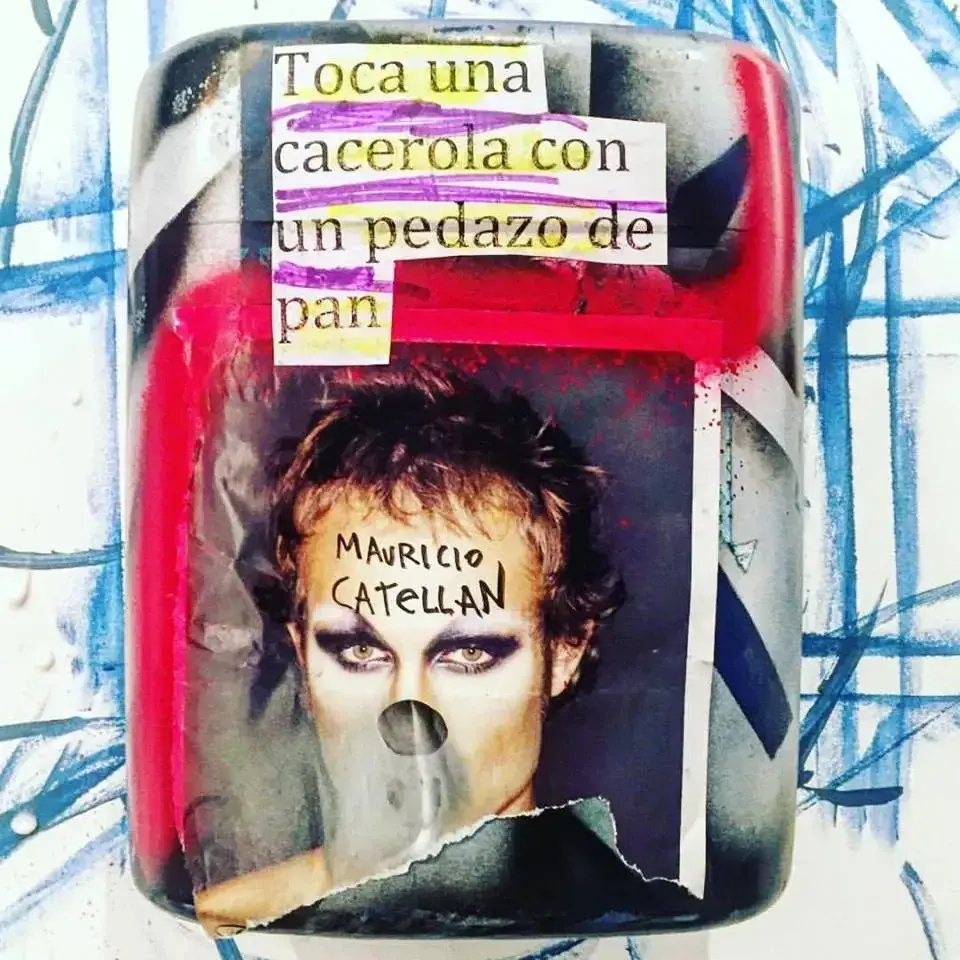
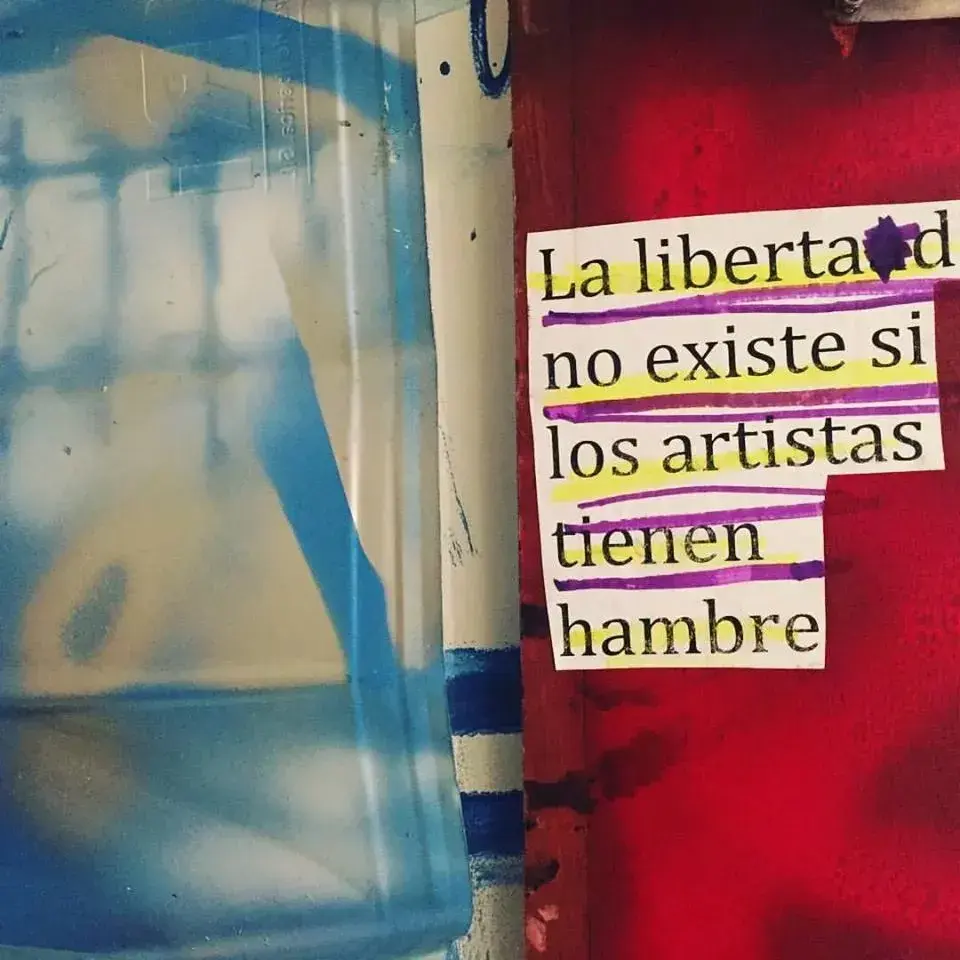
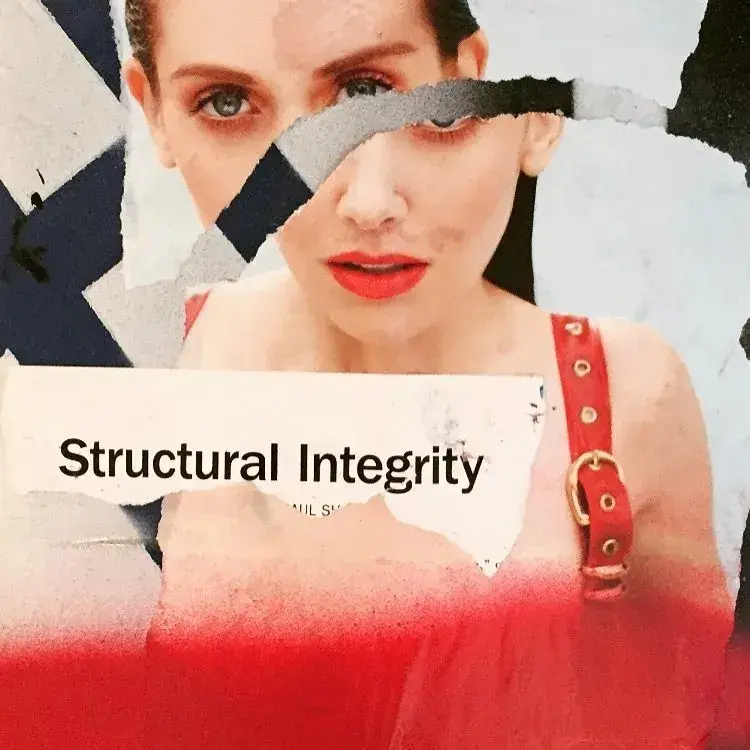
Luis Salazar. Nothing Is the Same Anymore, 2016. Espacio MAD. Photos courtesy of Galería Carmen Araujo Arte.
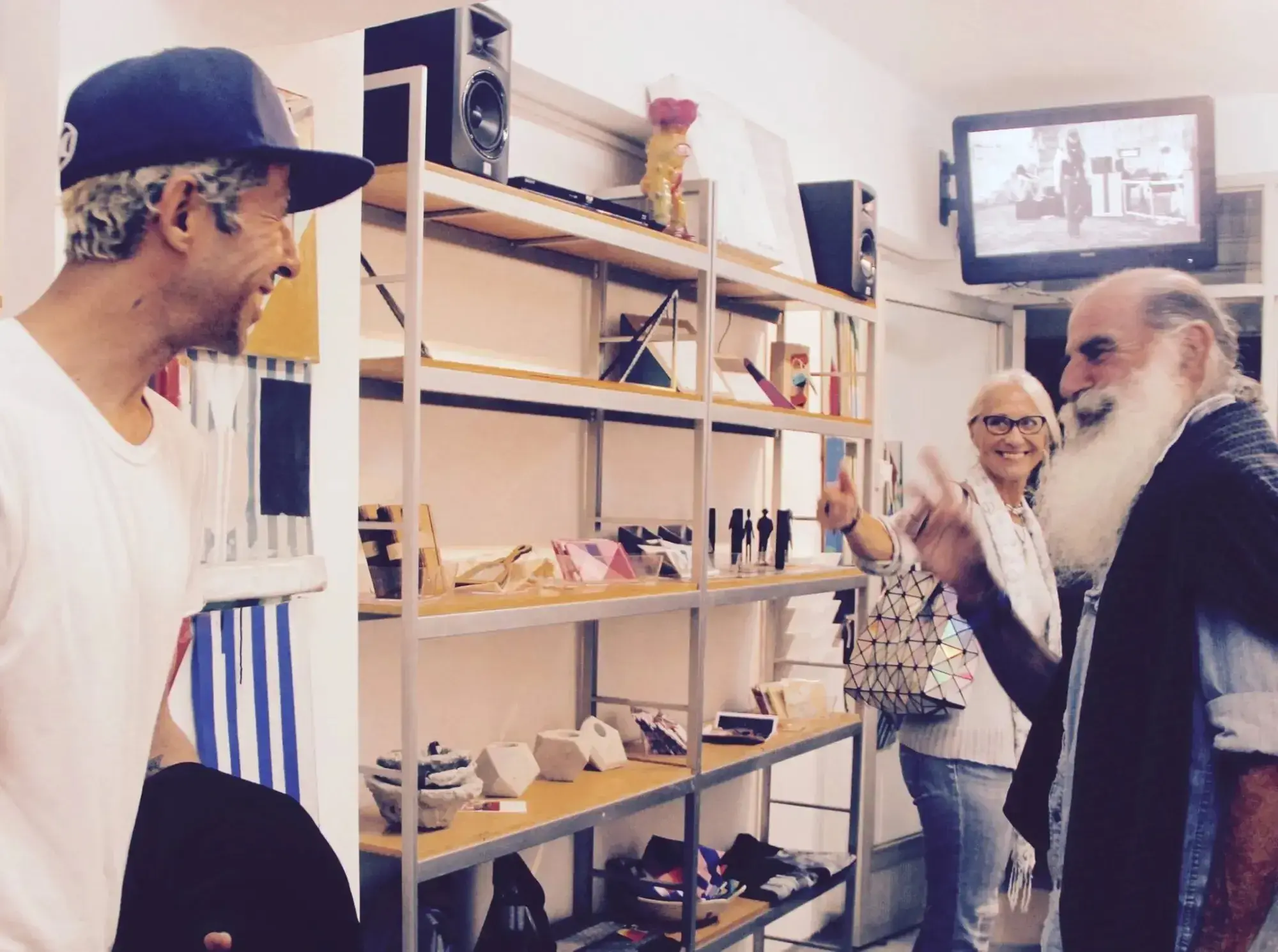
Luis Salazar with Carlos Castillo and his wife. Photo courtesy of Galería Carmen Araujo Arte.
Salazar’s artistic activity leads him toward practices more akin to those of an urban archaeologist of visual culture than to those of a sociologist. He pours into his works both his referential world of the art system and all of his urban imagery, coded in the same raw, trash aesthetic that is so distinctly his own.
Here we may establish a relationship between certain characteristics of this practice and some of Bourdieu’s ideas, according to which the symbolic value of the work of art exists only when the work is known and recognized: “The producer of the value of the work of art is not the artist but the field of production as a universe of belief that produces the value of the work of art as fetish by producing belief in the creative power of the artist.” [6]
The space of possibles constitutes part of the system of categories that contributes to the historical inscription of works. In a specific context and moment, it is the set of conditioning impositions and, as its counterpart, the set of their possible uses. This tension between the possible and coercion characterizes artistic production and circulation in society, which in our case offers particular resistance to the professional development of the intellectual field of the arts. Bourdieu defines the space of possibles as follows:
“…the finite universe of the potentialities liable to be thought and realized at the moment under consideration—freedom—and the system of impositions within which what has to be done and thought is determined—necessity.” [7]
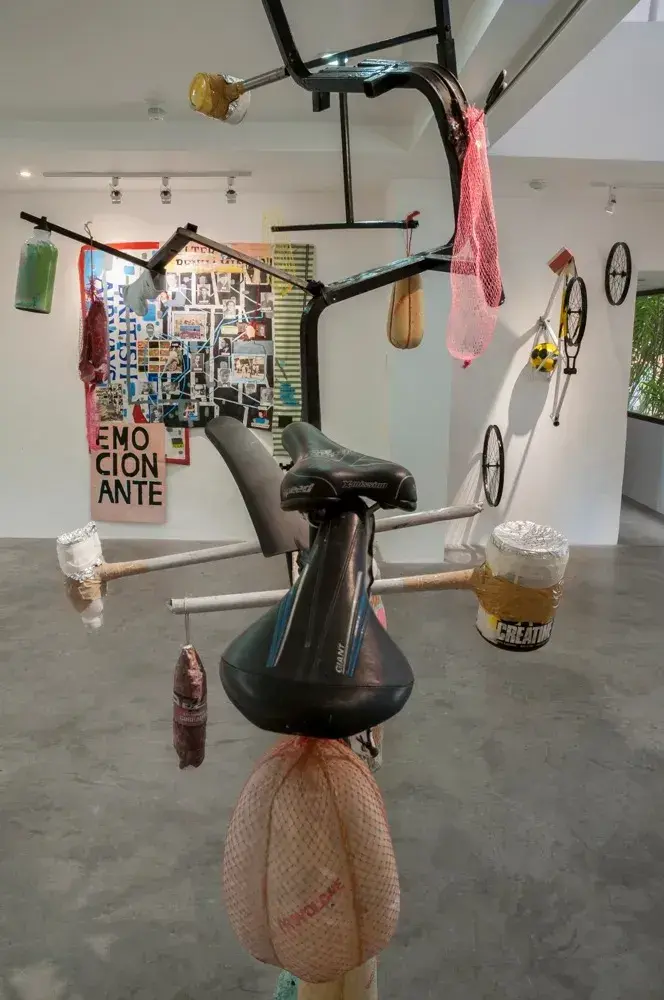
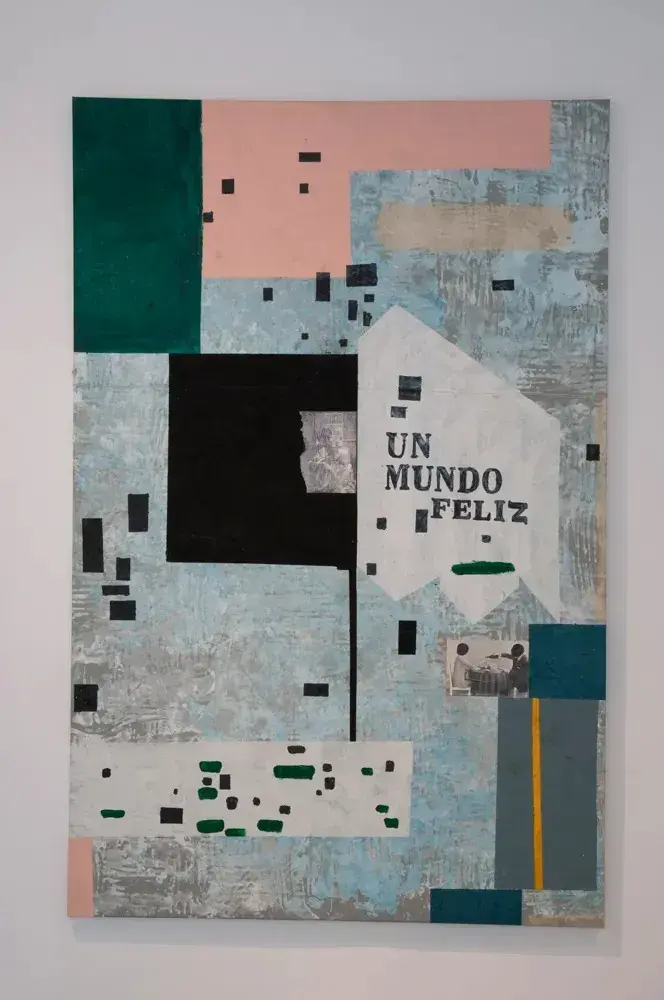
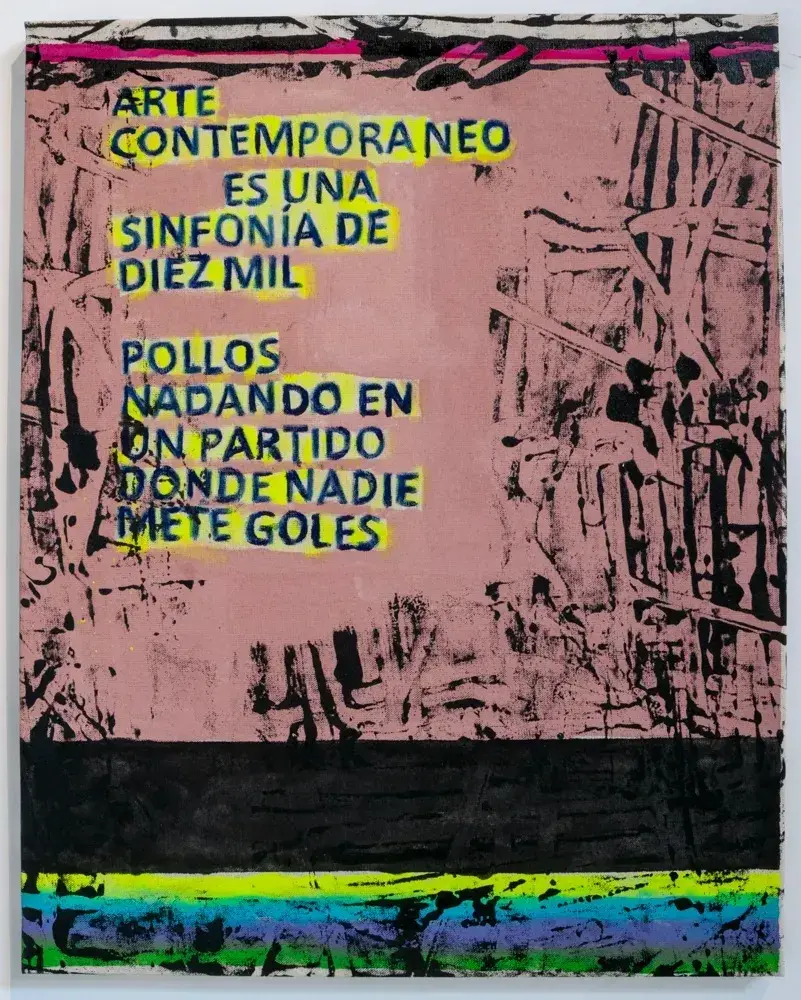
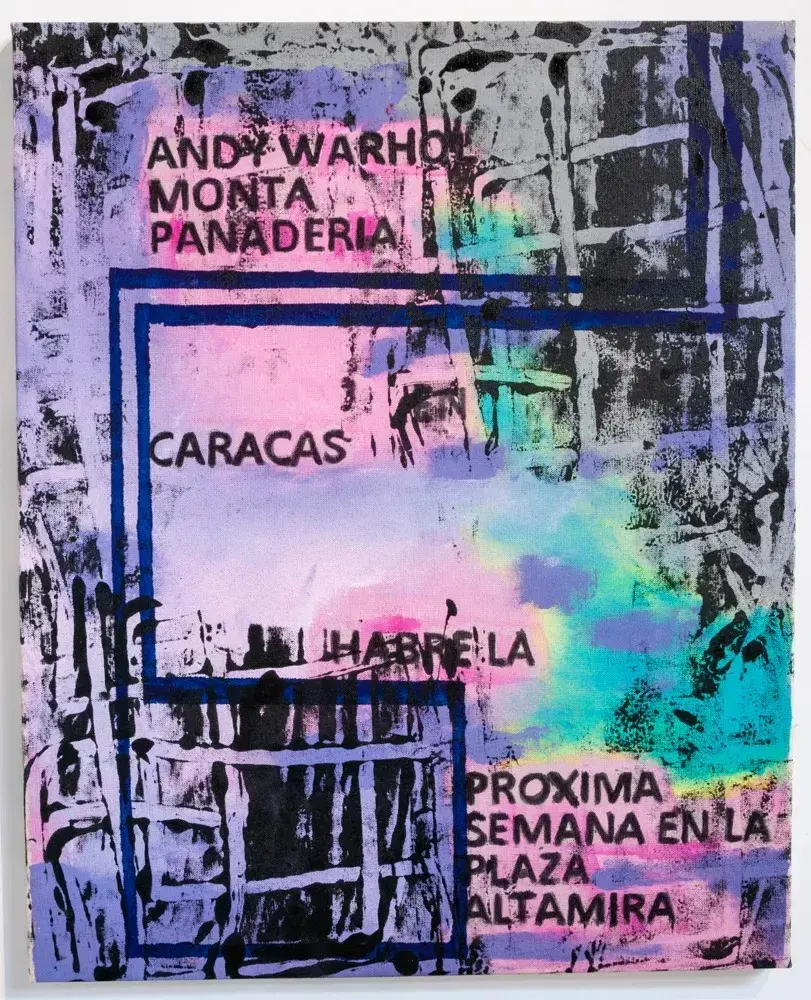
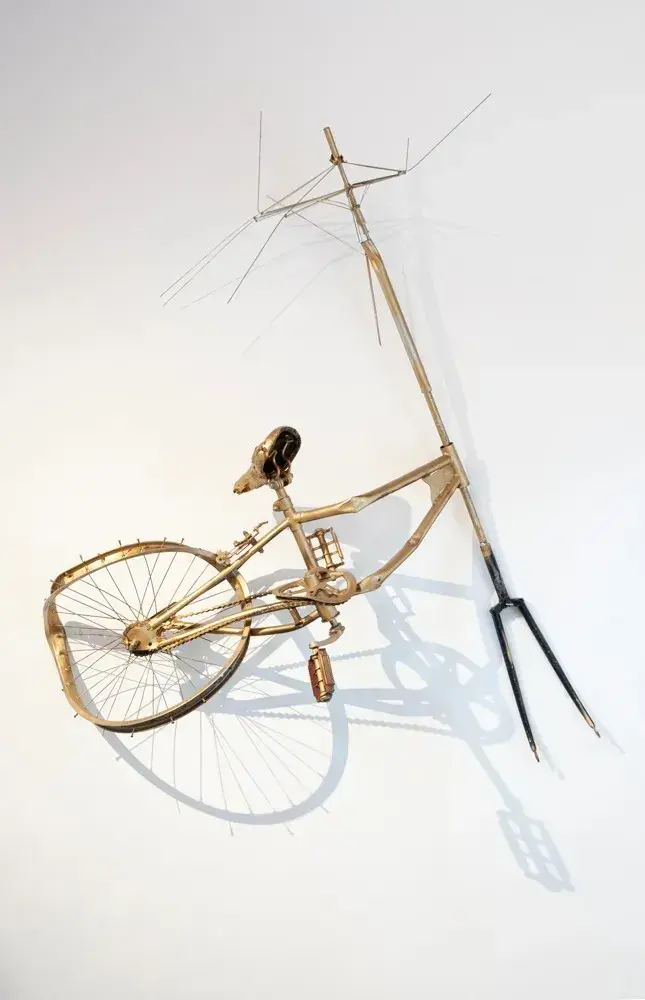
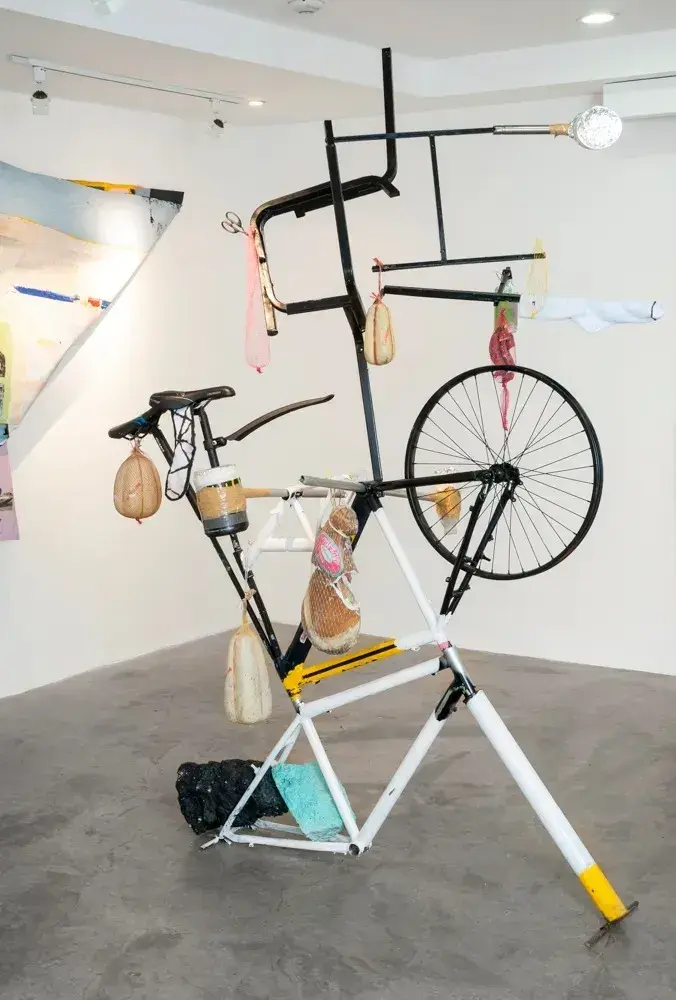
Luis Salazar. Lost Atlas, 2018. Photographs by Daniel Benaim. Galería Carmen Araujo Arte.
This idea of the space of possibles appears, in our view, projected with particular force in these works, sublimated to the point of becoming, to some degree, their very object, revealing that space as one in crisis: “Gagosian is like Chanel,” “A Damien Hirst is like a Nike shoe.” Luis Salazar’s work embodies a fissure within this space of possibles, symptomatic of its potential expansion.
These works are not only a response to displacement, as already noted; they also bring into relief the cultural abyss that exists between industrialized societies and contexts such as our own. This amorphous instrumentalization of the notion of “the art world,” returned to us in strange cartographies full of names and references, reveals, like few others, a concern with the place and role of the artist in a Third World society such as Caracas.
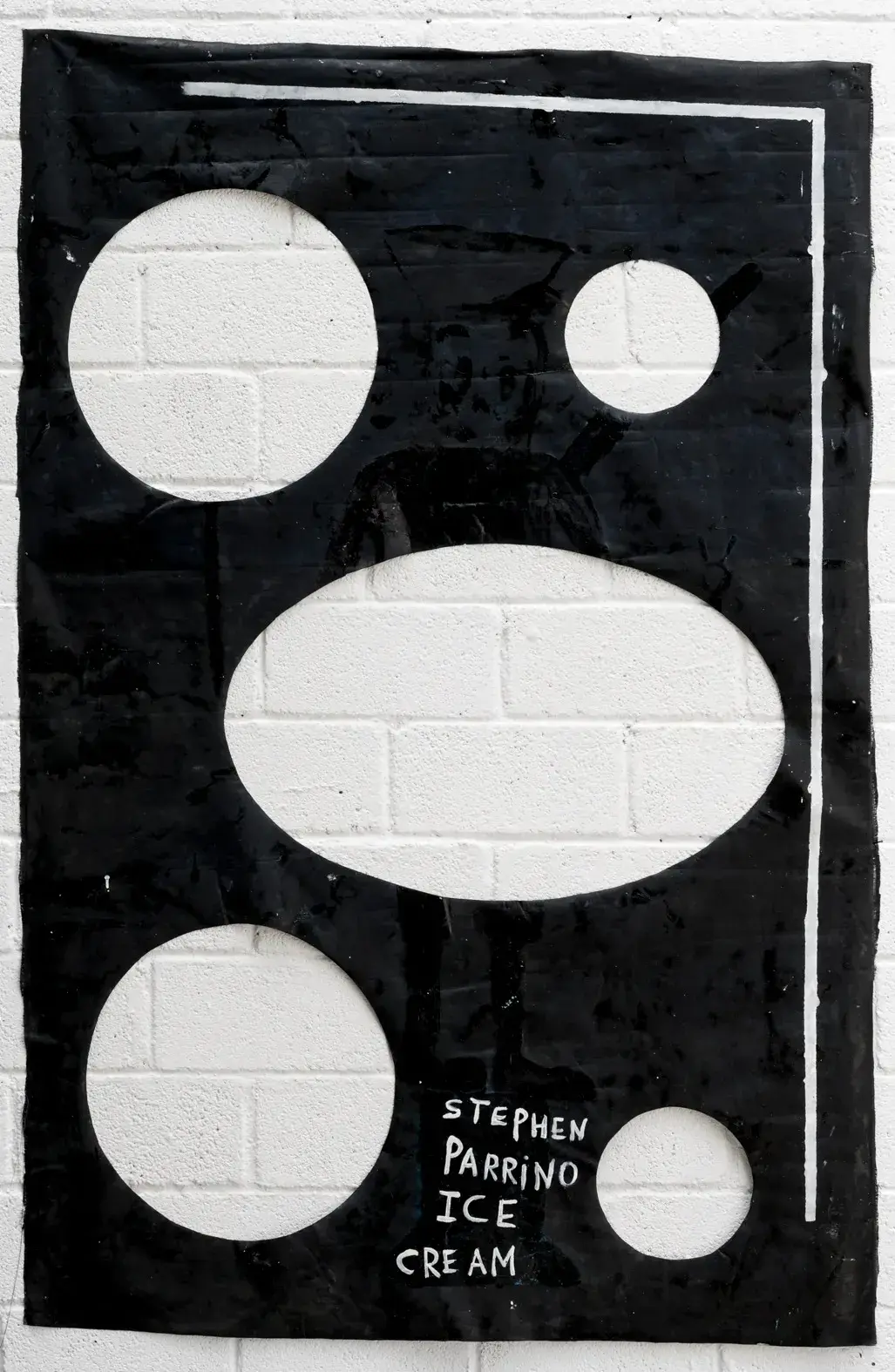
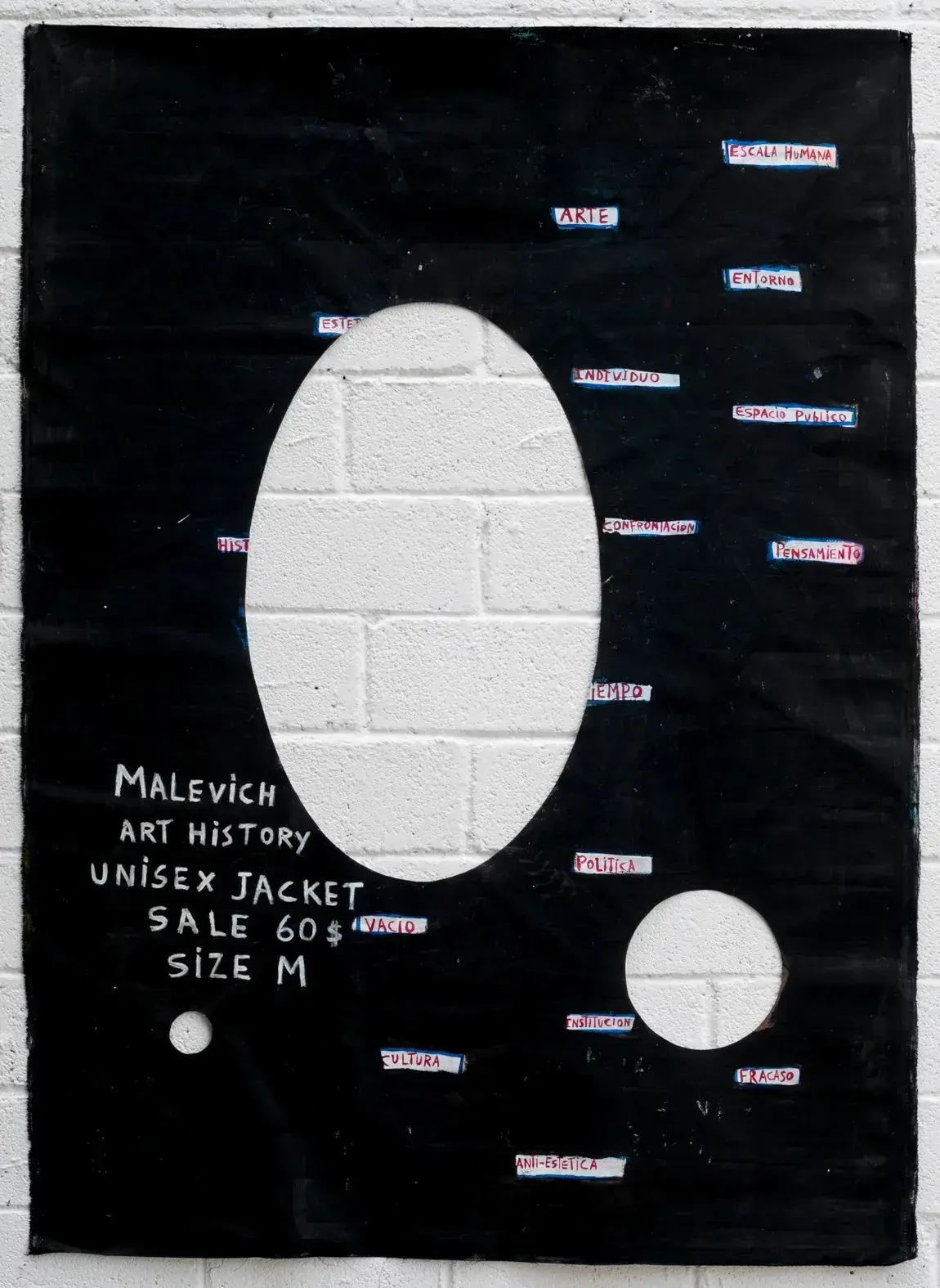
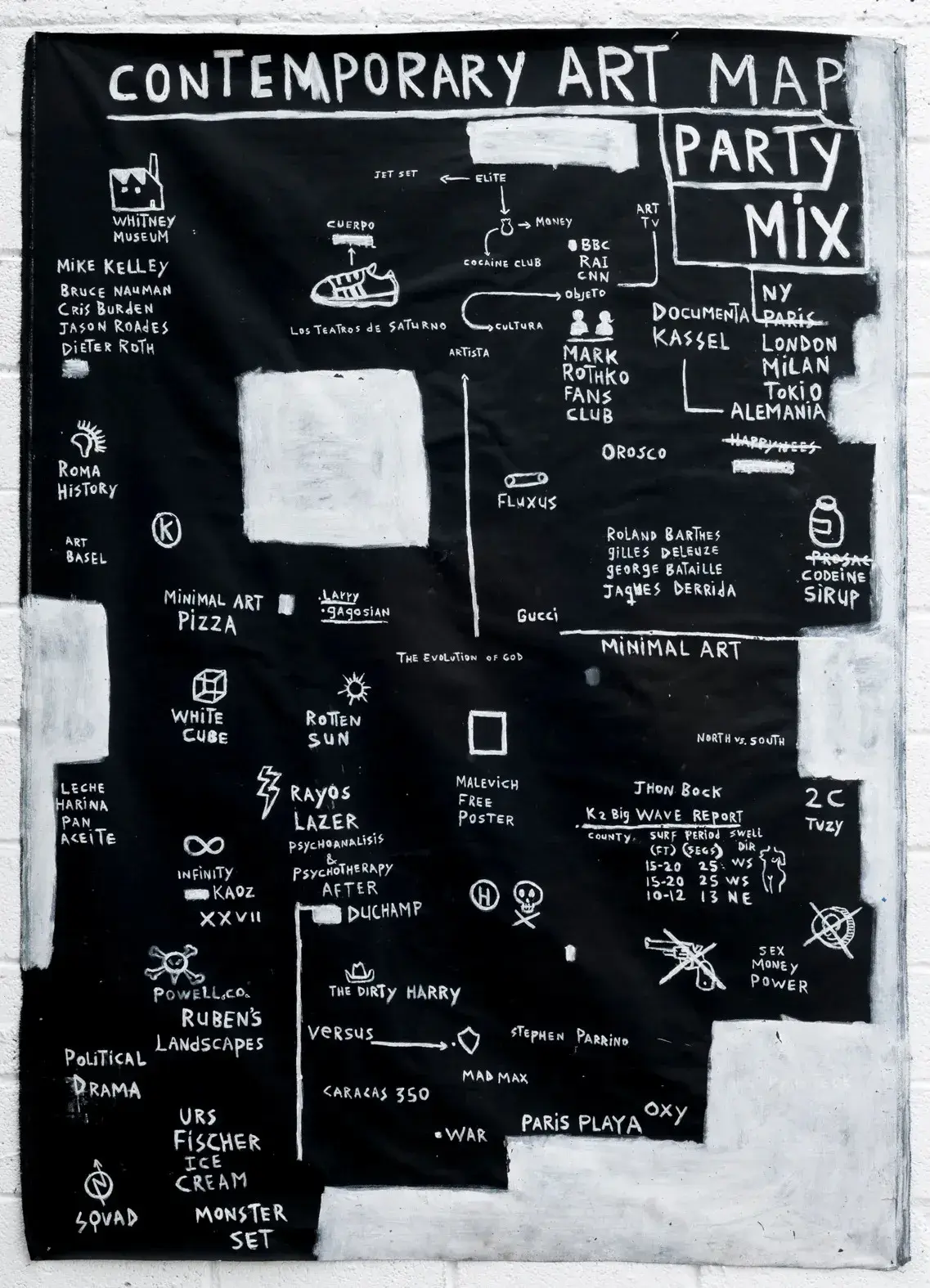
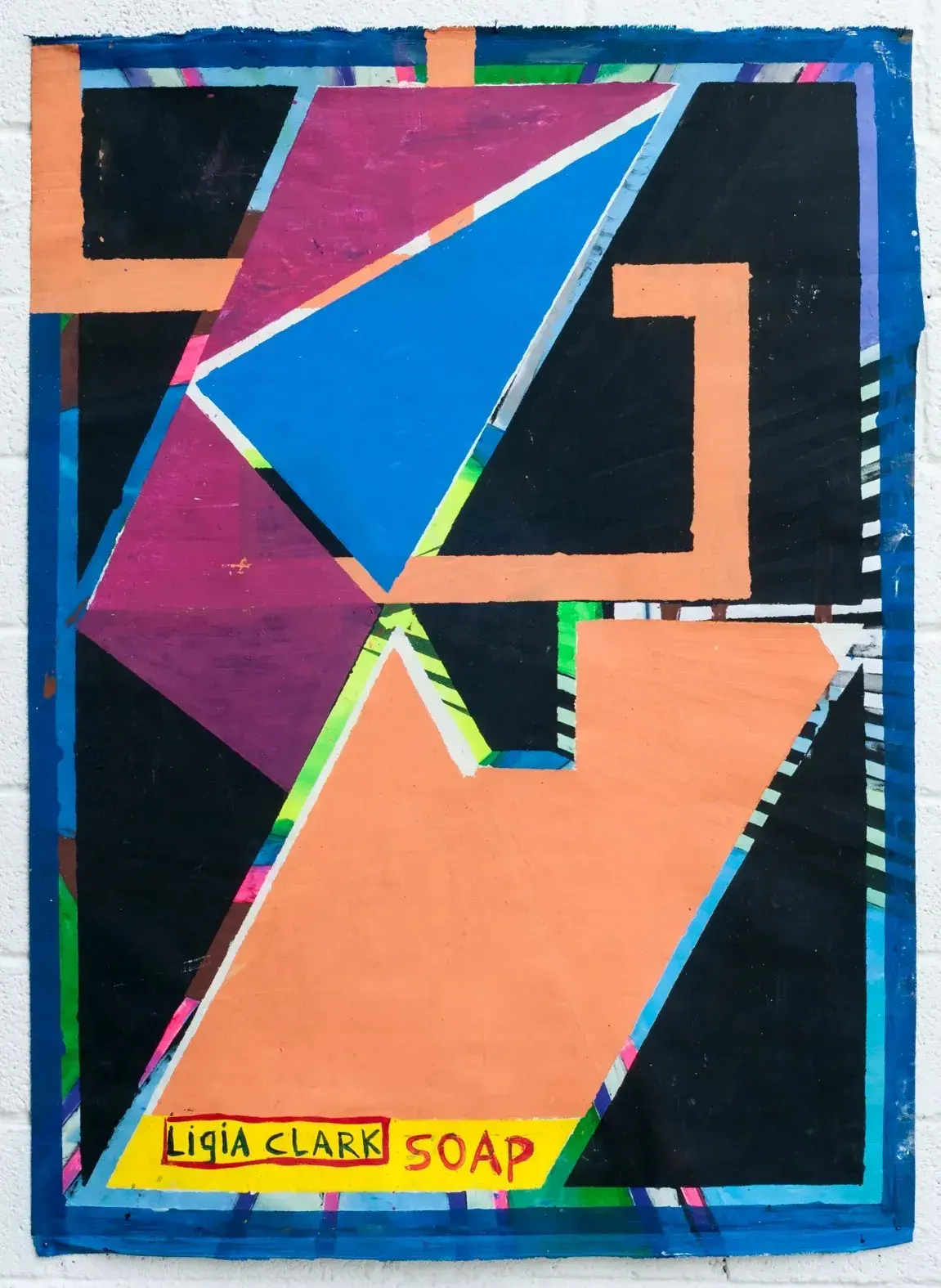
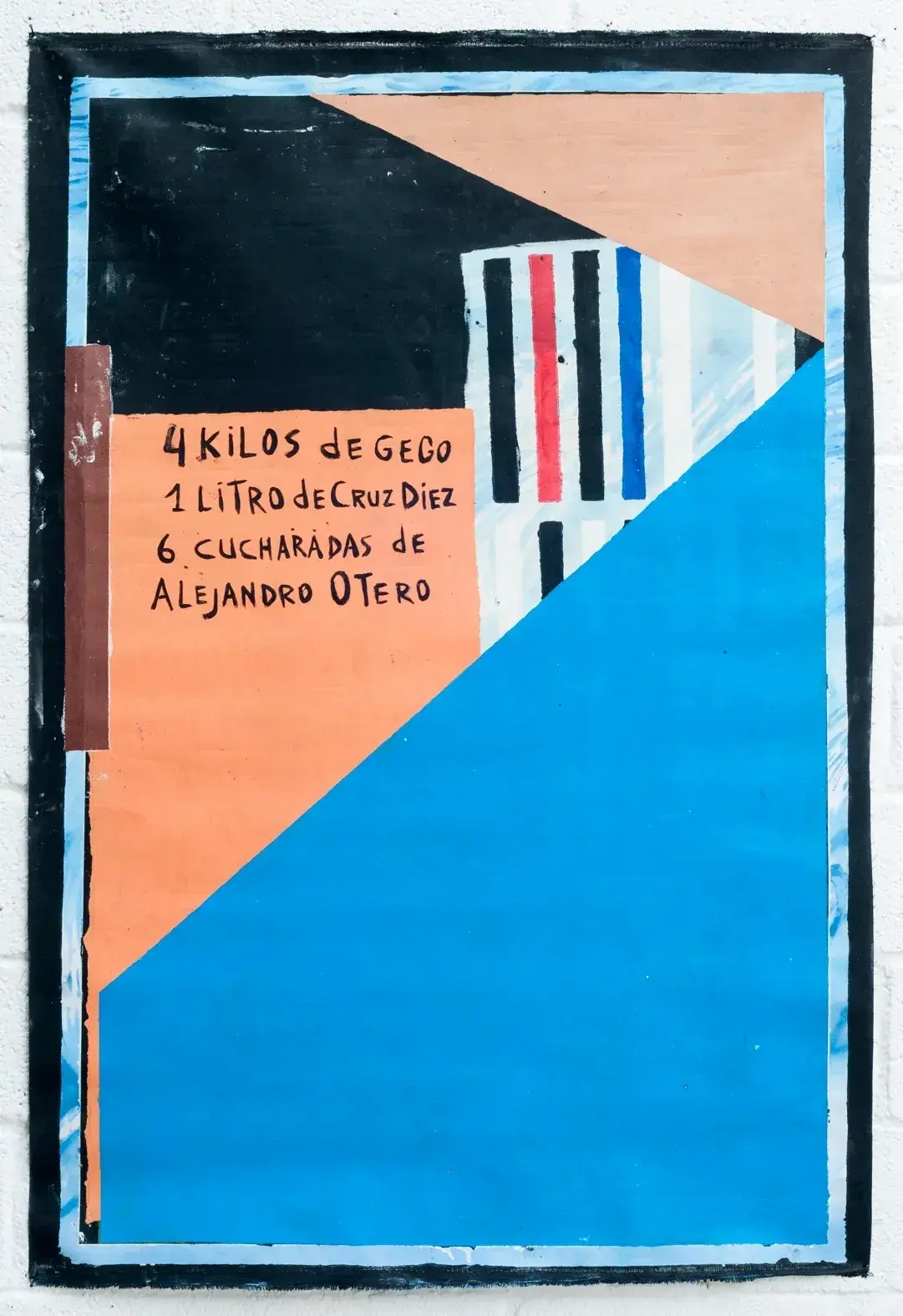
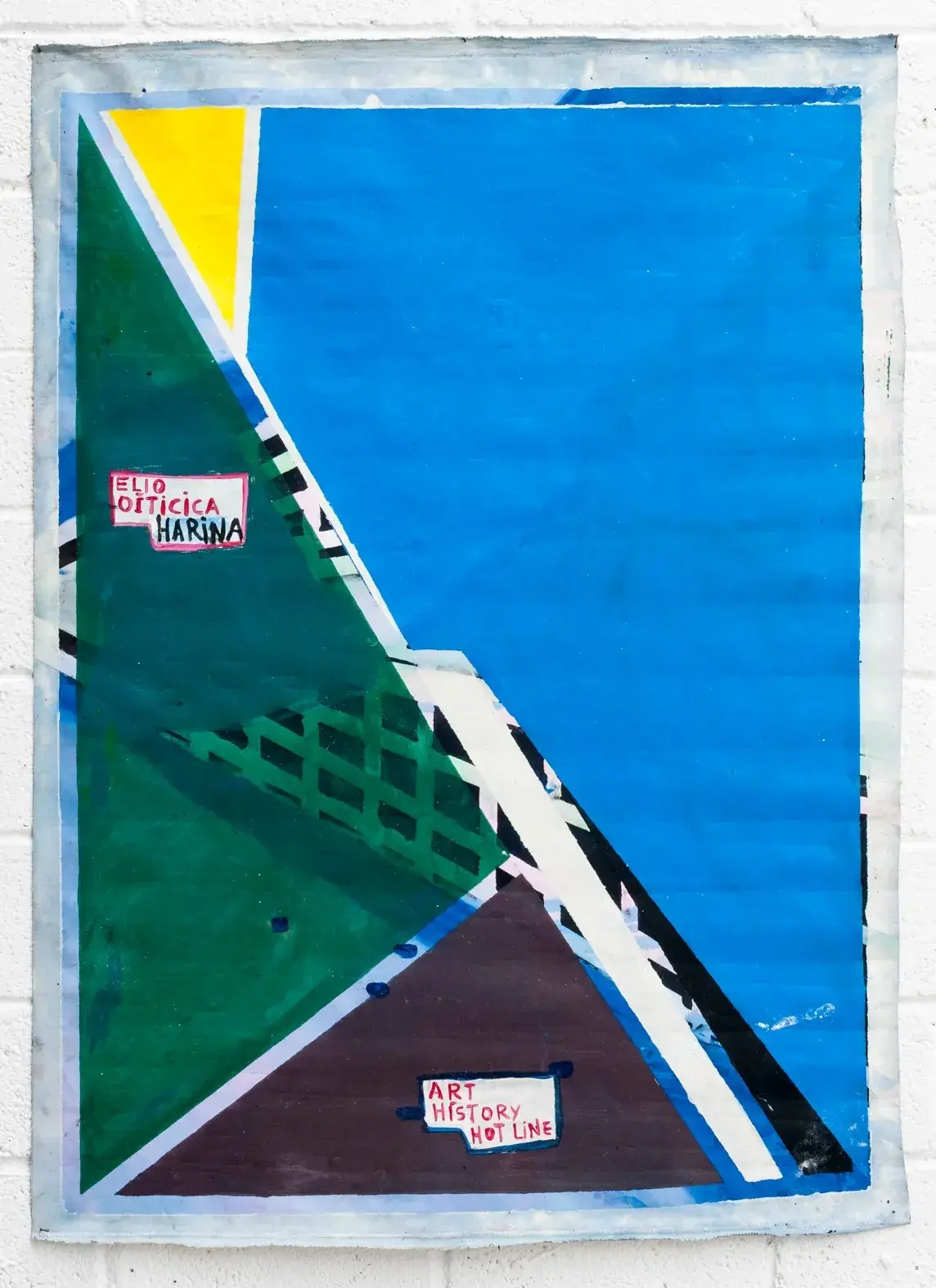
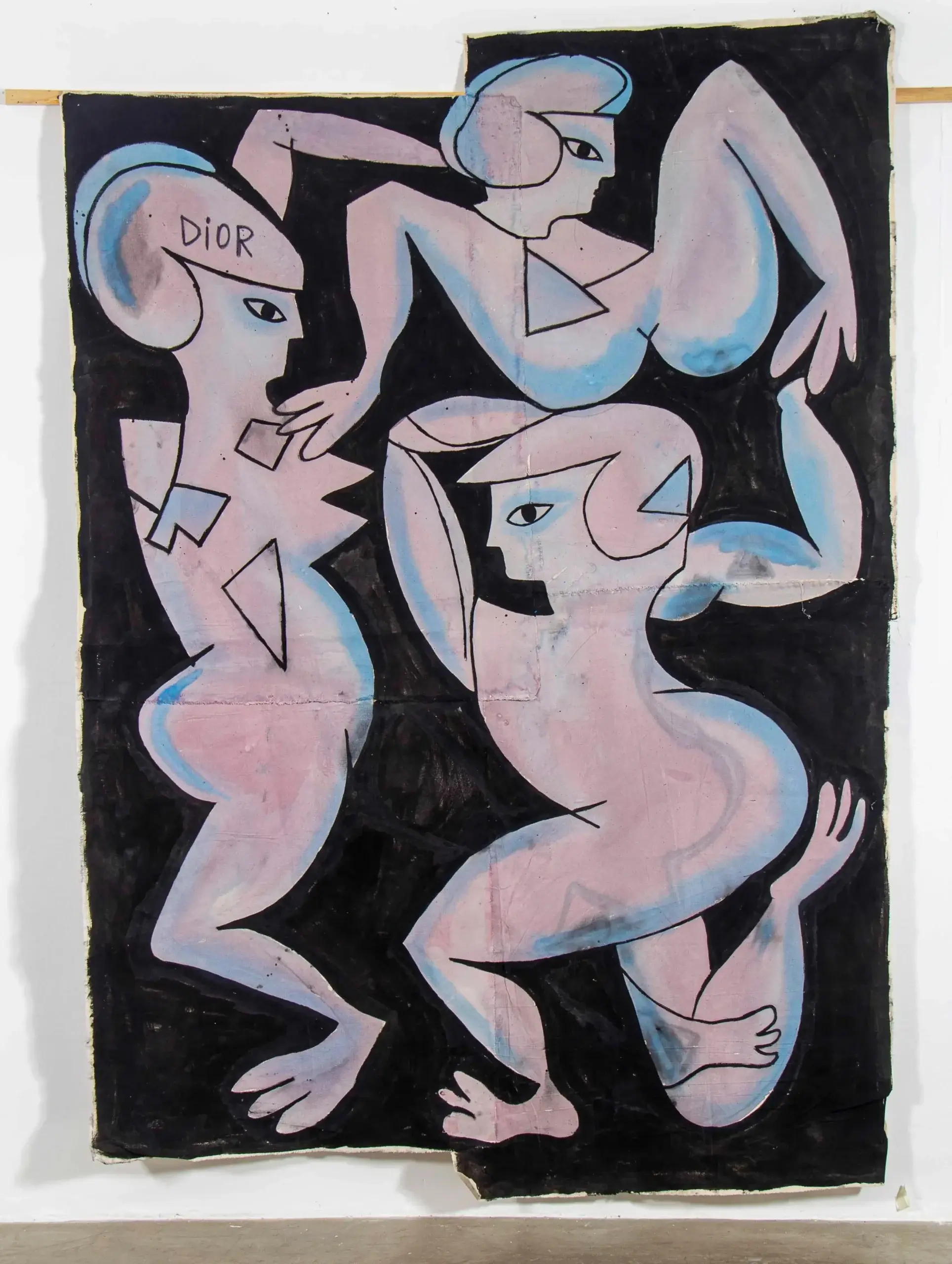
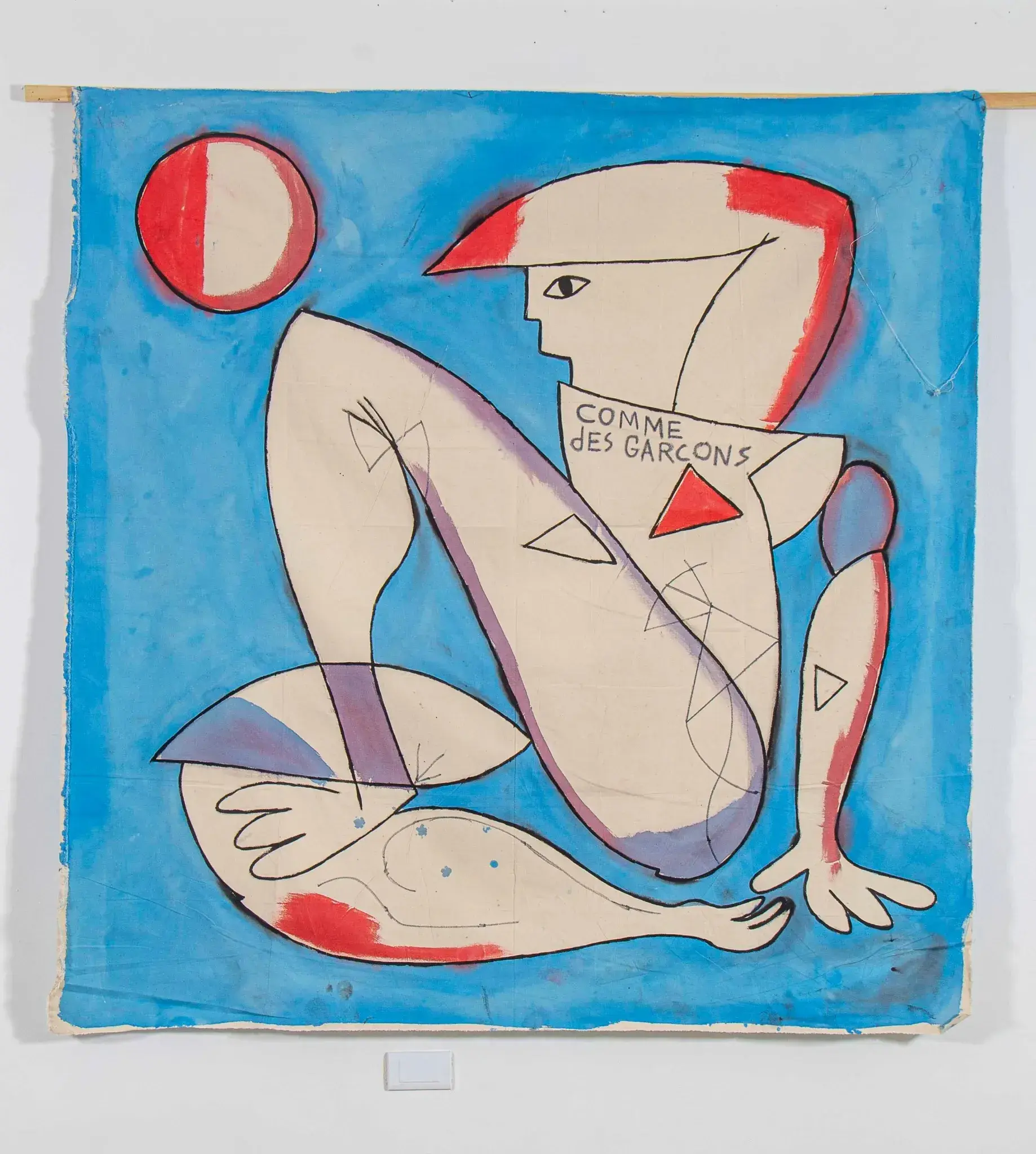
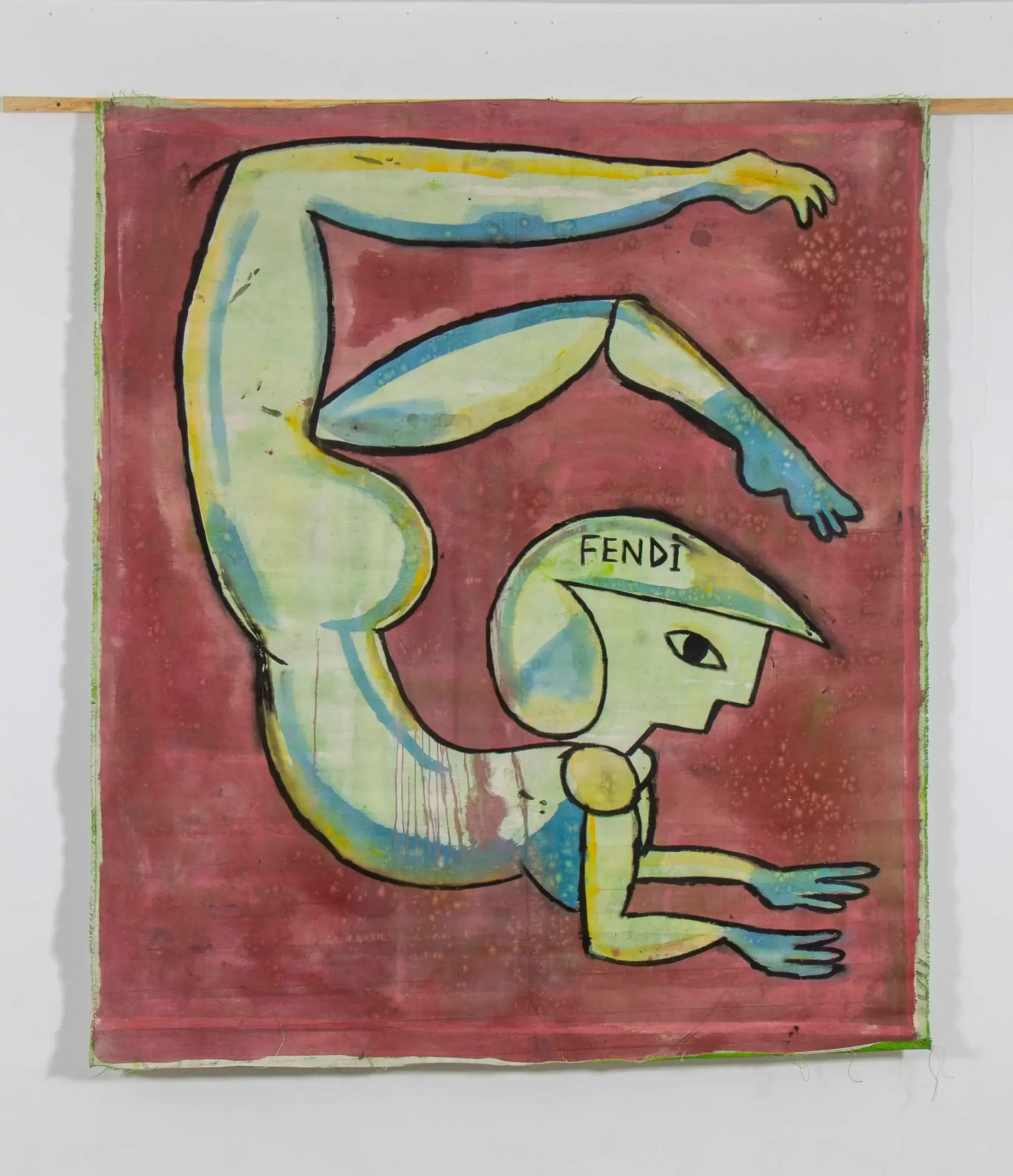
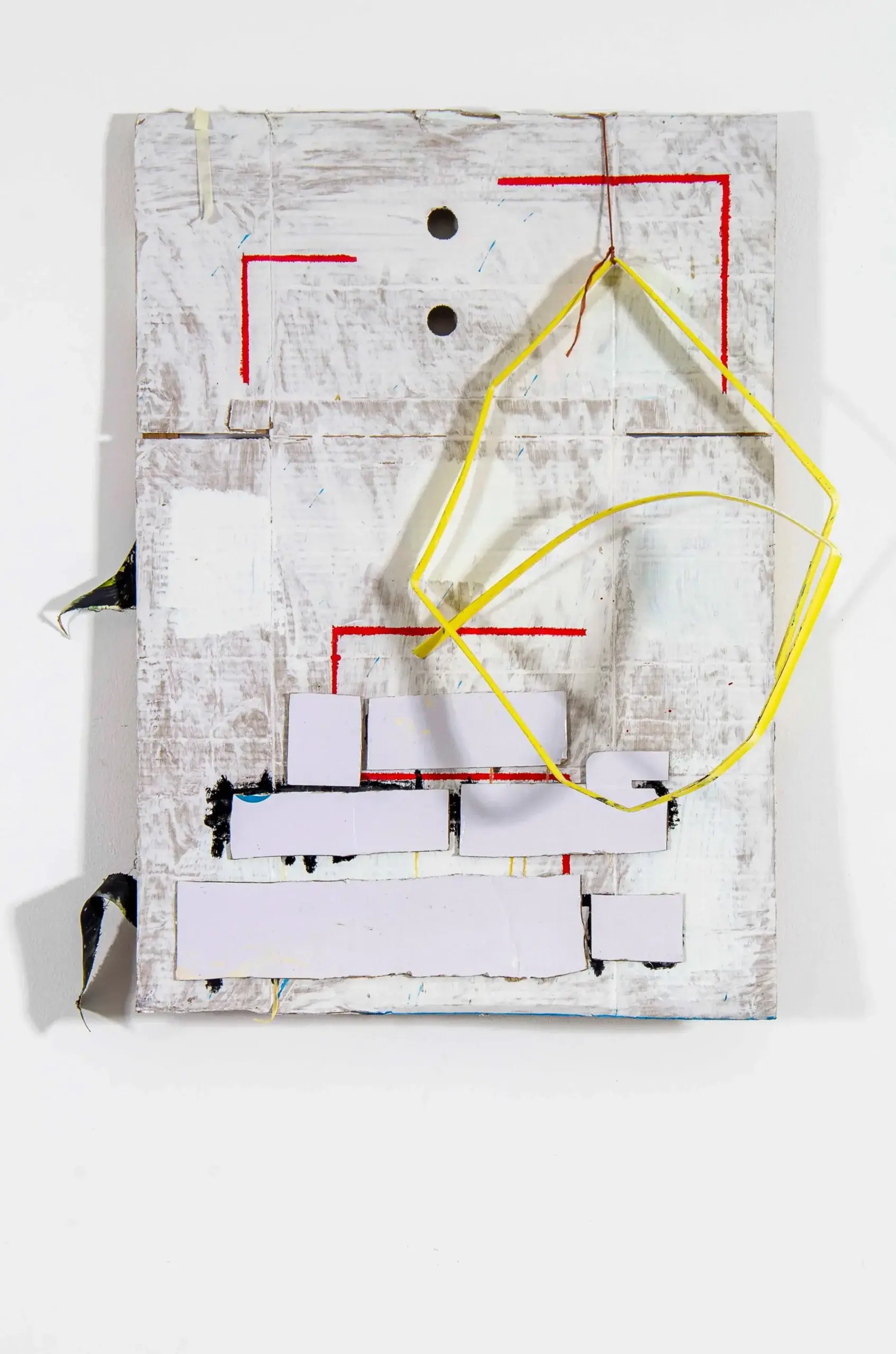
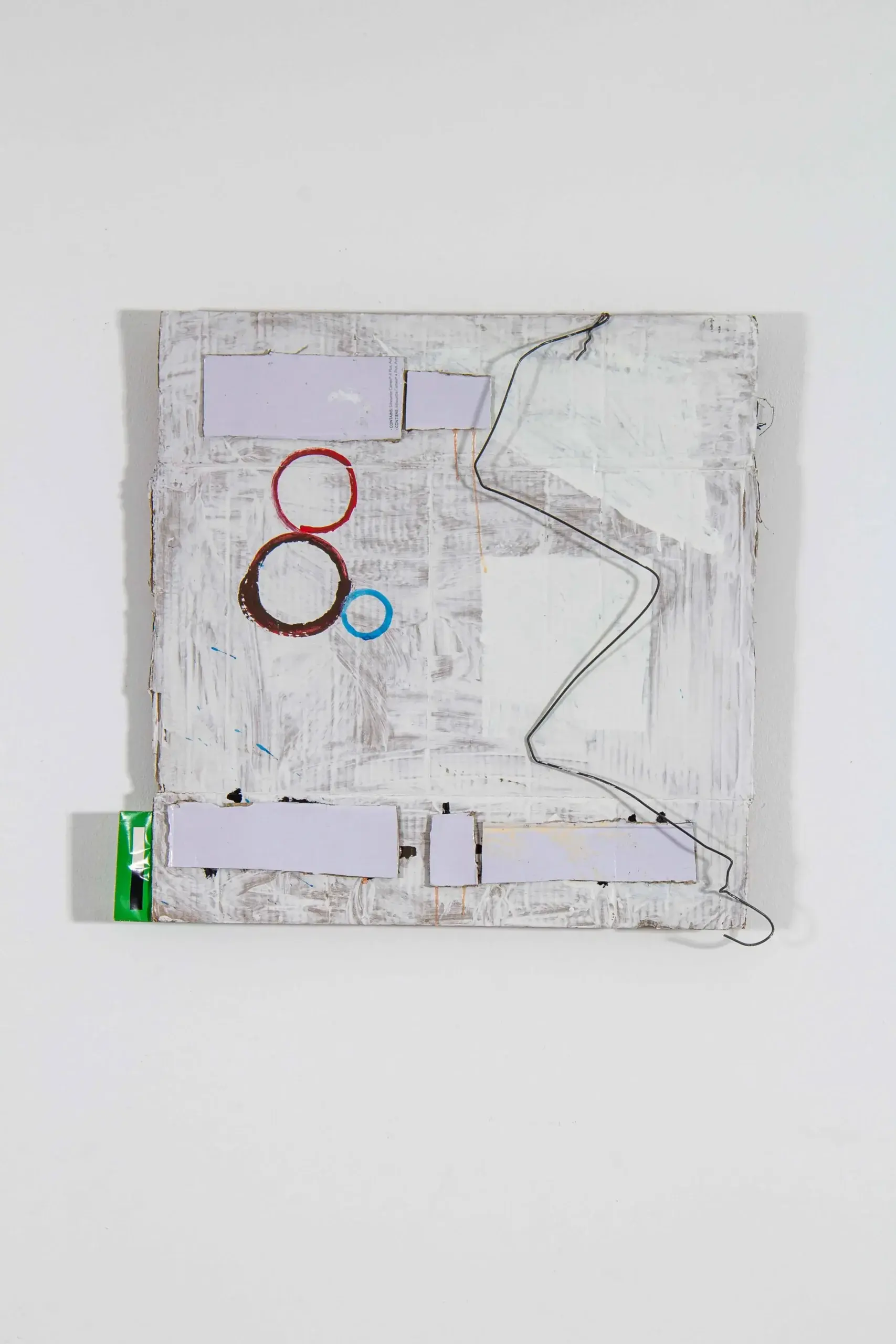
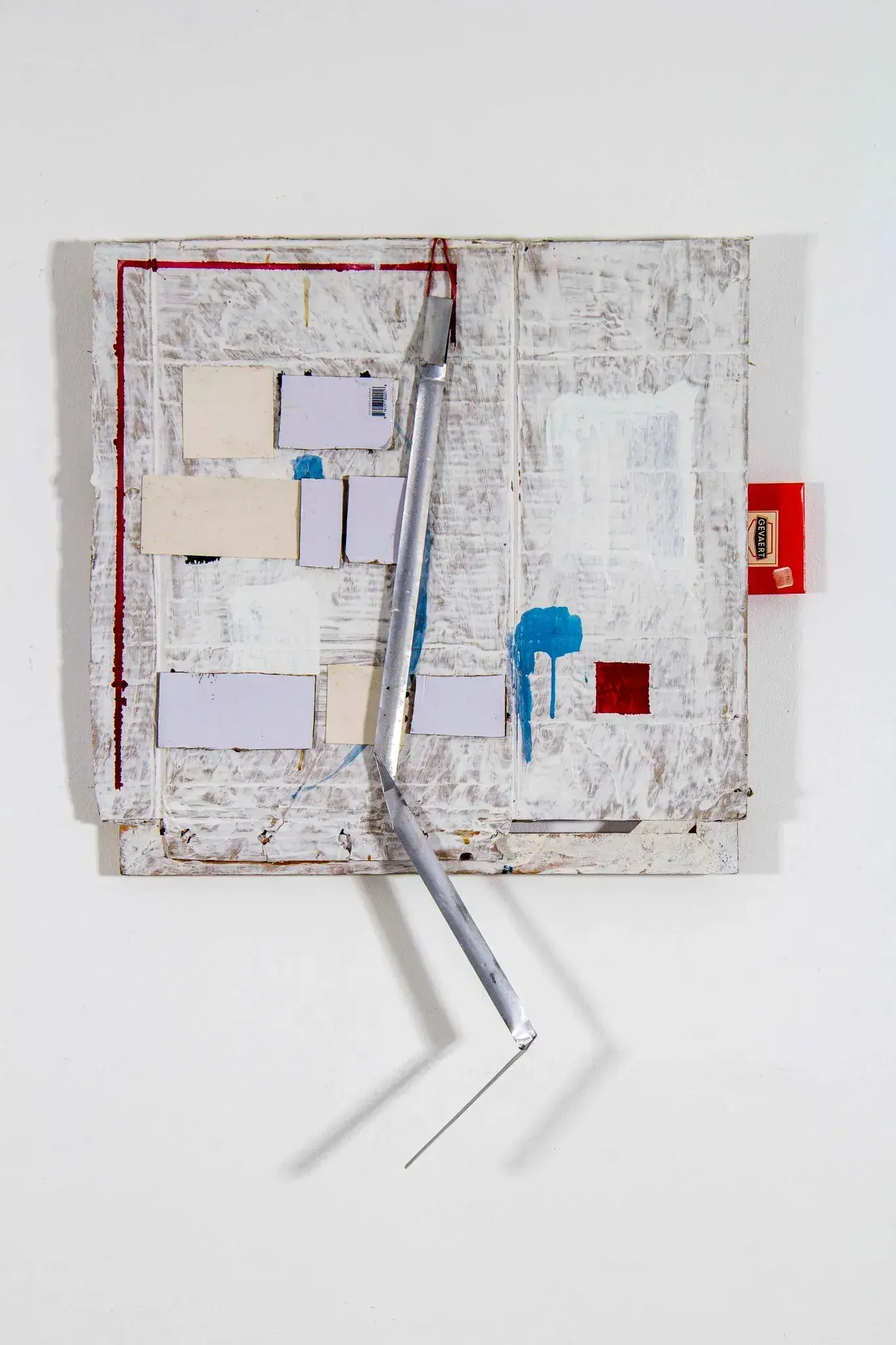
Luis Salazar. Art in America, 2021. Sala TAC. Photos courtesy of Galería Carmen Araujo Arte.
If there has been one constant in this artist’s trajectory, it has been an irreverent attitude and a permanent attempt to subvert and expose the system of legitimation within the cultural field of the arts, practicing an alternative mode of production and using recycled references to art and to other artists—along with paint and discarded materials—as material for the work. In the interview we held, he revealed that since his years in art school, he had felt a fascination with the work of John Baldessari, who openly drew inspiration from other artists’ work and even worked with their ideas, as he put it.
During the last decade, the artist has been represented by the gallery Carmen Araujo Arte, at whose venue he has held three solo exhibitions, the latest titled Lost Atlas; and in collaboration with other spaces, he has held three others, the most recent of which was Art in America at Sala TAC. In the context of the latter, a 64-page magazine-format publication was produced, featuring reviews of Art in America and Lost Atlas, along with the Pinardi text discussed here, a text by María Luz Cárdenas, and the Héroes Caídos essay by Ruth Auerbach.
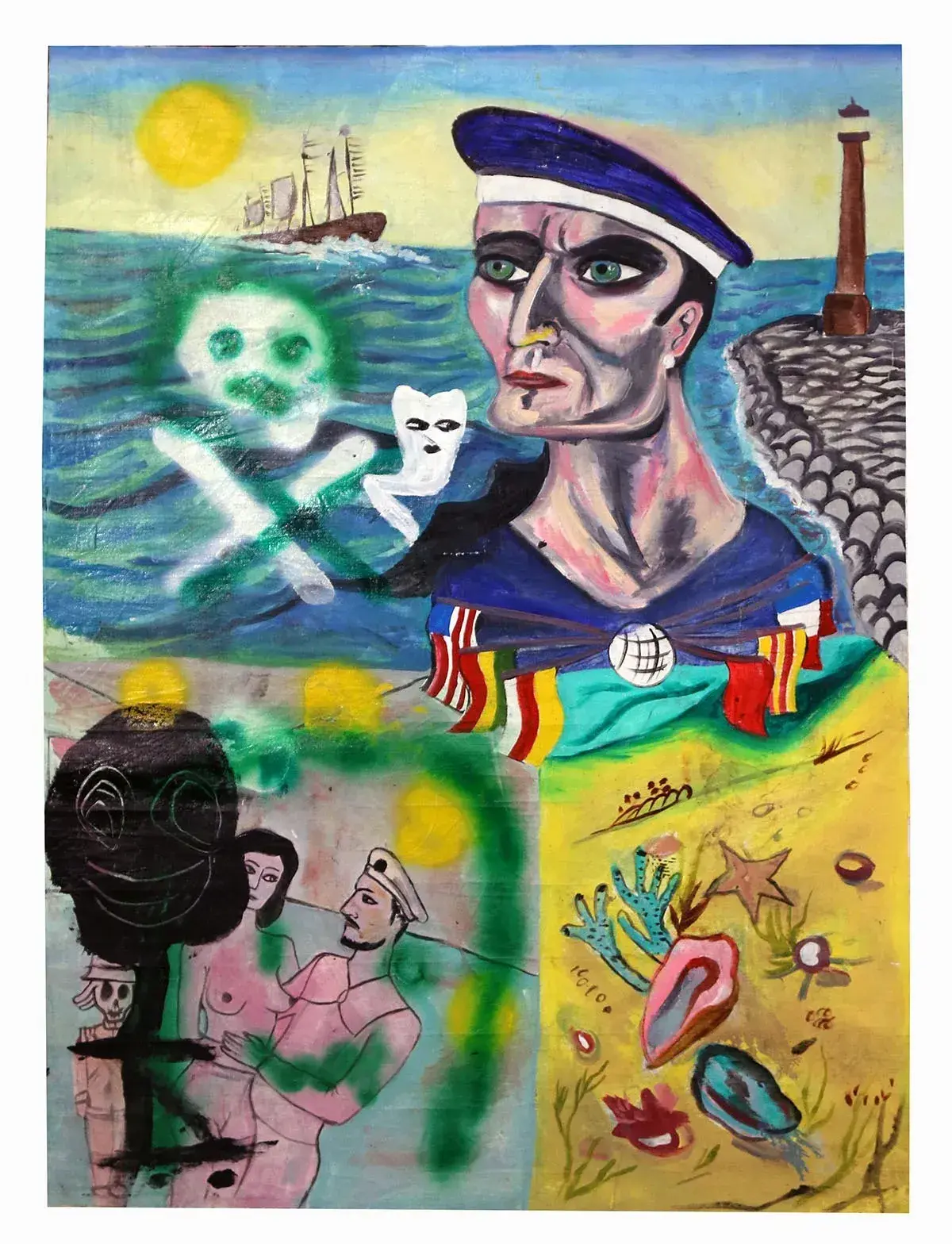
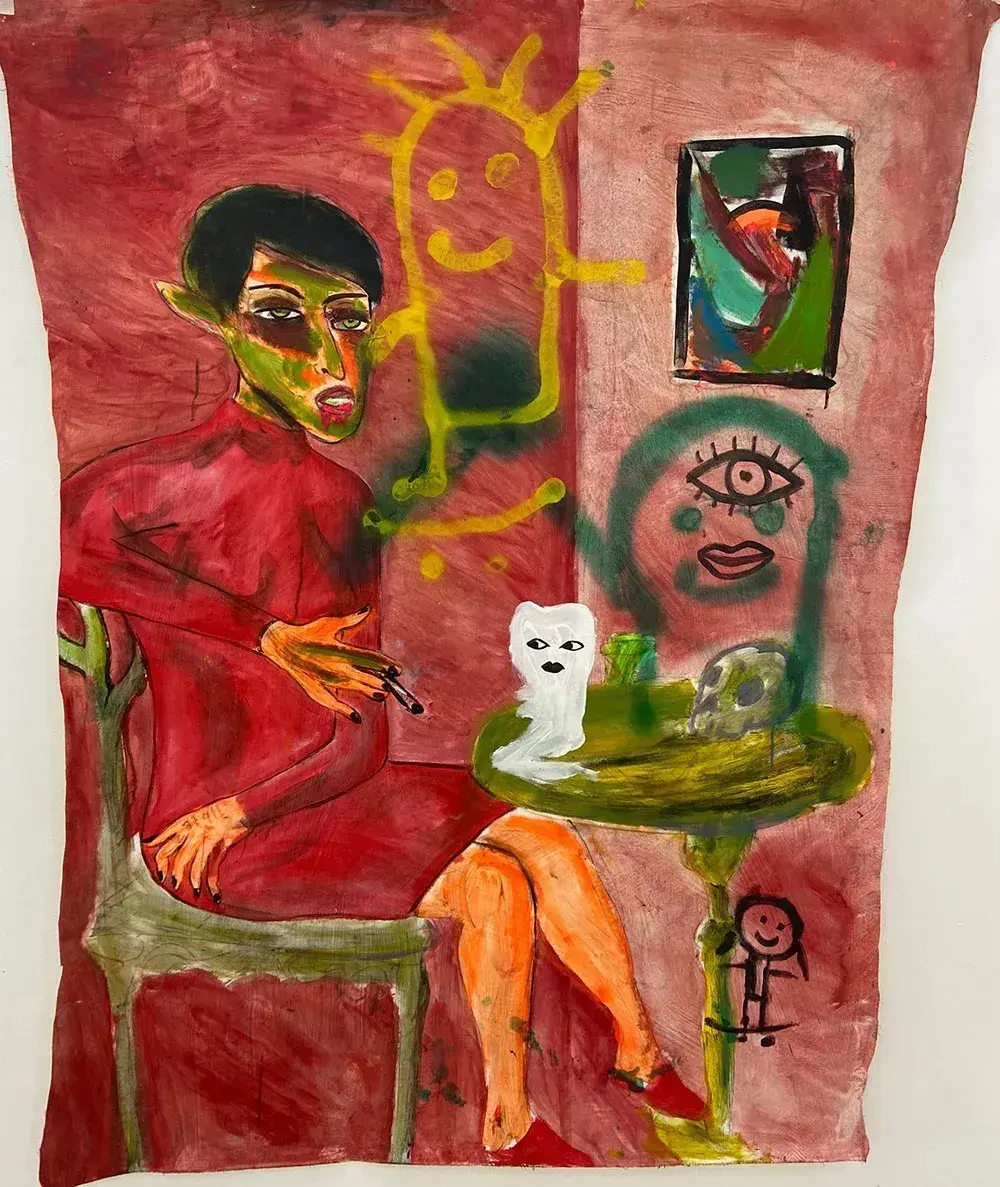
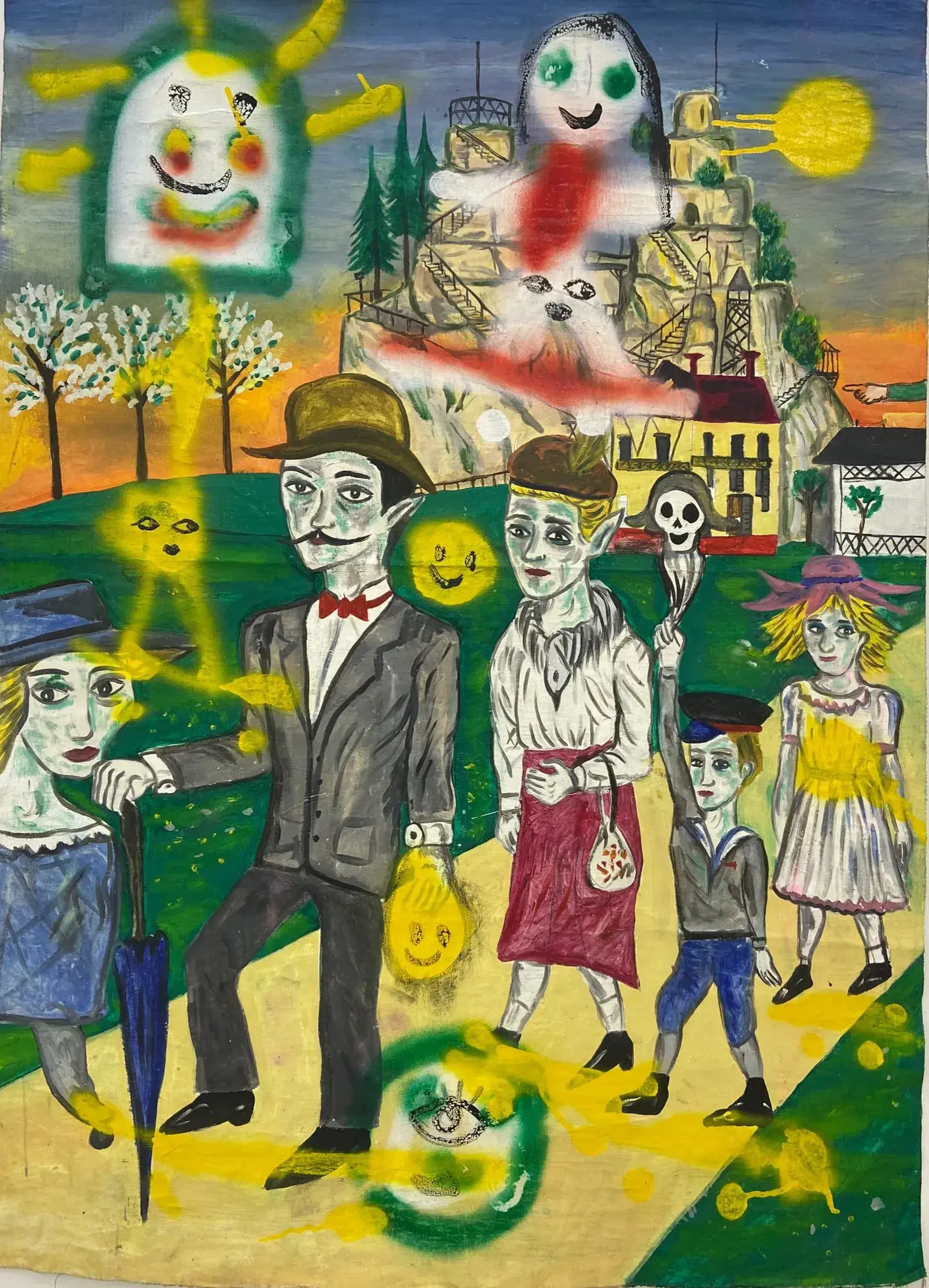
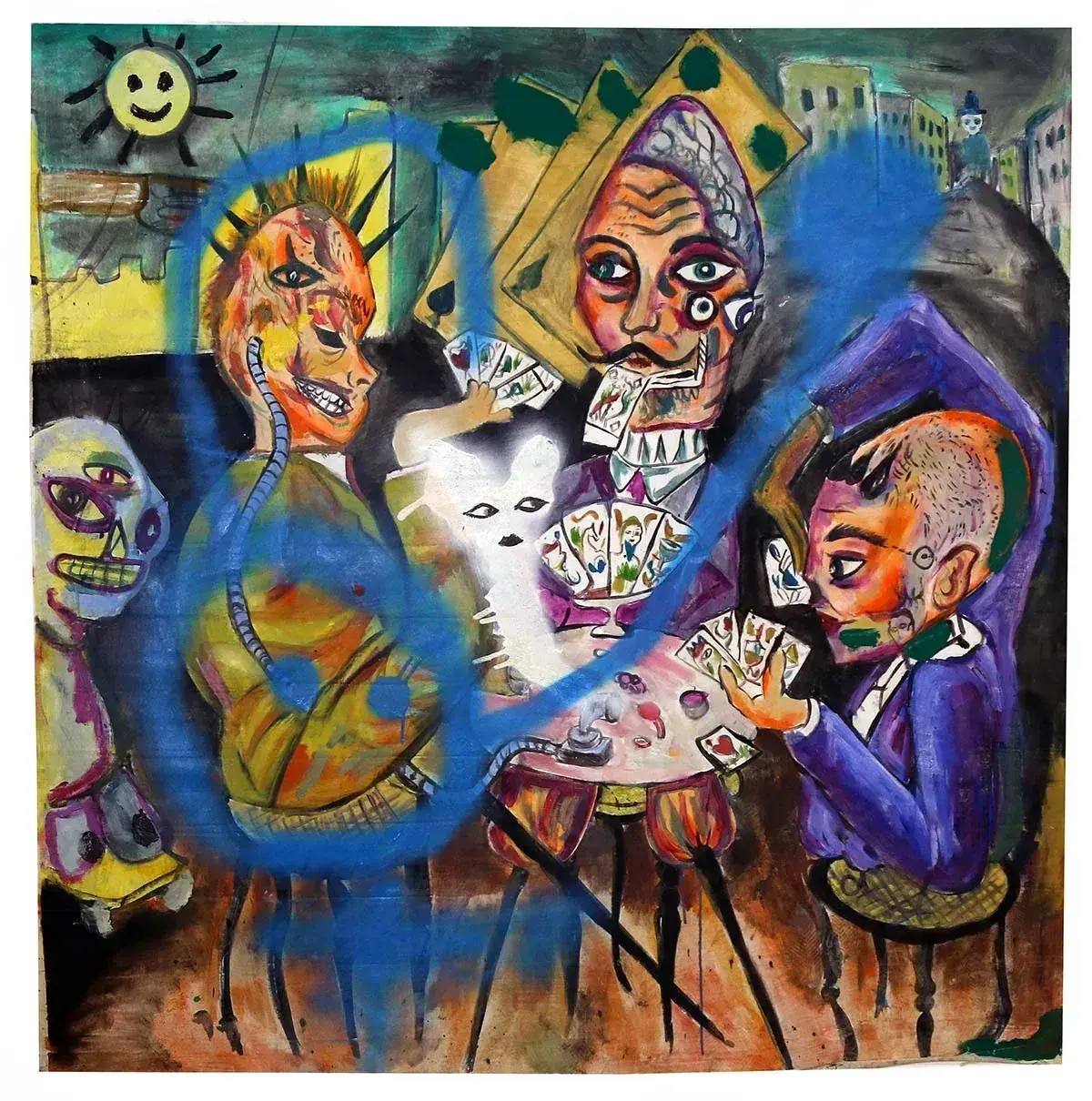
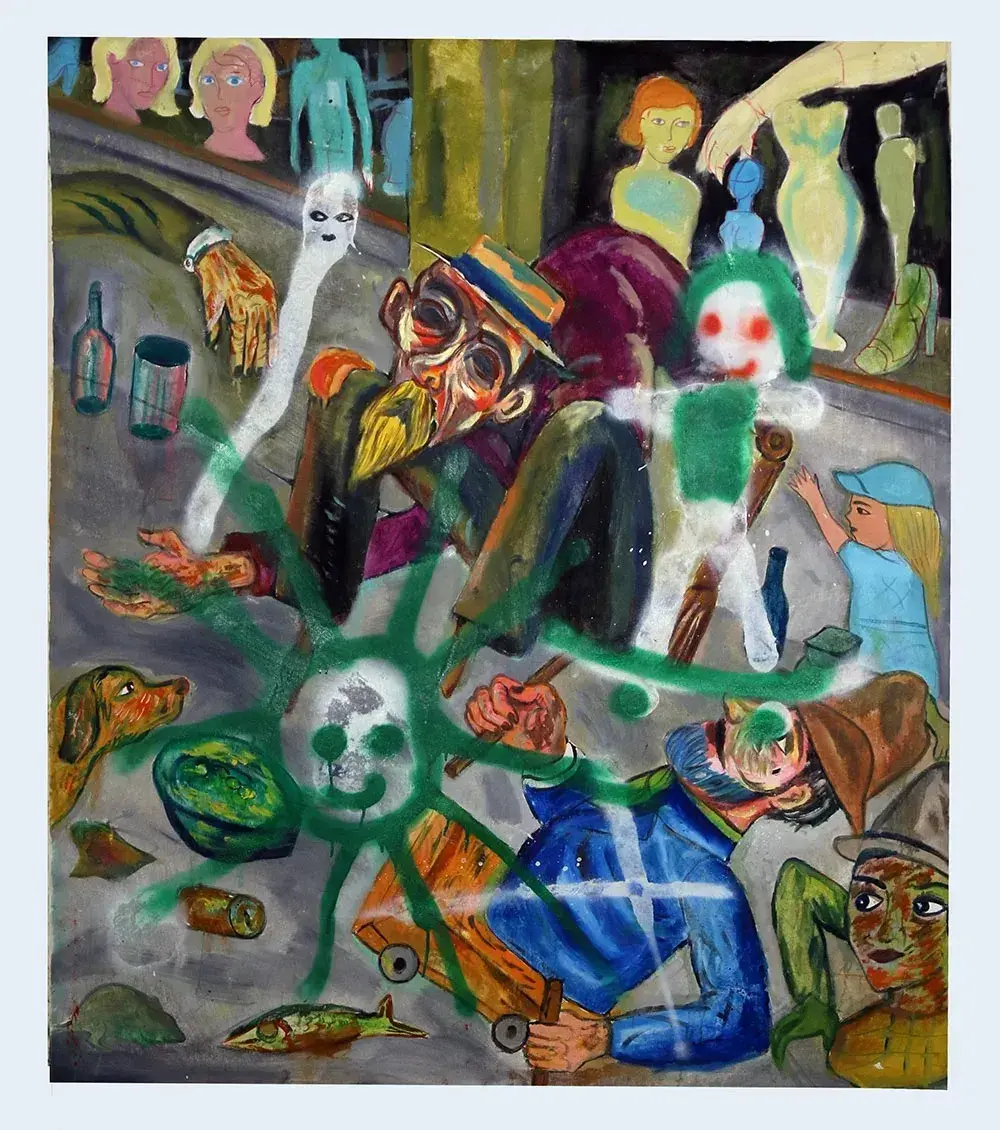
Luis Salazar. Todo a la vez, 2023. Galería Cerquone. Photos courtesy of Galería Carmen Araujo Arte.
Post War (Galería Fernando Zubillaga, 2009), Venice Bienal (Espacio MAD, 2011), Party Monster Museum (Bienal del Caribe, Aruba), Fantasía de la cultura de consumo (Museo de Arte Contemporáneo de Caracas), and The Great Utopia (Hacienda La Trinidad, 2014) are among the artist’s solo exhibitions. The most recent, Todo a la vez, was held in 2023 at Galería Cerquone in collaboration with Carmen Araujo Arte and curated by Tahía Rivero, whose text for the occasion reads: “…a mixture of elements that make up a great contemporary altarpiece of wonders in which different discourses and aesthetics are superimposed simultaneously.” [8]
Luis Salazar advances a complex artistic practice whose production is preeminently processual. His cycles of production are intense, and from them derive a plurality of results. Much of his output is transformable, in some cases recyclable into the production of new works. Moreover, as an accomplished painter, he is the author of a significant and extensive body of work on different supports and in different formats, in which series have succeeded one another constantly and uninterruptedly, without any decline in their critical conviction toward the system and without ceasing to meet a high standard of aesthetic quality in their heterogeneous and often psychedelic visual discourse.
Javier León is a visual artist and art researcher. Follow him on Instagram: @javierleonccs
Notes
[1] Todorov, Tzvetan. Teorías del símbolo. Monte Ávila Editores, 3rd ed., 1993, p. 359.
[2] Pinardi, Sandra. Teatro de operaciones, una imagen que se excede. Catalog for the exhibition Art in América, Sala TAC, 2018.
[3] Ibid., p. 15.
[4] Ibid., p. 12.
[5] Auerbach, Ruth. Héroes Caídos. Exhibition catalog, Sala Mendoza, 2003.
[6] Bourdieu, Pierre. Las reglas del arte. Anagrama, 1995.
[7] Ibid., p. 350.
[8] Rivero, Tahía. Superposición y Simultaneidad. Printed handout for the exhibition Todo a la vez. Galería Cerquone, 2023.
Originally published in Revista Estilo on May 5, 2024. This English version appears on EL CONSULADO with permission from the author, Javier León.
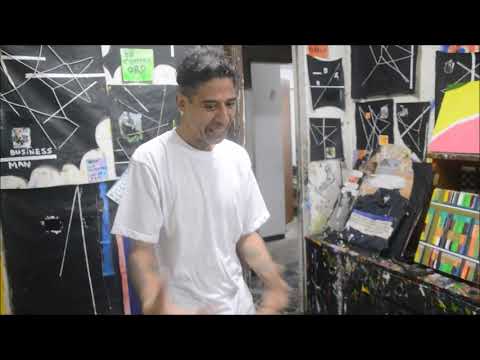
Interview with Luis Salazar.